
India is preparing for a major transformation in defence manufacturing as private sector giants Tata Advanced Systems, Larsen & Toubro and Bharat Forge move closer to leading the country’s ambitious fifth-generation fighter jet programme under AMCA.
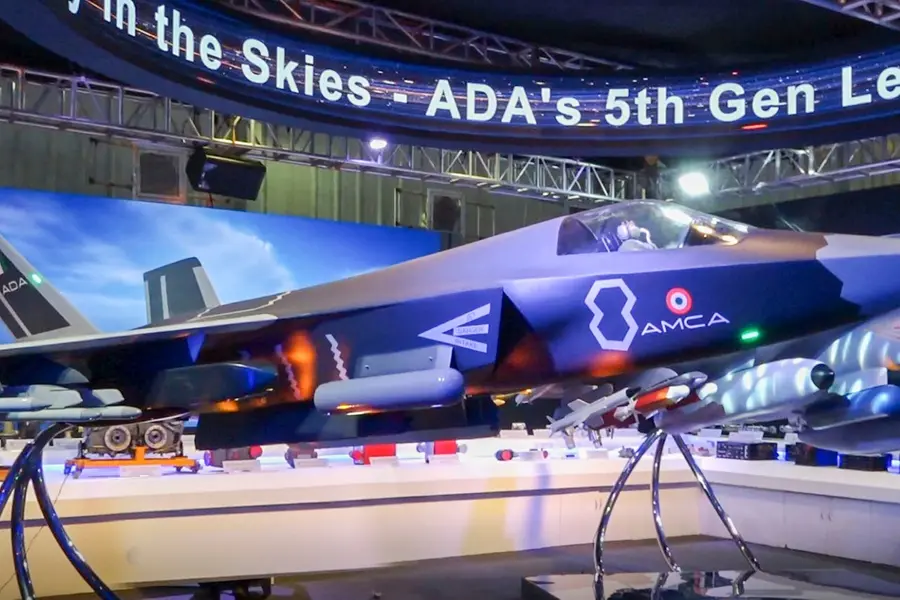
The Indian government is all set to take a big step forward in strengthening our country's defence capabilities. Soon, tenders will be issued to three carefully chosen private sector companies for developing and manufacturing next-generation fighter jets under the Advanced Multirole Combat Aircraft (AMCA) programme.
This is exciting news for every Indian who wants to see our nation stand tall with powerful, modern weapons made right here at home.
Also Read

People who know the inside details say that technical and legal terms have already been finalised. The three companies – Tata Advanced Systems Limited, Larsen & Toubro, and Bharat Forge – are likely to receive these important tenders by the end of this month. These firms were shortlisted earlier because of their strong technical skills and proven ability to handle complex projects.
For a common man like you and me, think of it this way: Just as we choose the best carpenter or mechanic for important work at home, the government has picked these private players who have shown they can deliver high-quality results. This programme is not just about making planes. It is about building India's own fifth-generation fighter jet that can change the game in air power.
The government has intentionally prioritised fresh private sector agility and speed over the old public sector monopoly to push this critical project faster. In a surprising move, the public sector giant Hindustan Aeronautics Limited (HAL) has been left out of this initial competition. HAL, which is based in Bengaluru, Karnataka, has a long history of making aircraft for our forces. Many people feel HAL lost this opportunity because of slow decision-making and old-style working methods. Karnataka, which has good infrastructure and talent in aerospace, could have used this chance to grow further. But due to lethargic approach and heavy bureaucracy, the state seems to have missed the bus. The new testing facility is now coming up in Andhra Pradesh at Puttaparthi. This shows how other states are moving fast while Karnataka lags behind in grabbing such big defence projects despite having the base.
The winner among the three private companies will now be decided purely on commercial bids – meaning who offers the best price and value. This winner will team up with the Aeronautical Development Agency (ADA) to build five prototypes of the AMCA. These prototypes will be made at a brand-new testing facility being constructed in Andhra Pradesh. For ordinary citizens, prototypes are like test models. Just as we test a new bike or car before full production, these five jets will be tested thoroughly in the sky.
The new facility is expected to be ready within a year. The target is to get these prototypes manufactured and flown by 2032. This same place will also be used to develop unmanned combat aircraft under the Ghatak programme, which was recently cleared by the defence ministry. This link is important because the AMCA will have advanced Manned-Unmanned Teaming (MUM-T) capability, allowing the fighter jet to work closely with these unmanned drones in real combat situations for smarter and safer operations.
Once the AMCA prototypes prove their worth in tests, the Indian Air Force will issue a bigger tender for buying a large number of these jets. This later tender will be open to more companies, and HAL can also participate then. However, the company that successfully develops the prototypes will have a big natural advantage for the full order. This makes sense because they would already know the plane inside out.
The defence ministry has set aside an indicative budget of around ₹15,000 crore for this prototype stage. But the final order is expected to be many times bigger once the aircraft is proven and the Air Force places the demand. Reports say that after full development, the IAF is expected to order 120 jets in the first batch, with deliveries starting by 2035. This new jet will become India's main star in the skies from the mid-2030s onwards.
What makes this AMCA special? Here is a simple breakdown for every common Indian to understand:
- Stealth features that help the jet hide from enemy radars, making it almost invisible during missions.
- Artificial Intelligence (AI) integration so the plane can assist pilots with quick decisions in tough situations.
- Long-range targeting capabilities to hit enemies accurately from far away, keeping our pilots safer.
- Ability to team up with unmanned aerial systems like drones for joint operations, which is the future of smart warfare.
For a common Indian, this means our soldiers in the air will have safer, smarter, and more powerful machines to protect our borders.
This is a proud moment for private Indian industry. For decades, defence manufacturing was mostly in government hands. Now, opening doors to companies like Tata, L&T, and Bharat Forge shows trust in India's private sector. These firms have already proved themselves in many challenging projects. Their involvement can bring fresh energy, faster work, and world-class standards.
However, this development also sends a strong message to Karnataka. The state has excellent aerospace ecosystem around Bengaluru. HAL is headquartered there. Yet, due to slow processes and too much red tape, opportunities are moving to other states. Media in Karnataka seems busy only with local politics involving leaders like DK and Siddaramaiah. Important national defence news like this hardly gets attention. This is worrying. Karnataka must wake up now.
It is high time for everyone involved to pull up their socks. Bureaucratic hurdles need to be removed quickly. Action-oriented plans should replace long meetings and delays. People handling such projects must be made responsible and accountable for results. If Karnataka wants to stay ahead in defence and high-tech manufacturing, it needs to become more competitive, supportive, and fast-moving. The state government and industry bodies should work together to attract more such projects instead of losing them.
For the common man in India, this AMCA programme brings hope. It means jobs in manufacturing, technology growth, and stronger national security. When our country makes its own advanced fighter jets, we become less dependent on foreign suppliers. This saves precious foreign money and builds self-reliance – the true spirit of Atmanirbhar Bharat.
The journey ahead is challenging. Developing a fifth-generation fighter is no small task. It needs perfect coordination between private companies, government agencies, and scientists. But with clear targets like flying prototypes by 2032 and first deliveries by 2035, there is a solid roadmap.
As Indians, we should watch this space with pride and expectation. The private sector is stepping up. Our defence is getting modern wings. If states like Karnataka also improve their working style, remove delays, and focus on real development instead of just politics, India’s defence story will become even stronger. The coming years will show whether we can truly turn this ambitious programme into a big success that makes every Indian feel secure and proud.
Published: 25 May 2026, 12:39 pm IST
Disclaimer: Kindly avoid objectionable, derogatory, unlawful and lewd comments, while responding to reports. Such comments are punishable under cyber laws. Please keep away from personal attacks. The opinions expressed here are the personal opinions of readers and not that of Mathrubhumi.