
Critics dismiss HAL, but what's the real story behind the Tejas jet & the advanced Uttam AESA radar? Discover why HAL is crucial for India's defense.
There is a company in India that most people have never heard of, yet without it, Indian Air Force planes would have been grounded decades ago. That company is Hindustan Aeronautics Limited — HAL. And recently, certain international aviation publications have been writing it off as a failed, outdated institution that India is better off without. That narrative is not just wrong. It is dangerous, and it needs to be answered.
Let us start from the beginning, so the full picture is clear. HAL was born in 1940. For over eight decades, this one organisation has been responsible for building, repairing, and maintaining the aircraft that protect India's skies. It has worked on Russian MiGs, British Jaguars, Sukhois, Hawks — over 17 types of aircraft and 15 types of engines — all under one roof, spread across 21 production divisions in India. When America imposed sanctions on India after the 1998 nuclear tests and global suppliers turned their backs on us, it was HAL that kept every Indian Air Force jet operational. No foreign company came to help. HAL did the job alone, quietly, without applause.
Also Read

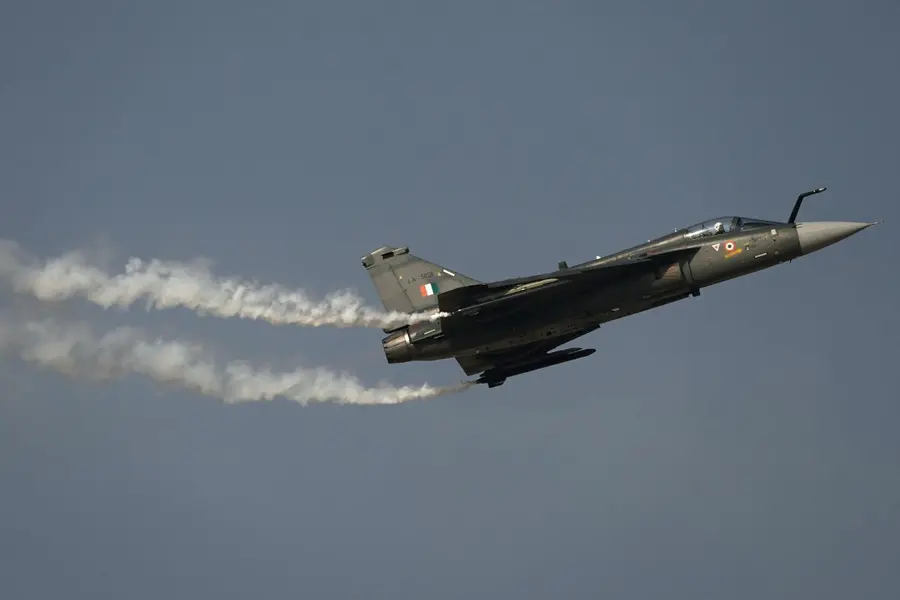
Now, about the Tejas fighter jet — which certain publications have had the nerve to call a "disaster." Think about what it actually means to build a fighter aircraft from scratch. India had no experience designing supersonic combat jets when the Tejas program began in 1983. None. The entire knowledge base had to be built from zero — the engineers, the design tools, the testing infrastructure, everything. Compare this to America: their F-22 fighter program started in 1986 and took nearly 20 years to reach the air force. Their F-35 has been running for over two decades and has crossed $200 billion in cost overruns — and is still fixing problems. Nobody calls those programs disasters. Yet HAL building India's first ever supersonic fighter jet, achieving full operational clearance, and getting it ready for export to countries like Malaysia — that gets called a failure. The double standard is remarkable.
This brings us to something that happened just this month, in February 2026, that deserves far more attention than it has received. India has confirmed final clearance and a full production contract for the Uttam AESA radar — an entirely indigenous, Made-in-India fire control radar — to be integrated into the next batch of 97 Tejas Mk1A jets, alongside a domestically built Electronic Warfare suite. To understand why this matters, you need to know what an AESA radar actually does. It is the brain of a fighter jet in combat — it detects enemy aircraft, guides missiles, and keeps the pilot alive in a hostile sky. For years, critics confidently declared that India could never build one. That India would always remain dependent on Israel, America, or Europe for this critical technology.
The Uttam radar is India's answer to every one of those critics. Born from the brilliance of DRDO's scientists and brought to life on HAL's production lines, it is a testament to what happens when Indian institutions work as one. The private sector supplies components, yes — but it is HAL that takes this extraordinarily complex brain and integrates it into the beating heart of the Tejas. That is not a small thing. Integration is where most nations fail. It is where years of accumulated knowledge, systems engineering, and hard-won experience either exist or they do not. Inside HAL, they exist.
And here is the part that should make every Indian sit up straighter — the Uttam is not just matching Western radars. It is built on Gallium Nitride technology, known as GaN. Most radars currently flying on Western and Israeli fighter jets are built on the older Gallium Arsenide, or GaAs, technology. Without getting lost in the science, GaN runs cooler, transmits more power, detects targets at longer ranges, and is significantly harder to jam or fool. In plain terms — India did not simply catch up. On the next 97 jets, India is flying past several current global standards. A country that critics said could never build a radar is now building a radar that outclasses what many of those critics are flying today.
This is also the moment to understand something much larger about where HAL is headed. The world's biggest defense markets are not won by those who provide the cheapest assembly lines. They are won by those who own the underlying science. An assembly line can be replicated anywhere. The science behind it cannot — not without decades of investment, failure, learning, and stubborn persistence. HAL's mastery of GaN technology is proof that it is no longer just a manufacturer following someone else's blueprint. It is moving from the assembly line to the design table. That shift is everything. It is the difference between being a vendor and being a power.
Aviation Week and similar publications celebrated when private sector companies were announced as lead contractors for future programs, suggesting HAL is finished. But the engineering knowledge, the Uttam radar, the AMCA's design DNA — all of it lives inside HAL's engineers and DRDO's scientists. You cannot hand a nameplate to a private company and expect a fighter jet to emerge. The intellectual foundation of India's aerospace future was built inside HAL, under conditions no Western company has ever had to face.
HAL is not perfect. But it is reforming, delivering, and proving — radar by radar — that India does not just assemble what others design. India learns, builds, and when the moment is right, leapfrogs. The next time someone writes HAL's obituary from a comfortable office thousands of miles away, they would do well to remember that.
The author is a Defence, Aerospace & Geopolitical Analyst
Published: 27 Feb 2026, 09:45 pm IST
Disclaimer: Kindly avoid objectionable, derogatory, unlawful and lewd comments, while responding to reports. Such comments are punishable under cyber laws. Please keep away from personal attacks. The opinions expressed here are the personal opinions of readers and not that of Mathrubhumi.