
If HAL is to handle the complexity of Rafale partnerships while simultaneously scaling up Tejas production, fundamental reforms in leadership accountability, vendor management, and project execution timelines are non-negotiable.
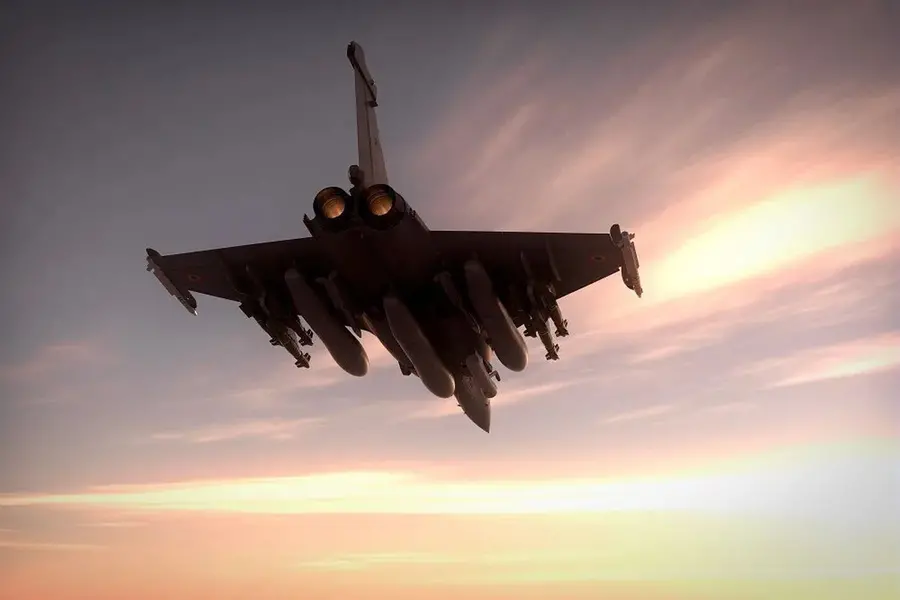
India stands at a turning point in its defence modernisation drive. The proposed purchase of 90 Rafale F4 fighter jets from France under a government-to-government (G2G) deal could reshape the Indian Air Force (IAF) for decades -- and, more importantly, create a rare opening for Hindustan Aeronautics Limited (HAL) and the wider domestic aerospace industry.
The IAF now fields only 31 fighter squadrons, far short of its approved strength of 42. With the rapid retirement of ageing MiG-21s and MiG-27s, the advanced Rafale F4 -- equipped with a stronger SPECTRA electronic-warfare system, modern AESA radar, and long-range Meteor missiles -- offers a timely lifeline. Deliveries between 2028 and 2030 would coincide with the IAF's most pressing capability gap.
Originally, the 2019 MRFA tender sought 114 jets and required partial manufacturing in India, which slowed negotiations. A direct G2G deal now simplifies the path, but the offset clause must translate into real industrial gains. HAL should take the lead, learning from the 2016 purchase of 36 Rafale aricraft -- a deal that ensured performance but limited technology transfer.
India's first and largest multinational air exercise, Tarang Shakti 2024, unfolded in two phases -- Sulur, Tamil Nadu (Aug 6–14) and Jodhpur, Rajasthan (Aug 29–Sep 14). Ten nations -- including France, Germany, the UK, US, Spain, Greece, Australia, Bangladesh, UAE and Singapore -- flew alongside 18 observers. About 150 aircraft participated, showcasing India's Tejas, Rafale, Mirage 2000, Jaguar and MiG-29 fleets.
The Rafale's performance drew widespread praise, reinforcing its combat reliability and underscoring India's growing status as a regional air-power leader.
In May 2025, Operation Sindoor -- a cross-border strike on terror camps in Pakistan -- marked one of India's most intense air operations. Neutral observers noted operational challenges that exposed maintenance and coordination gaps.
These events underline the urgency of better technology transfer, training, and fleet readiness if the Rafale is to reach its full potential.
HAL's Strategic Opening
Valued at around ₹1 lakh crore, the Rafale F4 deal could redefine India's aerospace ecosystem. With long experience in licensed production of the Su-30MKI and Tejas, HAL is best placed to become the regional hub for Rafale maintenance, repair, and overhaul (MRO).
If 60–70 percent of the deal's value flows back into Indian manufacturing, HAL could serve not only India but also Rafale-operating nations such as Egypt, Qatar, and Greece.
However, for HAL to fully capitalise on this opportunity, it must confront uncomfortable truths about its internal functioning. The middle management layer, particularly within the LCA (Tejas) project division, requires comprehensive structural and attitudinal corrections. Supply chain coordination has been plagued by bureaucratic delays, risk-averse decision-making, and a culture that sometimes prioritizes procedural compliance over mission urgency.
If HAL is to handle the complexity of Rafale partnerships while simultaneously scaling up Tejas production, fundamental reforms in leadership accountability, vendor management, and project execution timelines are non-negotiable. Without addressing these deep-rooted inefficiencies, even the best technology transfer agreements will fail to deliver results.
Moreover, integrating Indian weapons like BrahMos and Astra with the Rafale will boost combat power while deepening local expertise. This experience will directly support future programs such as the Tejas Mk2 and the Advanced Medium Combat Aircraft (AMCA).
Policy Path Ahead
The government must negotiate with a long-term vision -- placing HAL at the centre, empowering private suppliers, and ensuring steady technology transfer to domestic plants.
Offset terms should create new manufacturing skills, testing facilities, and a training academy for Rafale systems and avionics. Critics of HAL's pace forget its recent progress -- improved Tejas output and Su-30MKI serviceability -- proof of growing maturity.
What HAL needs now is stability, continuity, and access to advanced French know-how to anchor India's aerospace autonomy. But this opportunity will be squandered unless HAL simultaneously undertakes painful internal reforms, particularly in middle management culture and supply chain execution within the LCA division.
The Rafale F4 agreement is more than a weapons purchase; it is a strategic catalyst. Tarang Shakti 2024 showed India's rising prowess, while Operation Sindoor revealed the need for stronger self-reliance.
If structured wisely -- with robust offset clauses and HAL leadership -- this deal can deliver far more than 90 jets; it can secure India's place as a global aerospace power. But HAL must first look inward, fix what is broken, and transform its organizational culture to match the scale of this historic opportunity.
HAL must not stand on the sidelines. It should lead India's march toward true defence self-reliance (Atmanirbharta)—but only after proving it has the internal discipline and management excellence to handle such responsibility.
The author is a defence, aerospace & geopolitical analyst.
Published: 15 Oct 2025, 06:02 pm IST
Related Topics
Disclaimer: Kindly avoid objectionable, derogatory, unlawful and lewd comments, while responding to reports. Such comments are punishable under cyber laws. Please keep away from personal attacks. The opinions expressed here are the personal opinions of readers and not that of Mathrubhumi.
