
The GE–HAL F414 agreement marks a major shift in India’s push for jet engine self-reliance and defence manufacturing capability.
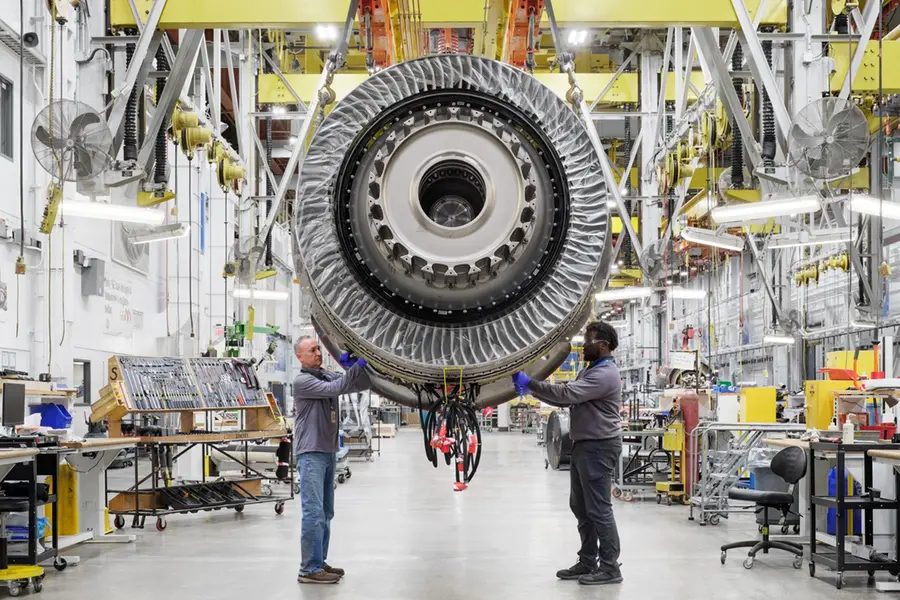
If we look at the landmark deals in India’s defence sector, the one that stands out the most is the recently signed technical agreement between GE Aerospace and Hindustan Aeronautics Limited (HAL) to co-produce F414 jet engines in India marks a defining moment in India’s defence modernisation journey.
For the first time, India is set to gain access to advanced jet engine manufacturing technology through a structured partnership with the United States. The agreement, which has been under negotiation for nearly three years, signals a deepening of strategic ties between the two countries and aligns closely with India’s long-standing goal of achieving self-reliance in critical defence technologies.
Also Read

At its core, the agreement goes beyond a simple procurement arrangement. It represents a shift toward capability creation within India, with both sides confirming that key technical aspects have now been finalised. A formal contract is expected later this year, paving the way for domestic production of one of the world’s most advanced fighter jet engines.
The Evolution of the deal
The origins of this agreement can be traced back to 2023 when Prime Minister Narendra Modi and then US President Joe Biden outlined a roadmap for deeper defence and technology collaboration. Among the key pillars of this engagement was the co-production of high-end defence equipment, including jet engines, an area historically guarded by a handful of nations.
Since then, negotiations have focused on resolving complex issues related to technology transfer, intellectual property, and manufacturing responsibilities. The breakthrough on ‘technical matters’ suggests that both sides have managed to reconcile these concerns, enabling the partnership to move toward execution. This also builds on an existing four-decade relationship between GE Aerospace and HAL, which has included the supply and support of engines for various Indian military platforms.
What the F414 means for India’s next-generation fighters?
The F414 engine will power the upcoming variants of India’s indigenous fighter programmes, particularly the Tejas Mk-2 and the initial squadrons of the Advanced Medium Combat Aircraft (AMCA). Compared to the currently deployed Tejas Mk-1A, the Mk-2 is a heavier, more capable platform designed to meet evolving operational requirements.
India plans to produce around 99 F414 engines domestically in the initial phase, supporting a projected fleet of 120 to 130 aircraft. These aircraft are intended to replace ageing Russian-origin fighters and restore the Indian Air Force’s declining squadron strength. The urgency of this modernisation effort has been underscored by recent regional tensions and the growing capabilities of neighbouring air forces.
The F414 itself is a proven platform, having powered US Navy aircraft for decades. Its reliability and performance make it a suitable choice for India’s next-generation fighters, offering improved thrust, efficiency, and operational flexibility.
Technology transfer is the real game changer
Perhaps the most significant aspect of this agreement is the scale of technology transfer involved. Reports indicate that up to 80% of the engine’s manufacturing technology and intellectual property will be shared with India. This is a rare move, as jet engine technology is among the most tightly controlled in the global defence ecosystem.
For India, this opens the door to developing indigenous expertise in one of the most complex areas of aerospace engineering. It enables not just assembly, but deeper capabilities in manufacturing, maintenance, and eventual design evolution. Over time, this could reduce India’s dependence on foreign suppliers and enhance its ability to sustain and upgrade its own defence platforms.
A long road to engine self-reliance
India’s pursuit of jet engine self-sufficiency has been marked by setbacks and lessons. The experience of the HF-24 Marut in the 1960s remains a telling example. Despite being India’s first indigenous fighter aircraft, the Marut was constrained by an underpowered imported engine, limiting its operational effectiveness. Subsequent efforts to develop indigenous engines have faced technological and resource challenges.
The F414 co-production agreement represents a potential turning point in this journey. By embedding advanced manufacturing know-how within the domestic ecosystem, India can build a foundation for future indigenous engine programmes, reducing the risk of repeating past limitations.
Boosting ‘Make in India’ and defence industrial growth
The agreement aligns strongly with the government’s ‘Make in India’ initiative, which seeks to transform the country into a global manufacturing hub. In the defence sector, this translates into building domestic capabilities, creating skilled jobs, and fostering a robust industrial base.
Co-production of jet engines will involve a wide network of suppliers, including micro, small, and medium enterprises (MSMEs), thereby strengthening the broader aerospace ecosystem. It also enhances India’s attractiveness as a partner for future global defence collaborations, particularly in high-technology domains.
Moreover, the establishment of a domestic depot facility for F404 engines already powering the Tejas Mk-1A, complements this effort by building in-country maintenance and lifecycle support capabilities. Together, these initiatives signal a move toward a more self-sustaining defence infrastructure.
All-in-all this deal comes at a time when India faces complex security challenges along its borders. The need to maintain credible air power deterrence against both western and northern adversaries has made the modernisation of the Indian Air Force a priority.
By enabling faster induction of advanced fighters and reducing reliance on external supply chains, the F414 programme strengthens India’s operational readiness. It also reflects a broader shift in global geopolitics, where trusted partnerships are increasingly centred around technology sharing and co-development rather than simple buyer-seller relationships.
Conclusion
The GE Aerospace–HAL F414 agreement is is a strategic investment in India’s technological and industrial future. By combining global expertise with domestic manufacturing ambitions, it sets the stage for a new phase in India’s aerospace journey.
While challenges will remain in execution, the agreement represents a significant step toward achieving long-term self-reliance in one of the most critical areas of defence capability. If successfully implemented, it could reshape India’s position in the global aerospace landscape and serve as a model for future high-technology collaborations.
Published: 16 Apr 2026, 11:18 pm IST
Related Topics
Disclaimer: Kindly avoid objectionable, derogatory, unlawful and lewd comments, while responding to reports. Such comments are punishable under cyber laws. Please keep away from personal attacks. The opinions expressed here are the personal opinions of readers and not that of Mathrubhumi.