
The engine will power the Advanced Medium Combat Aircraft (AMCA), India’s ambitious fifth-generation fighter programme, targeted for induction by 2035.
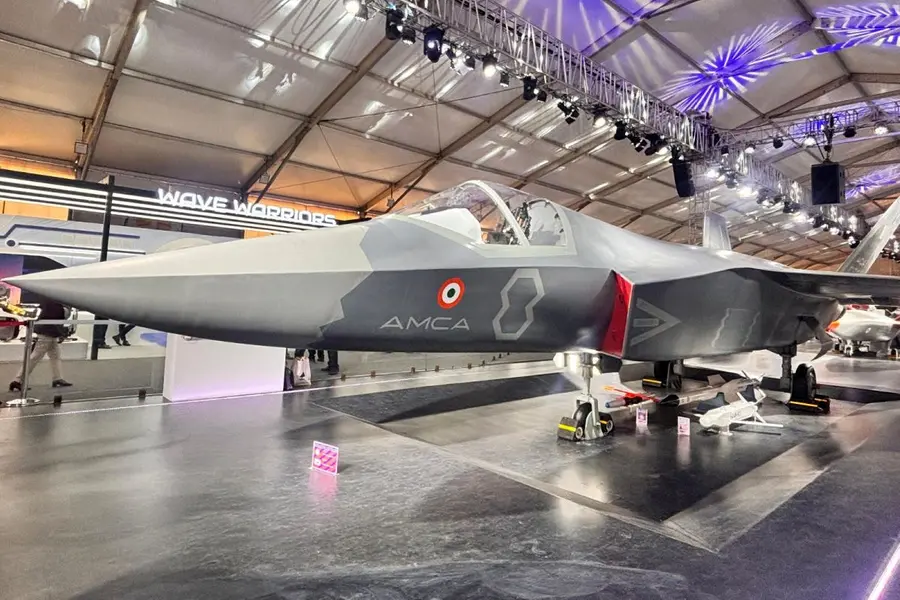
In a landmark move that could shape India’s military aviation landscape for decades, New Delhi has decided to co-develop a new 120 kN engine with French aerospace major Safran under a government-to-government agreement. This engine will power the Advanced Medium Combat Aircraft (AMCA), India’s ambitious fifth-generation fighter programme, targeted for induction by 2035.
Speaking on the development, Defence Minister Rajnath Singh said: “Today, we have also taken steps forward in the direction of building fifth-generation fighter aircraft. We have also moved towards manufacturing the aircraft’s engine in India itself. We are about to start engine manufacturing work in India with the French company Safran.”
The significance of the fighter jet engine
If the airframe is the body of a fighter aircraft, its engine is the heart. For fifth-generation fighters, engines must provide not just high thrust, but also fuel efficiency, stealth compatibility, and advanced thermal management for onboard sensors and directed-energy systems.
India’s existing experience with fighter jet engines such as the indigenous Kaveri programme, has been marked by technological and performance challenges. While the Tejas Light Combat Aircraft has achieved maturity, it still relies on the American GE F404/F414 engines. This dependence has long been a strategic vulnerability, especially amid shifting geopolitical currents.
By partnering with Safran to co-design and manufacture a 120 kN class engine, India is attempting to close this gap, ensuring that its next-generation AMCA will not be hostage to foreign technology restrictions.
Why Safran?
Sources indicate that Rolls Royce (UK) and MTU Aero Engines (Germany) were also contenders. Yet India’s final decision to go with Safran reflects several strategic and technical considerations:
1. Safran has an impeccable track record in combat Jet engines: Safran (through its joint venture CFM with GE) already produces some of the most widely used commercial jet engines. Its M88 engine also powers France’s Rafale fighter, already in service with the Indian Air Force. This gives Safran both credibility and an operational baseline relevant to India.
2. Willingness for deep Technology Transfer: Unlike Western rivals, Safran has shown greater openness to sharing core technologies and enabling indigenous production. Past negotiations with Rolls Royce, for instance, stumbled over intellectual property rights.
3. Strategic Alignment: The deal is enshrined in the Horizon 2047 roadmap for India–France defence cooperation. France has consistently positioned itself as a long-term, trusted strategic partner, less encumbered by restrictive end-user clauses or geopolitical volatility compared to the U.S.
4. Political Willingness: Prime Minister Narendra Modi and President Emmanuel Macron have repeatedly emphasized defence co-production as a pillar of bilateral ties. This engine pact is both a technical collaboration and a geopolitical handshake symbolizing trust.
At the Delhi event, Rajnath Singh highlighted how this collaboration will address a critical capability gap in India’s aerospace ecosystem. “Our vision of self-reliance in defence is not just about reducing imports. It is about creating an ecosystem where Indian industry, public and private, develops world-class capability, where we not only meet domestic requirements but also emerge as a global supplier of high-quality defence products,” he said.
India’s fifth-generation AMCA programme is being spearheaded by the Defence Research and Development Organisation (DRDO) and Hindustan Aeronautics Limited (HAL). While the aircraft’s design and stealth features are progressing, the absence of a dedicated indigenous engine has been a bottleneck. The Safran partnership directly addresses this, accelerating timelines for the AMCA’s prototype phase in the early 2030s.
The announcement comes against a backdrop of increasing orders for indigenous platforms. Singh revealed that HAL has received fresh orders worth INR 66,000 crore for 97 Tejas Mk-1A fighters, in addition to an earlier INR 48,000 crore order for 83 aircraft. “Our Tejas aircraft is set to become a brilliant example of India’s indigenous defence capabilities. It’s not that we haven’t faced problems in this endeavour, but we have decided that we will find a solution to every problem and surely establish the full capability to build fighter aircraft in India,” he said.
This aligns with India’s larger goal of transforming its defence aviation base from assembler to designer-producer, moving up the value chain in global aerospace.
Beyond the technicalities, the deal sends a clear signal to the global defence industry. Singh extended an open invitation: “Today there is an opportunity for all the big defence companies of the world to invest in India and co-produce defence equipment here. Our Make in India is not limited to India only. When you Make in India, you will make for the world.”
By leveraging partnerships like Airbus–Tata (for C295 transport aircraft) and now Safran for fighter engines, India is positioning itself as both a strategic market and a co-development hub.
The India–Safran engine pact is more than just a manufacturing project. It represents India’s bid to break free from decades of dependence in one of the most guarded domains of aerospace technology. It underpins the AMCA programme, but more importantly, it lays the foundation for India’s entry into the elite club of nations with indigenous jet engine capability.
With the AMCA envisioned as a stealthy, networked, multirole platform, the availability of a locally co-developed 120 kN engine could be the difference between strategic autonomy and continued dependence.
For New Delhi, the choice of Safran is both pragmatic and symbolic with France offering proven expertise, political trust, and a willingness to share what others won’t. For India, this is not just about powering a fighter; it’s about powering its future in aerospace and defence.
Published: 23 Aug 2025, 06:40 pm IST
Related Topics
Disclaimer: Kindly avoid objectionable, derogatory, unlawful and lewd comments, while responding to reports. Such comments are punishable under cyber laws. Please keep away from personal attacks. The opinions expressed here are the personal opinions of readers and not that of Mathrubhumi.
