
The sidelining of HAL from the ambitious Rs 15,000-crore AMCA stealth project due to its massive order backlog sparks debate on whether overloading success disqualified it unfairly
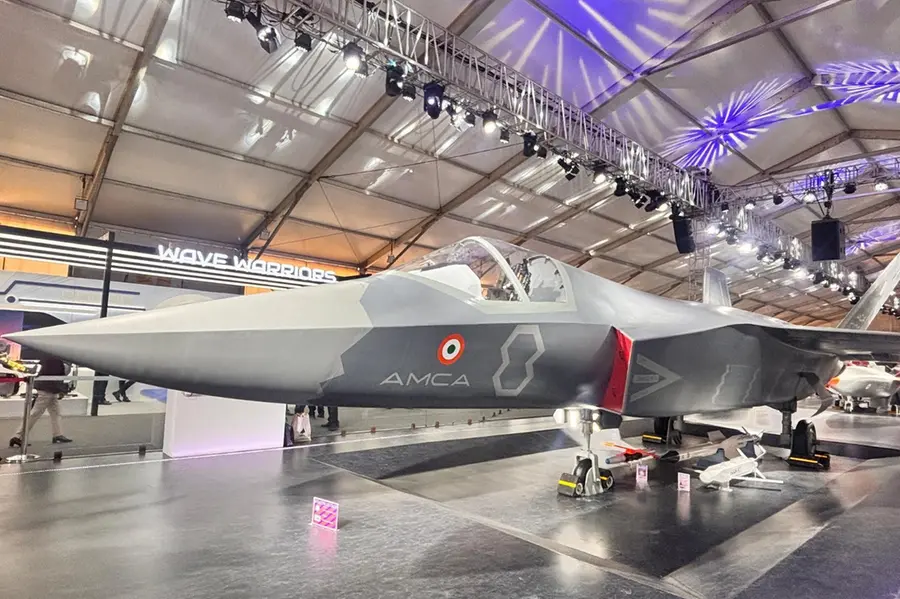
When you work hard for something big, you expect to finish what you started. That's what State-owned aviation giant Hindustan Aeronautics Limited thought too. But today, HAL -- the company that has been building fighter jets for the Indian Air Force for decades -- just got left out of one of country's most ambitious projects -- the Advanced Medium Combat Aircraft, or AMCA.
It's like being benched right before the final match, and honestly, it feels unfair to many of us who understand what HAL has actually accomplished. Let me explain what's happening in simple terms.
India is dreaming of building its own fifth-generation fighter jet -- a super-advanced warplane that can hide from enemy radar and outfight anything in the sky. This is no small thing. It's like designing your own dream home instead of buying one ready-made.
The government says this project will cost around 15,000 crore rupees just to build five test aircraft. Now comes the interesting part -- they said HAL cannot lead this project because it's too busy with other orders.
Here's what happened. The government made a rule: any company bidding for AMCA must not have pending orders worth more than three times their yearly revenue. Sounds reasonable on paper, right? But then they applied this rule strictly to HAL and it stumbled.
HAL's pending orders are somewhere between 230,000 crore to 270,000 crore rupees, while they earn about 30,000 to 32,000 crore every year. This means their pending orders are roughly seven to eight times their yearly revenue – way above the limit. So HAL was knocked out, and private companies like Tata, L&T, and Bharat Forge got a chance instead.
Now, is this fair to HAL? Let me tell you why many believe it isn't. HAL is not a struggling company trying to look bigger than it is. That huge order book shows something else -- it shows the Indian Air Force and government trust HAL with massive responsibilities. These aren't small orders; they're important contracts for Tejas fighters, helicopters, and maintaining Sukhoi planes. That order book actually proves HAL's strength, not its weakness.
The real problem is different. HAL is struggling with delays, yes but this is because India's defence projects are incredibly complex. They need special engines, cutting-edge technology, and approval from multiple government departments.
It's like trying to cook a five-course meal when you're used to cooking two-course meals. You need more time, more hands, and better kitchen setup. But instead of helping HAL build more capacity, the government pushed them out of the AMCA race.
When you look at how the world handles this, something becomes clear. Boeing, the American aircraft giant, had a backlog of 682 billion dollars with yearly revenue of only 89 billion dollars -- that's nearly eight times their revenue! Yet nobody disqualified Boeing.
Airbus, the European company, manages over 8,600 commercial planes worth hundreds of billions of euros. Lockheed Martin, which makes the F-35 fighter jet, has 194 billion dollars in backlog. These companies didn't get thrown out of competition; they simply hired more workers, built more factories, and got the job done. They proved that a heavy order book doesn't mean you can't take on more work -- it just means you need to expand.
The HAL could have done the same. The company has built Tejas fighter jets from scratch. That's not a small achievement. Tejas is a proven fighter, and HAL did it despite India having no experience in modern jet-building. They've also successfully managed production lines for Sukhoi fighters and Apache helicopters. This is real, hands-on experience with exactly what AMCA demands.
The government's decision pushes private companies into the picture -- companies like Tata, L&T, and Bharat Forge. They are good companies, no doubt. But except for Tata, which assembled the C-295 transport plane with Airbus, they don't have experience building fighter jets from concept to production.
AMCA is not a simple project. A single mistake in the stealth design, materials, or systems could cost thousands of crores and years of delay. Is this the right time to experiment with new players on India's most advanced fighter?
Here's the opinion that makes sense: The HAL should have been given a chance. Not by lowering standards, but by understanding that a company with huge orders is not weak -- it's overloaded. The government should have helped HAL hire thousands of skilled workers, build second assembly lines, and expand infrastructure instead of pushing them aside.
That said, the decision is made. Now private players will lead building the AMCA prototypes. If they succeed, fine. But if they face problems, HAL will still be there, with Tejas experience, ready to support. The real winner in this story should be India -- whether it's HAL, private companies, or both together, our nation needs the best fighter jet possible. AMCA should fly high, no matter who builds it.
Published: 04 Feb 2026, 03:58 pm IST
Related Topics
Disclaimer: Kindly avoid objectionable, derogatory, unlawful and lewd comments, while responding to reports. Such comments are punishable under cyber laws. Please keep away from personal attacks. The opinions expressed here are the personal opinions of readers and not that of Mathrubhumi.
