
HAL can either transform itself into a lean, aggressive, world-class aerospace manufacturer, or it can watch from the sidelines as private companies carve up India's defence aviation future. There is no middle ground anymore.
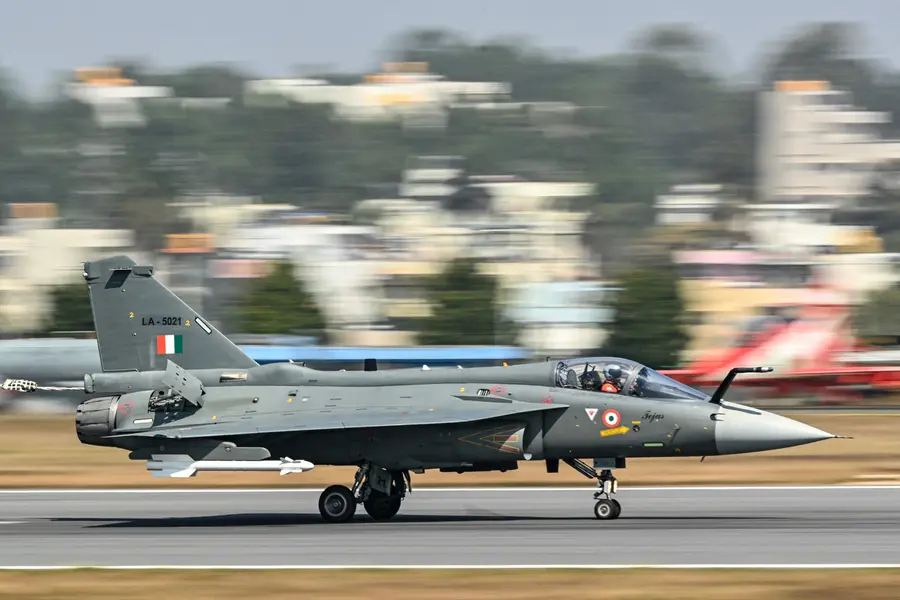
Hindustan Aeronautics Limited stands at a crossroads that will define its future for decades to come.
The state-owned defence giant, which has been the backbone of India's military aviation for over 70 years, now faces the most serious challenge in its history. The question is not whether HAL has the capability to compete, but whether it has the will to transform itself before it's too late.
Also Read

The Indian Air Force desperately needs new transport aircraft. The aging An-32 fleet, which carries 6-7 tonnes, and the IL-76 heavy lifters, capable of hauling 48 tonnes, are approaching retirement. The Ministry of Defence has restarted the Medium Transport Aircraft project after a decade-long pause, with plans to order up to 80 aircraft worth approximately $5 billion under the Make in India initiative. Additionally, 10-12 heavy transport aircraft will be needed by 2035 to replace the IL-76 fleet.
This represents a massive opportunity worth billions of dollars. But here's the harsh reality: HAL might not even be in the running if things continue as they are.
Where private players are winning
The C-295 deal was a watershed moment that changed everything. When Tata Advanced Systems Limited partnered with Airbus to deliver transport aircraft worth $2.5 billion, it wasn't just another contract. It was proof that Indian private companies could execute complex military aviation projects with speed, efficiency, and world-class standards. The Vadodara facility, opened in October 2024, became India's first private military aircraft factory. Sixteen aircraft arrived from Spain, while 40 are being manufactured in India, with deliveries completing by August 2025.
HAL's absence from this transformational project spoke volumes. Now, Adani Defence, Bharat Forge, Mahindra, and others are lining up with international partners, ready to replicate the TASL-Airbus success story for the Medium Transport Aircraft project. With government mandates requiring up to 70 percent local content, these private giants have the formula, the momentum, and the hunger to win.
Top leadership knows what's at stake
Let's be absolutely clear about one thing: HAL's top brass is visionary, focused, and genuinely committed to making HAL a true Maharatna company that India can be proud of. The leadership secured a massive ₹62,370 crore contract in September 2025 for 97 additional Tejas Mk1A fighter jets. They understand the strategic importance of indigenous capability. They have the technical expertise and the institutional knowledge that spans decades.
The problem is not at the top. The problem lies in execution at the ground level.
Brutal truth about HAL's supply chain crisis
Here's what needs to be said plainly: HAL's supply chain, particularly the teams handling the LCA Tejas projects, needs a complete and immediate overhaul. This is not about questioning anyone's patriotism or dedication. This is about facing facts.
Delays, quality issues, and missed deadlines in the Tejas program have given HAL a reputation problem that threatens to overshadow its genuine capabilities. Whether the issue is outdated processes, inadequate vendor management, lack of accountability, or simply an attitude that doesn't match the urgency of the moment, something is fundamentally broken in the delivery mechanism.
The men and women at the bottom of the organizational pyramid need either serious attitudinal corrections or comprehensive retraining in modern aerospace manufacturing practices. The contrast is glaring: private companies are delivering on time with stringent quality standards, while HAL continues to struggle with execution despite having far greater experience and resources.
This is not sustainable. More importantly, it's not fair to the brilliant engineers and visionary leaders at the top who are working tirelessly to position HAL for future success.
Clear path forward for HAL
HAL has everything it needs to win this battle. The question is whether it will act decisively enough, and quickly enough. Experts suggest a two-stage development approach: first, create a medium transport aircraft capable of carrying around 30 tonnes to address immediate MTA requirements. Then, scale up to a heavy-lift platform with 60-tonne capacity to replace the IL-76 fleet. This isn't wishful thinking.
HAL has successfully upgraded the Dornier 228 and collaborated with the National Aerospace Laboratories on the Regional Transport Aircraft project. The technical foundation exists.
The government has already signaled strong support by establishing a Special Purpose Vehicle in March 2025 specifically for regional aircraft production. If HAL presents a credible, detailed plan for an indigenous transport aircraft, leveraging support from NAL and DRDO's advanced avionics capabilities, government backing and funding will follow.
Supply chain revolution HAL must lead
But here's the non-negotiable requirement: before HAL can convince anyone it can deliver a new transport aircraft program, it must first fix its existing supply chain problems. The Tejas program must become a showcase of efficiency, not a cautionary tale.
This means conducting a ruthless audit of every aspect of the LCA supply chain. Identify bottlenecks. Replace vendors who cannot meet standards. Implement modern project management systems. Create accountability at every level. Most critically, change the culture from "good enough for government work" to "world-class or nothing."
The personnel managing these supply chains need to understand that they are not just building aircraft; they are defending HAL's future existence. If attitudes don't change, if excellence becomes optional, if deadlines remain suggestions rather than commitments, then no amount of top-level vision will save HAL from irrelevance.
Message to every HAL employee
To everyone working at Hindustan Aeronautics Limited: your company's top leadership is fighting for you. They are securing contracts worth tens of thousands of crores. They are building relationships with the Air Force, Navy, and Army. They are positioning HAL to be the cornerstone of India's aerospace future.
But they cannot do it alone. Every technician, every supply chain manager, every quality inspector, every vendor coordinator must match their commitment. The reputation you build or destroy with every decision, every inspection, every delivery, determines whether HAL thrives or withers.
HAL can either transform itself into a lean, aggressive, world-class aerospace manufacturer, or it can watch from the sidelines as private companies carve up India's defence aviation future. There is no middle ground anymore.
The opportunity is massive. The government support is available. The technical capability exists. The leadership vision is clear.
What's needed now is execution excellence from top to bottom, a complete overhaul of supply chain management, and an attitude shift that treats every project like the company's survival depends on it because it does.
HAL has been India's pride for seven decades. With the right changes, particularly in how it manages execution and supply chains, it can remain India's aviation leader for seven decades more. But the window for transformation is closing fast.
The time for HAL to act is not tomorrow. It's today.
Published: 12 Oct 2025, 07:53 pm IST
Disclaimer: Kindly avoid objectionable, derogatory, unlawful and lewd comments, while responding to reports. Such comments are punishable under cyber laws. Please keep away from personal attacks. The opinions expressed here are the personal opinions of readers and not that of Mathrubhumi.