
The AMCA project represents more than just a fighter jet -- it's a test of India's industrial maturity, technological ambition, and institutional reforms. The choice between private companies and HAL isn't black and white
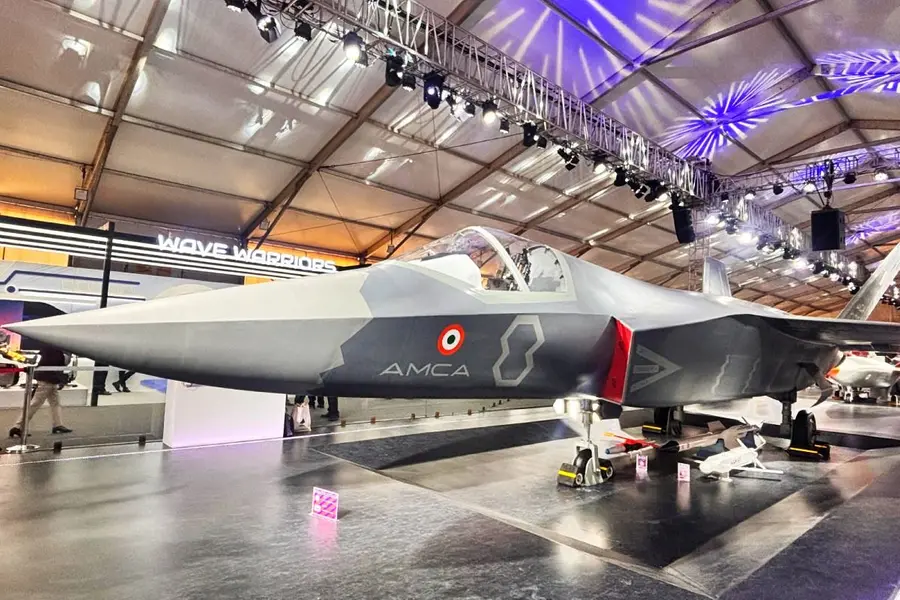
India stands at a crucial crossroads in its defence journey. By mid-2026, the country will decide who builds its first homegrown stealth fighter jet -- the Advanced Medium Combat Aircraft (AMCA). This isn't just about assembling metal and engines; it's about national pride, self-reliance, and proving to the world that India can join the elite club of nations that design and manufacture fifth-generation (or, as experts call it, 5.5 generation) stealth fighters.
Only a handful of countries -- the United States, Russia, China, and recently Turkey -- have managed to develop stealth fighter technology. If India succeeds, it will be writing our name in aviation history. But the big question troubling defence circles today is: should we trust private companies with this dream, or should we stick with our traditional defence giant, Hindustan Aeronautics Limited (HAL)?
Understanding the 5.5 Generation Advantage
The AMCA isn't just another fighter jet. It's being designed as a 5.5-generation aircraft, which means it sits between today's fifth-generation fighters like the American F-35 and the future sixth-generation jets that countries are still dreaming about. What makes it special? The AMCA will have stealth capabilities to avoid enemy radar, advanced artificial intelligence to help pilots make split-second decisions, the ability to control drones as loyal wingmen, and most importantly, it will be built with Indian technology -- our own Uttam radar with Gallium Nitride (GaN) modules that make it more powerful and reliable.
This technological leap means the AMCA won't just be a fighter jet; it will be a flying computer with weapons, capable of network-centric warfare where multiple aircraft, ships, and ground stations work together like a well-coordinated orchestra.
Private Sector Promise: Speed, Efficiency, and Innovation
The government's decision to invite private companies like Larsen & Toubro, Tata, Mahindra, Bharat Forge, and Godrej shows a bold shift in thinking. These companies bring something HAL has often struggled with – speed and efficiency.
Private firms work with a different mindset. They face market pressures, answer to shareholders, and understand that delays mean losses. When Tata manufactured components for the Tejas program, they consistently met deadlines that HAL often missed. Private companies also bring modern management practices, better quality control, and a hunger to prove themselves on the global stage.
Moreover, involving multiple private players creates healthy competition. If one company falls behind, others can pick up the slack. This reduces the risk of project delays that have plagued Indian defence projects for decades. Private sector involvement also means better cost management -- something crucial when you are talking about a ₹15,000 crore project that could eventually balloon to much more.
The innovation factor cannot be ignored either. Private companies invest heavily in research and development because their survival depends on staying ahead. They're more willing to take calculated risks, adopt new technologies faster, and bring in international best practices without the baggage of bureaucratic approvals.
The Dark Side: Secrecy, Profiteering, and National Security
But here's where things get complicated. Stealth technology isn't just sensitive -- it's explosive. The special radar-absorbing coatings, the aircraft's exact design curves that deflect radar waves, the electronic warfare systems -- all of these are closely guarded secrets that enemies would pay billions to obtain.
Can private companies, which often have international partnerships and investors, be fully trusted with such sensitive information? What if a disgruntled employee leaks designs? What if foreign investors pressure Indian companies to share technology? These aren't just paranoid questions -- industrial espionage is real, and China has repeatedly been accused of stealing fighter jet technology from Russia and the United States.
Private companies also work for profit, not patriotism. While this drives efficiency, it also creates risks. Will they cut corners to save costs? Will they hold the government hostage with pricing once they become indispensable? The defence sector isn't like selling cars -- you can't just switch suppliers midway through a fighter jet program.
There's also the question of long-term commitment. Defence projects run for decades. Private companies can merge, go bankrupt, or shift priorities based on market conditions. HAL, for all its faults, has been building aircraft for over 70 years and isn't going anywhere.
The HAL Dilemma: Experience Versus Red Tape
HAL is India's aviation backbone. It has manufactured thousands of aircraft, from the Marut to the Tejas, and possesses institutional knowledge that no private company can match. HAL engineers understand the Indian Air Force's needs intimately because they've worked with them for generations.
Going fully with HAL means complete government control over sensitive technologies. There's no risk of profit-driven compromises, no worry about private companies failing, and no concerns about technology leaks to competitors. HAL's Nashik facility, where the AMCA airframe will be built, has experience with complex aircraft manufacturing that private players are still developing.
But -- and this is a big but -- HAL's track record is deeply frustrating. The Tejas fighter program, started in the 1980s, took over three decades to produce a combat-ready aircraft. Delays, cost overruns, and quality issues have become HAL's unwanted trademarks. The company operates with the speed and flexibility of a government department, which is exactly what it is.
Red tapism chokes HAL at every level. Want to procure a specialised component? Get fifteen approvals. Want to hire an expert engineer? Navigate through years of bureaucratic procedures. Want to make a design change based on new technology? Wait for committee meetings, file reviews, and ministerial clearances. By the time HAL implements a change, the technology has often become outdated.
HAL's monopoly over defence manufacturing for decades has also made it complacent. Without competition, there's little pressure to improve efficiency or innovate. Workers have job security regardless of performance, and there's no real penalty for missing deadlines.
The Smart Middle Path: Consortium Model
Perhaps the wisest approach is what experts are already suggesting -- a consortium model where HAL leads alongside two or three major private partners, with each handling about 40% of the work. This creates checks and balances. HAL brings its experience and government oversight, while private companies inject speed, efficiency, and innovation.
Under this model, HAL could handle the most sensitive technologies -- the stealth coatings, electronic warfare systems, and final integration -- while companies like L&T and Tata manufacture the airframe, landing gear, and other structural components. Mahindra and Bharat Forge could supply specialised forgings and metal parts, while Godrej handles composite materials.
The key is clear contracts with severe penalties for delays and rewards for early completion. The government must also strengthen security protocols across all participating companies, with regular audits and strict background checks for personnel handling sensitive technologies.
How the World Will Watch India?
The global defence community is watching India's AMCA program with a mixture of scepticism and hope. If we succeed, it fundamentally changes Asia's power balance. Countries like Vietnam, Malaysia, and even Middle Eastern nations could become potential buyers, giving India its first major fighter jet export success.
China, which has struggled with reliable engines for its own stealth fighters, would lose its technological edge over India. Pakistan's dependence on Chinese and American aircraft would become a strategic vulnerability. Most importantly, India would no longer be just a buyer of foreign weapons -- we'd become a maker, a game-changer in the global arms market.
But failure would be equally significant. Another delayed, over-budget programme would confirm global doubts about India's manufacturing capabilities. It would strengthen arguments for buying foreign jets instead of developing indigenous ones. It would set back India's Aatmanirbhar Bharat dream by decades.
The Bottom Line
The AMCA project represents more than just a fighter jet -- it's a test of India's industrial maturity, technological ambition, and institutional reforms. The choice between private companies and HAL isn't black and white. Both have strengths we need and weaknesses we must guard against.
The smart approach combines HAL's experience with private sector efficiency, wraps everything in ironclad security protocols, and backs it with political will to push through bureaucratic obstacles. The mid-2026 decision will reveal whether India's leadership has the wisdom to balance these competing demands.
If we get this right, the AMCA flying in 2028 will be more than a prototype -- it will be proof that India has finally arrived as a defence manufacturing powerhouse. The world will have no choice but to take us seriously. The question is: do we have the courage to make the tough choices that success demands?
The author is a defence, aerospace & geopolitical analyst.
Published: 06 Oct 2025, 09:21 pm IST
Related Topics
Disclaimer: Kindly avoid objectionable, derogatory, unlawful and lewd comments, while responding to reports. Such comments are punishable under cyber laws. Please keep away from personal attacks. The opinions expressed here are the personal opinions of readers and not that of Mathrubhumi.
