
Millions of people fly every day, but few notice the tiny hole built into every airplane window. What looks like an ordinary design detail has an important role in aviation.
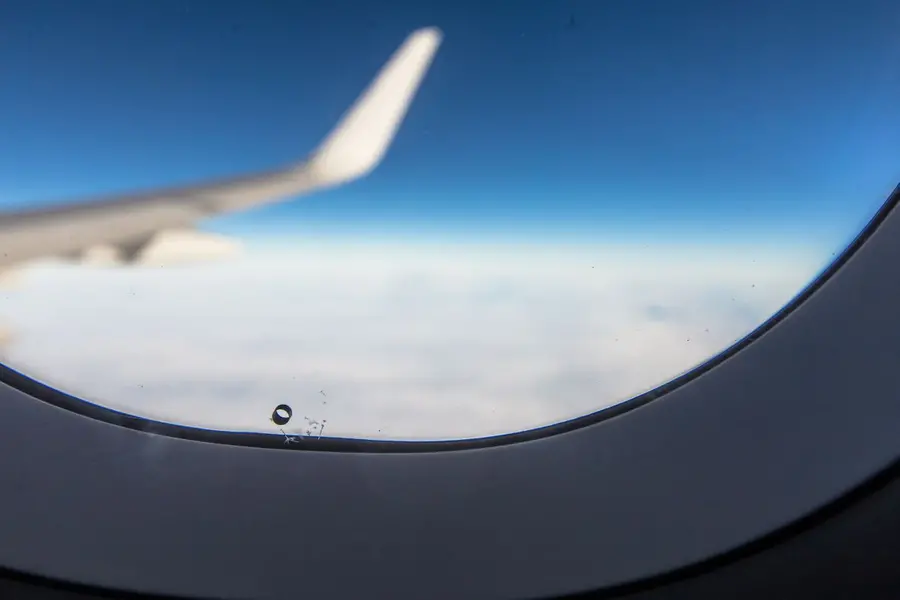
You settle into your window seat, glance outside as the aircraft climbs through the clouds, and notice something odd, a tiny pin-sized hole near the bottom of the window. It might look like a manufacturing flaw or even a crack waiting to happen.
In reality, that seemingly insignificant opening is one of the aircraft's cleverest safety features. Far from being an imperfection, the tiny hole is a carefully engineered component designed to help modern airliners withstand enormous pressure changes while keeping passengers comfortable and the view outside crystal clear.
Known in aviation as a bleed hole or breather hole, the feature has been quietly doing its job on commercial flights for decades. Its purpose illustrates how even the smallest details in aircraft design are shaped by rigorous engineering and years of safety improvements.
A window is more than just a sheet of plastic
Commercial aircraft windows are not made from a single pane. Instead, they consist of multiple layers of strong acrylic, each performing a different role.
The outer pane is the primary structural barrier that withstands the large pressure difference between the aircraft cabin and the thin atmosphere outside. Behind it sits another pane, while the innermost layer mainly protects the structural window from scratches, accidental knocks and everyday wear caused by passengers.
The tiny hole is located in the middle layer, not the outer window exposed to the sky.
According to the Smithsonian National Air and Space Museum's ‘How Things Fly’ explainer, the hole allows cabin air to pass through the middle pane so pressure is distributed correctly, ensuring the greatest stress is carried by the outermost pane rather than the layer closest to passengers.
Why pressure matters at 35,000 feet
Although passengers cruise comfortably inside a pressurised cabin, conditions outside the aircraft are dramatically different.
At cruising altitude, outside air pressure is only a fraction of what it is at sea level. Without a pressurised cabin, passengers would struggle to breathe. But maintaining a comfortable cabin environment also means aircraft windows constantly experience a significant pressure difference.
Rather than allowing this force to act equally across every layer, engineers direct most of the load onto the strongest outer pane.
According to Aerospace Global News, the bleed hole is designed so that the aircraft's outer window pane carries most of the cabin pressure, while the inner layers perform supporting and protective roles.
The tiny hole has another important job
The hole is not only about pressure.
Moisture naturally forms when warm cabin air meets the freezing temperatures outside the aircraft. Without ventilation between the window layers, condensation, or even frost, could develop, obscuring passengers' view.
The bleed hole allows moisture to escape from the space between the panes, helping prevent fogging and ice formation.
What happens if the outer pane is damaged?
Window failures on commercial aircraft are exceptionally rare, but aviation engineers still design systems with multiple layers of protection.
Should the outer pane ever become damaged, the middle pane is designed to act as a secondary safeguard while cabin pressure remains controlled long enough for the aircraft to descend safely if necessary.
The bleed hole plays a role in this arrangement by ensuring the pressure load is managed as intended throughout normal operations.
As the Smithsonian explains, the hole relieves pressure on the inner layers so that the structural demands remain concentrated where engineers expect them to be.
Another detail you may never have questioned
The tiny hole is just one example of how aircraft design often hides complex engineering behind everyday features.
Rounded airplane windows, for instance, are also a safety innovation. Earlier aircraft with square windows experienced dangerous stress concentrations around sharp corners, leading engineers to adopt rounded designs that distribute pressure more evenly.
Together with bleed holes, these features demonstrate how seemingly minor design choices can significantly improve aircraft safety.
The next time you look out of an aircraft window, that tiny opening isn't a flaw to worry about. It's quietly balancing pressure, reducing condensation and helping ensure the window performs exactly as designed.
Published: 27 Jul 2026, 05:00 pm IST
ABOUT THE AUTHOR

Related Topics
Disclaimer: Kindly avoid objectionable, derogatory, unlawful and lewd comments, while responding to reports. Such comments are punishable under cyber laws. Please keep away from personal attacks. The opinions expressed here are the personal opinions of readers and not that of Mathrubhumi.