
The last time storms of similar intensity were recorded was in October 2003, which caused power outages in Sweden and damaged electricity transformers in South Africa.
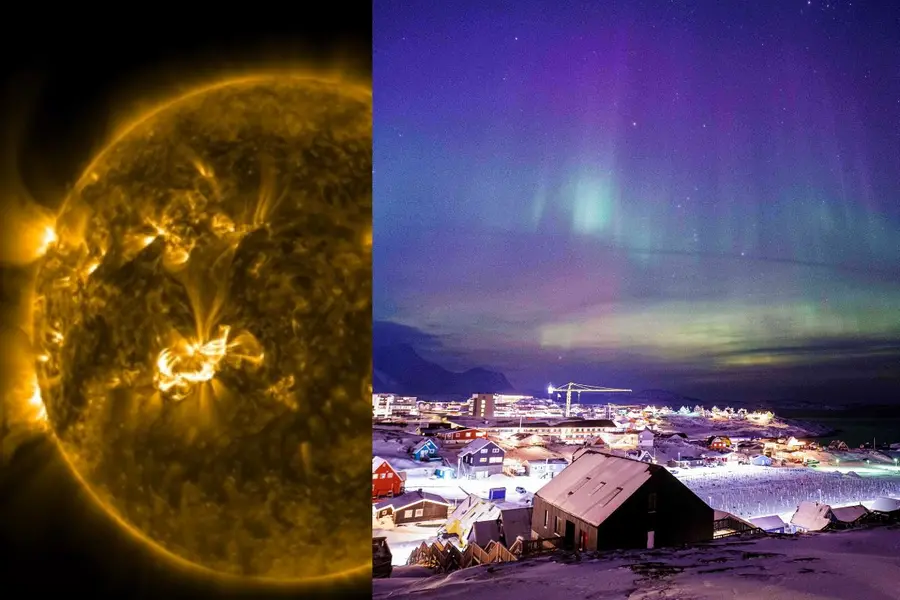
Powerful solar activity from the Sun reached Earth on Monday, triggering vivid auroral displays in parts of the world and causing temporary disruptions to GPS systems used by aircraft, according to the US National Weather Service’s Space Weather Prediction Center (SWPC).
The agency reported a severe solar radiation storm, rated four out of five on its severity scale, describing it as the strongest event of its kind in more than 20 years, as per a CNN report. Solar radiation storms involve the release of highly energetic, fast-moving charged particles that can interfere with aviation, satellite operations and space missions.
Also Read

The last time storms of similar intensity were recorded was reportedly in October 2003, during the so-called Halloween space weather events, which caused power outages in Sweden and damaged electricity transformers in South Africa.
In addition to the radiation storm, a severe geomagnetic storm reached Earth at around 2.20pm Eastern Time on Monday. SWPC warned that such storms can disrupt power grids and affect satellites used for communication and navigation.
Geomagnetic storms occur when coronal mass ejections (CMEs) — vast eruptions of plasma and magnetic fields from the Sun’s outer atmosphere — are directed towards Earth. These disturbances can significantly disrupt the planet’s magnetic field.
The latest CME was launched on Sunday and was triggered by an X-class solar flare, the most powerful category of solar flare. Scientists said it was the first major solar flare of the year.
How did the storm impact astronauts?
The storm prompted alerts to airlines, NASA and a range of US agencies, including the Federal Aviation Administration and the North American Electric Reliability Corporation. Elevated radiation levels pose risks to astronauts in low-Earth orbit, such as those aboard the International Space Station (ISS), as well as to passengers and crew on aircraft flying over polar routes. During such events, astronauts can move to better-shielded areas of the space station, a precaution taken during previous solar storms.
Such heightened solar activity often produces auroras near Earth’s poles, known as the northern and southern lights. These displays occur when charged particles collide with gases in the atmosphere, creating waves of coloured light across the sky. While the orientation of the storm limited widespread auroral displays over the United States, striking images of intense auroras were reported across parts of Europe.
Published: 21 Jan 2026, 08:42 am IST
Related Topics
Disclaimer: Kindly avoid objectionable, derogatory, unlawful and lewd comments, while responding to reports. Such comments are punishable under cyber laws. Please keep away from personal attacks. The opinions expressed here are the personal opinions of readers and not that of Mathrubhumi.