
MEA's clarification that a passport is not proof of citizenship triggers political backlash, with opposition leaders, journalists and public figures questioning how ordinary Indians can establish their citizenship.
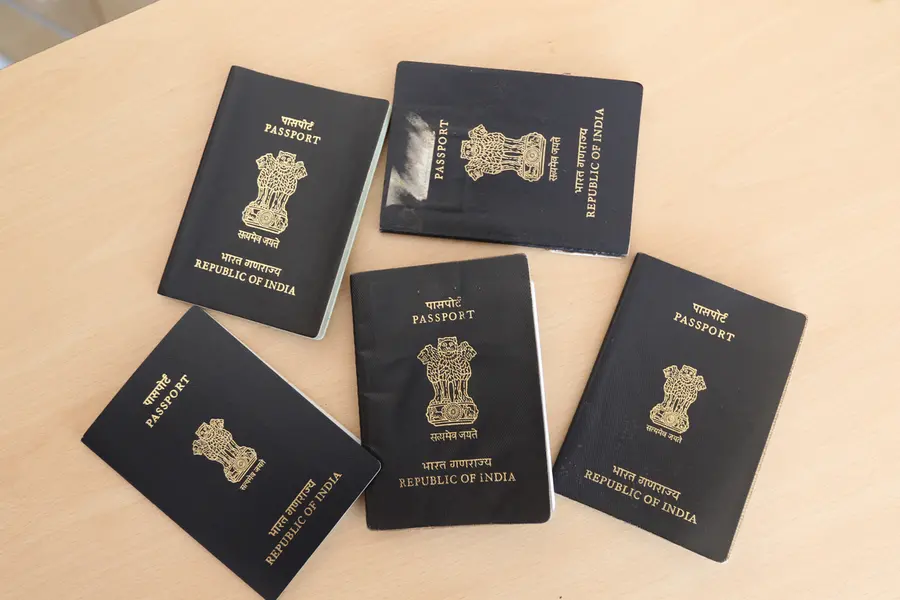
New Delhi: A clarification by the Ministry of External Affairs (MEA) that a passport is not proof of Indian citizenship has triggered a political and public debate, with opposition leaders, journalists and public figures questioning what document can conclusively establish a person's citizenship in India.
The Ministry of External Affairs has found itself at the centre of a nationwide debate after a senior official stated that a passport is a travel document and not proof of citizenship. The remark, made during Passport Seva Divas celebrations, has sparked criticism from opposition politicians, journalists and civil society voices who argue that the government has created uncertainty over one of the most fundamental questions in a democracy: how does an ordinary Indian prove citizenship?
Also Read

The controversy began after the MEA clarified that while passports are generally issued to Indian citizens and serve as strong evidence of nationality, they are not considered conclusive proof of citizenship under Indian law.
Why the government says a passport is not proof of citizenship
According to the government, citizenship is determined under the Citizenship Act, 1955, through birth, descent, registration, naturalisation or incorporation of territory. A passport, meanwhile, is issued primarily as a travel document after authorities verify an applicant's credentials.
Officials argue that because citizenship can later be challenged or a passport can be revoked if obtained through false information, the document itself cannot be treated as absolute proof of citizenship.
The government has also maintained that Aadhaar cards, PAN cards and voter identity cards are not standalone proof of citizenship.
Kapil Sibal asks: Which document proves citizenship?
The clarification immediately drew criticism from Rajya Sabha MP Kapil Sibal, who questioned the implications of the government's position.
"MEA June 24, 2026: 'A passport is a travel document, and not a document of citizenship.' Which document then is proof of citizenship?" Sibal wrote on social media.
He further warned that such interpretations could potentially affect voting rights if citizenship comes under question.
"BLO can doubt my citizenship. Deprive me of my vote. Result BJP wins the election. Over to Supreme Court!"
Rajdeep Sardesai raises concerns
Journalist Rajdeep Sardesai also criticised the government's stance, pointing to the apparent contradiction between widely used identity documents and citizenship verification.
"I have a VOTER ID card, but NO, it is not proof of citizenship. I have an AADHAR card but NO, it is not proof of citizenship. I have a PAN Card, but NO, it is not proof of citizenship. I have a PASSPORT but NO, it is not proof of citizenship," he wrote.
"So who will give me a CITIZENSHIP CERTIFICATE? A govt bureaucrat? My question is simple: is the problem with the citizen, or with the Mai Baap State itself?"
Javed Akhtar calls the argument 'absurd'
Veteran lyricist and screenwriter Javed Akhtar also questioned the government's reasoning.
"The ministry of external affairs says that a passport is a document for travel, not proof of citizenship. Really?" he wrote.
"So are they providing this travel document to some people without being totally convinced that this person is an Indian citizen? It is absurd."
His remarks quickly gained attention online, with many users echoing concerns about the practical implications of the government's position.
Opposition links issue to citizenship debates
Nationalist Congress Party spokesperson Anish Gawande argued that the controversy reflects broader concerns surrounding citizenship verification and discussions around a potential National Register of Citizens (NRC).
"Yes, a passport is not proof of citizenship. But then, what is?" he wrote.
Gawande claimed that many Indians may struggle to produce extensive documentation proving not only their own birth but also that of previous generations.
He further argued that such requirements could disproportionately affect marginalised communities, though the government has repeatedly stated that it currently has no plans to conduct a nationwide NRC exercise.
What document actually proves citizenship?
Legally, the only document that explicitly certifies citizenship is a Citizenship Certificate issued under the Citizenship Act. However, such certificates are generally issued only to individuals who acquire citizenship through registration or naturalisation.
Most Indians are citizens by birth and therefore do not possess a separate citizenship certificate.
As a result, courts typically examine a combination of records when citizenship is disputed. These may include birth certificates, passports, school records, electoral records, parental documents and residence records.
Rather than relying on a single document, authorities and courts usually assess the overall evidence available in each case.
Why the debate matters
The controversy has highlighted a long-standing reality in India: despite more than a billion citizens, the country does not issue a universal citizenship document to every citizen.
For decades, citizenship has largely been presumed unless challenged. However, growing debates around voter rolls, migration and citizenship verification have brought renewed attention to how citizenship is established under Indian law.
The MEA's clarification may be legally accurate, but the strong reactions from politicians, journalists and public figures suggest that many Indians remain uneasy about what would happen if their citizenship were ever formally questioned.
Published: 25 Jun 2026, 09:56 am IST
Related Topics
Disclaimer: Kindly avoid objectionable, derogatory, unlawful and lewd comments, while responding to reports. Such comments are punishable under cyber laws. Please keep away from personal attacks. The opinions expressed here are the personal opinions of readers and not that of Mathrubhumi.