
MEA's passport clarification raises fresh questions over which documents can legally establish Indian citizenship.
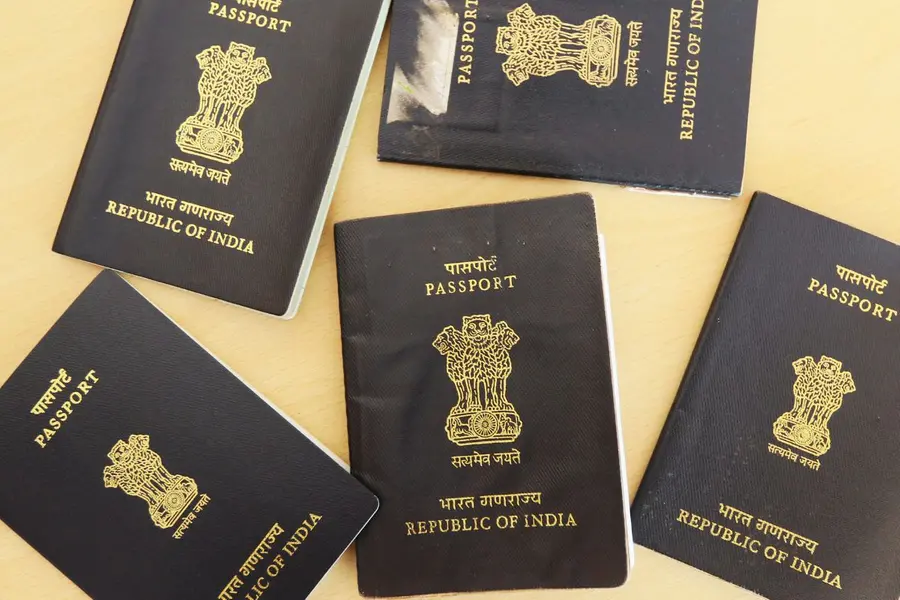
The Union government's clarification that an Indian passport is not conclusive proof of citizenship has reignited a crucial legal debate over what documents actually establish a person's citizenship in India.
The issue came into focus after the Ministry of External Affairs (MEA) stated that while a passport is issued only to Indian citizens, it cannot be treated as the final or absolute proof of citizenship.
The clarification has sparked widespread confusion, particularly against the backdrop of recent electoral roll revision exercises and ongoing debates over citizenship verification.
The statement appears surprising because the Passports Act, 1967, requires authorities to issue passports only after satisfying themselves that an applicant is an Indian citizen.
The law also mandates rejection of passport applications if the applicant is found not to be a citizen.
However, legal experts point out that there is a distinction between a document being strong evidence of citizenship and being conclusive proof of citizenship.
The government can still revoke or impound a passport if it later discovers that citizenship was obtained through fraud, concealment or misrepresentation.
The clarification also echoes the Centre's stand taken in Parliament in 2020, when the Ministry of Home Affairs said no single document, including Aadhaar, passport, voter ID, PAN card or birth certificate, can by itself be treated as definitive proof of Indian citizenship.
Instead, citizenship is determined under the provisions of the Citizenship Act, 1955, which allows citizenship through birth, descent, registration, naturalisation, or incorporation of territory.
Unlike several countries, India does not issue a universal citizenship certificate to every citizen at birth.
As a result, authorities often rely on multiple records to establish an individual's citizenship, depending on how that citizenship was acquired.
Which documents can help establish citizenship?
No single document is universally accepted as conclusive proof. Instead, authorities may consider one or more of the following:
- Birth certificate – Can establish birth in India and may support a citizenship claim, subject to the applicable citizenship laws.
- Citizenship certificate – Issued to persons who acquire citizenship through registration or naturalisation under the Citizenship Act.
- Parents' citizenship records – Often relied upon in cases where citizenship is claimed by descent.
- Voter ID card – Establishes electoral registration, but not citizenship by itself.
- School and educational records – May help establish identity, age, place of birth and family lineage.
- Residence and lineage documents – Land records, family records and other official documents may be considered alongside other evidence.
- Passport – Strong evidence that the government recognised the holder as an Indian citizen when it was issued, but not absolute proof.
Documents that do not prove citizenship
Several commonly used identity documents are not treated as proof of citizenship:
- Aadhaar card – Confirms identity and residence, not citizenship.
- PAN card – A tax identification document.
- Ration card – Indicates eligibility under welfare schemes.
- Voter ID – Shows inclusion in electoral rolls but is not conclusive proof of citizenship.
Ultimately, Indian courts and government authorities generally examine the totality of documents and circumstances, rather than relying on any single record.
While a passport remains one of the strongest indicators that the government has accepted a person's claim to citizenship, the latest clarification underscores that citizenship in India is ultimately determined under the Constitution and the Citizenship Act: Not by possession of any one document alone.
Published: 25 Jun 2026, 07:55 am IST
Related Topics
Disclaimer: Kindly avoid objectionable, derogatory, unlawful and lewd comments, while responding to reports. Such comments are punishable under cyber laws. Please keep away from personal attacks. The opinions expressed here are the personal opinions of readers and not that of Mathrubhumi.
