
PM Modi has announced a high-powered task force led by Infosys co-founder Nandan Nilekani to recommend technology-driven reforms for NTA examinations following paper leak concerns and student protests.
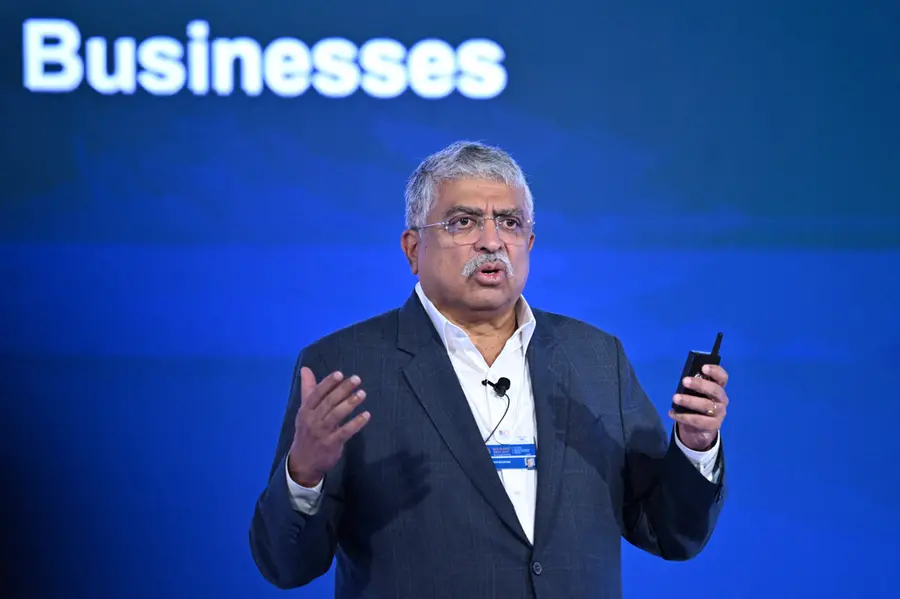
Prime Minister Narendra Modi has appointed Infosys co-founder Nandan Nilekani to head a high-powered task force on examination reforms, placing one of India's best-known technology leaders at the centre of efforts to overhaul the National Testing Agency (NTA) examination system after months of controversy over paper leaks and exam irregularities.
The announcement came through a video shared by the Prime Minister on social media, where he said the government had constituted the panel to recommend measures for making examinations more transparent, secure and technology-driven. The task force will also suggest structural reforms aimed at strengthening the credibility of competitive examinations.
Also Read

Who is Nandan Nilekani?
Nandan Nilekani is an Indian entrepreneur, technologist and public policy expert best known for co-founding Infosys in 1981 with N. R. Narayana Murthy and six other founders. He served as the company's Chief Executive Officer from 2002 to 2007 and returned as its Non-Executive Chairman in 2017.
Born in Bengaluru in 1955, Nilekani studied Electrical Engineering at the Indian Institute of Technology (IIT) Bombay before beginning his career at Patni Computer Systems. Over the past four decades, he has become one of India's most influential figures in technology and digital governance.
The architect of Aadhaar
Nilekani is widely recognised as the founding chairman of the Unique Identification Authority of India (UIDAI), where he led the creation and rollout of Aadhaar, the world's largest biometric identity programme.
Launched in 2009, Aadhaar became a key part of India's digital infrastructure and is now widely used for identity verification, welfare delivery, banking and other public services. He has also supported the development of several digital public infrastructure initiatives, including frameworks related to digital payments and open digital networks.
Political background
Although Nilekani entered electoral politics in 2014 as the Congress candidate from Bengaluru South, he lost the Lok Sabha election and stepped away from active politics soon afterwards.
Despite that, successive governments have continued to seek his expertise on technology and digital transformation. Over the years, he has contributed to discussions on digital payments, governance reforms and public digital infrastructure.
Why has he been chosen?
The government has tasked Nilekani with leading a multidisciplinary panel to recommend reforms that can make examinations more reliable, transparent and resistant to malpractice.
The task force includes former ISRO chairman S. Somanath, former Intelligence Bureau director Tapan Deka, IIT Madras Director V. Kamakoti, former Education Secretary Anita Karwal and logistics expert Amrit Lal Meena.
According to the Prime Minister, the panel will examine how technology can be used to improve question paper security, candidate verification, evaluation systems and the overall conduct of examinations while recommending broader structural reforms.
Background to the announcement
The announcement comes after months of public concern over alleged paper leaks and irregularities in competitive examinations.
The issue sparked nationwide student protests demanding greater transparency and accountability. The Cockroach Janta Party (CJP) led a 36-day protest at Delhi's Jantar Mantar, calling for reforms and the resignation of Education Minister Dharmendra Pradhan. The agitation ended after Pradhan resigned and the Centre assured protesters that it would act on several of their demands.
Alongside the Nilekani-led task force, the government has also proposed amendments to strengthen anti-paper leak laws, including provisions for fast-track courts and stricter penalties for those involved in examination malpractice.
The task force is expected to submit recommendations on long-term technological and institutional reforms aimed at restoring confidence in India's examination system.
Published: 26 Jul 2026, 08:34 pm IST
Disclaimer: Kindly avoid objectionable, derogatory, unlawful and lewd comments, while responding to reports. Such comments are punishable under cyber laws. Please keep away from personal attacks. The opinions expressed here are the personal opinions of readers and not that of Mathrubhumi.