
The demand has placed Pakistan in a difficult position due to its decades-old policy of refusing recognition of Israel without a Palestinian state
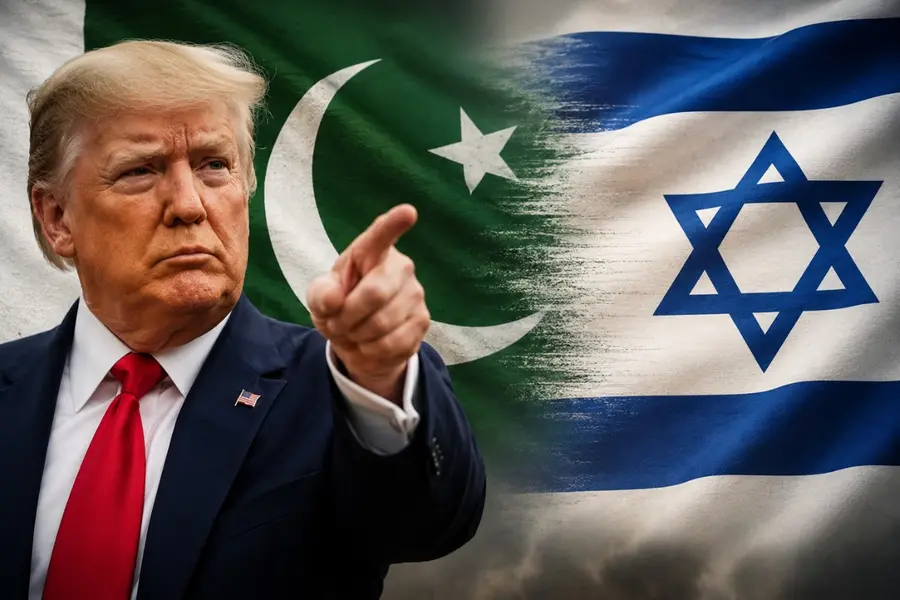
There are moments in world politics when one single demand can put an entire country in a very tight spot. This is exactly what has happened now. On Monday, May 25, US President Donald Trump made a demand that has created a serious tug-of-war for many Muslim nations, but for Pakistan especially, it has become a painful test between what America wants and what its own people will ever accept.
What exactly did Trump say?
Also Read

In a long post on his social media platform Truth Social, Trump said it was now compulsory for countries like Saudi Arabia, Qatar, Pakistan, Turkey, Egypt, and Jordan to sign the Abraham Accords together as part of a wider peace deal with Iran. In simple words, he wants all these nations to officially make friends with Israel at the same time and accept it as a normal country.
Trump said the process should begin with Saudi Arabia and Qatar signing first, and then the other countries joining one by one. He also gave a warning. Any country that refuses to sign, he said, should be kept out of the deal completely, because refusing would show "bad intentions." This was not a casual remark. The post came just two days after Trump held a phone call on May 23 with the leaders of all eight countries. According to the US news outlet Axios, this sudden demand actually shocked several world leaders, who were not expecting it.
So what are these Abraham Accords?
To understand the worry, we must first understand the agreement. The Abraham Accords were peace deals arranged by Trump back in 2020, during his first term as President. Under these deals, certain Arab and Muslim countries officially recognised Israel and started full diplomatic relations with it, meaning embassies, trade, and open friendship. The UAE and Bahrain signed first, and later Morocco and Sudan joined too.
Now Trump wants to make this group much bigger by pulling in many more countries. But here lies the problem. Most of the countries he named have always insisted on one condition first, a two-state solution. This means an independent country for Palestinians must exist side by side with Israel before they agree to anything. Interestingly, in his recent post, Trump did not even mention Israel directly, nor did he talk about a future Palestinian state or troubled areas like Gaza and the West Bank. And Israeli Prime Minister Benjamin Netanyahu has openly said he is against the idea of an independent Palestinian state.
Why Israel is the heart of the problem
Israel sits right at the centre of this entire mess. After fighting broke out in February, Israel joined hands with the US in carrying out attacks on Iran. Since then, its role has stayed extremely important, both in the war and in every conversation about bringing peace.
Even within America, not everyone agreed. In March, Joe Kent, the head of the US National Counterterrorism Center and a man appointed by Trump himself, resigned in protest. In his resignation letter, he plainly said Iran was not an immediate danger to America, and claimed the war had actually started because of pressure from Israel and its powerful supporters inside the United States. For many years, Israel has seen Iran as a deadly threat to its very survival. After Israel's military actions in Gaza caused thousands of deaths, it openly pushed for tougher action against Iran. Later, the Gaza situation moved toward a "reconstruction" plan to rebuild the badly damaged areas, reportedly arranged by Trump and a US-backed group called the Board of Peace.
Where does Pakistan stand in all this?
Here is where Pakistan's difficult position becomes clear. Pakistan was one of the key countries that signed the Board of Peace agreement, and it has also been acting as a mediator in talks with Iran. Trump has praised Prime Minister Shehbaz Sharif and Army chief Asim Munir several times, saying they helped arrange the ceasefire.
But among all eight countries, Pakistan faces the hardest dilemma. The reason is history. Pakistan has never recognised Israel in its entire 78-year existence. This stand goes all the way back to the country's founder, Muhammad Ali Jinnah, who strongly opposed the UN plan to divide Palestine in 1947-48. Since then, every single government, whether elected, military, or mixed, has followed the same policy without breaking it.
The pressure, however, is not new. After the first Abraham Accords in 2020, former Prime Minister Imran Khan, who is now in jail, said America had been pressuring him on this issue. In 2021, he openly admitted Pakistan was being pushed by the US and others to improve ties with Israel, but he said his conscience would never allow it because of the atrocities against Palestinians. What is remarkable is that Shehbaz Sharif, his bitter political rival, agreed with him on this one point. Even before becoming PM, Shehbaz had strongly attacked Netanyahu during Israel's 2021 Gaza operations, and as Opposition Leader he urged Muslim nations to protect the Palestinians.
More recently, Pakistan's Foreign Minister Ishaq Dar, after Army chief Munir's White House visit, repeated that Pakistan would not recognise Israel until a two-state solution is accepted. He insisted the 70-year-old policy had not changed at all. In January, Foreign Office spokesman Tahir Andrabi clarified that joining the Board of Peace had nothing to do with the Abraham Accords, and that Pakistan would not join them. As recently as May 24, Pakistani officials again rejected reports that Islamabad was planning to sign.
So Pakistan is balancing on a tightrope. On Iran, it has criticised the US and Israeli attacks, yet it remains one of Trump's favourite mediators. Trump has even called Pakistani leaders "incredible" and named Asim Munir his "favorite field marshal."
What about the other countries?
Pakistan's position closely matches Saudi Arabia's, as both refuse to recognise Israel without a Palestinian state, and the two share a major defence agreement. Among the eight named, the UAE and Bahrain are already in the Accords, while Egypt and Jordan recognised Israel decades ago. India, Pakistan's neighbour since the 1947 Partition, recognised Israel long back while still supporting a two-state solution, though PM Modi has lately faced criticism for moving closer to Israel.
Reports say Trump had already pushed Saudi Crown Prince Mohammed bin Salman to join during a tense Oval Office meeting last November. In Turkey, a court even charged Netanyahu and 35 officials over blocking a Gaza aid flotilla, and President Erdoğan has called Israel a "blood-stained genocide network." Turkey actually recognised Israel way back in 1949, but ties broke badly in 2010 after Israeli commandos raided a ship and killed nine Turkish activists. Trump has also floated the idea of Iran itself joining, but Iran has shown zero interest.
The final question
For Pakistan, the choice is brutal. Bow to global pressure and break a promise older than the country's leaders, or stand firm and risk angering a powerful friend. For now, history, faith, and public emotion are winning. But the pressure is only growing.
(Girish Linganna is an award-winning science communicator and a Defence, Aerospace & Geopolitical Analyst. He is the Managing Director of ADD Engineering Components India Pvt. Ltd., a subsidiary of ADD Engineering GmbH, Germany.)
Published: 26 May 2026, 06:26 pm IST
Related Topics
Disclaimer: Kindly avoid objectionable, derogatory, unlawful and lewd comments, while responding to reports. Such comments are punishable under cyber laws. Please keep away from personal attacks. The opinions expressed here are the personal opinions of readers and not that of Mathrubhumi.