
While Wall Street remains calm, betting on a swift reopening to avoid economic collapse, both nations are digging in.
Back in 1967, a war broke out between Egypt and Israel, and the famous Suez Canal was suddenly shut down. At that time, 15 ships got trapped inside it. The sailors dropped their anchors and waited, thinking the fighting would stop soon. The war itself ended in just six days and was later called the Six-Day War. But to everyone's shock, the canal stayed closed for eight long years. When the ships were finally allowed to leave in 1975, only two were still fit to sail. The rest had rusted so badly that they earned a sad nickname — the "Yellow Fleet."
History does not repeat in exactly the same way, but it often returns in a new form. So just imagine if something similar happened in the Strait of Hormuz. Very few people seriously think about such a frightening possibility, and honestly, even I do not see it as the most likely outcome. But it has now been almost 90 days since the US-Israel conflict with Iran nearly closed off this vital oil and gas route. That alone is reason enough to imagine even the unthinkable — because such things have happened before. You may call it a kind of historical science fiction.
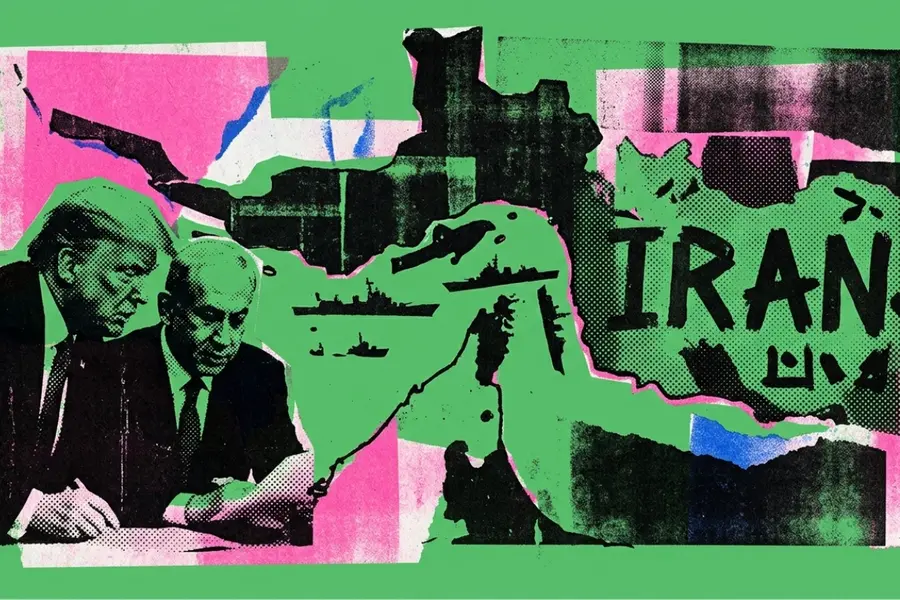
Right now, the US and Iran are working to de-escalate, with Pakistan playing mediator. Both sides want to reopen the Strait of Hormuz — one of the world's most critical arteries for oil and gas. Yet even a simple one-page agreement won't instantly restore safety. Deep mistrust and unresolved tensions could linger for months.
This is exactly why the UAE is quietly preparing for the worst. It has sped up plans to build a second pipeline that can carry oil without touching the Strait, hoping to start by 2027. While diplomats talk of peace, Abu Dhabi is clearly betting that this route may stay risky for much longer than most people assume.
Yet most experts in the oil and financial world are not panicking. As a recent Bloomberg Opinion column noted, many believe the Strait will reopen by next month, or by July at the latest. Their logic is simple — if it stays shut too long, prices will explode and hurt the entire global economy. As the American economist Herbert Stein once said, if something cannot continue forever, it will eventually stop. Wall Street firmly believes the same about Hormuz.
But here lies the real problem — the closure has not yet caused enough pain to force a compromise. For US President Donald Trump, the war has stayed surprisingly cheap in the one area he watches most closely, the stock market. The S&P 500, which mirrors the health of America's biggest companies, is near its record high and has actually risen almost 10 per cent since the war began. Petrol prices have climbed, but they are still below the 2022 peaks, and the economy is growing strongly. With so little pain at home, Washington feels no urgency to give in.
Iran, on the other side, is hurting far more but still refuses to bend. Unemployment is rising, food is getting costlier by the day, and the currency is sliding fast. Because of the US Navy blockade, Iran has even been forced to cut its own oil production. And yet, history has shown again and again that the country can endure crushing pressure, especially when it feels its very survival is at stake. So both sides simply dig in and wait, each quietly hoping the other will break first.
Beneath this calm, however, a slow-burning crisis is building. The world has somehow absorbed the loss of nearly 20 million barrels of oil that normally pass through the Strait. Luckily, the supply was already high before the war. Saudi Arabia and the UAE used bypass pipelines, rich nations released emergency reserves, China cut its imports, and poorer countries reduced fuel use as prices rose. But these cushions are not endless — every passing day eats into them.
If the Strait stays shut much longer, governments may impose emergency fuel limits, or prices may rise so high that people simply stop buying. That could drag the world into a painful slowdown, much like the oil shocks of 1973 and 1979. New pipelines and fresh oil sources will eventually appear, but they take years to build. Qatar is especially exposed, as it has almost no other way to export its natural gas except through Hormuz.
The very idea of a prolonged closure feels too frightening for most to seriously consider. That is why a temporary, imperfect deal remains the most probable outcome — everyone grasps the catastrophic cost of letting it drag on. But the Yellow Fleet stands as a quiet warning: sometimes the unthinkable slowly becomes the new normal. While hoping for the best, it pays to keep imagining the worst.
(Girish Linganna is an award-winning science communicator and a Defence, Aerospace & Geopolitical Analyst. He is the Managing Director of ADD Engineering Components India Pvt. Ltd., a subsidiary of ADD Engineering GmbH, Germany.)
Published: 23 May 2026, 09:58 pm IST
Related Topics
Disclaimer: Kindly avoid objectionable, derogatory, unlawful and lewd comments, while responding to reports. Such comments are punishable under cyber laws. Please keep away from personal attacks. The opinions expressed here are the personal opinions of readers and not that of Mathrubhumi.
