
As the LUH remains idle, recent accidents highlight the urgent need for modern replacements.
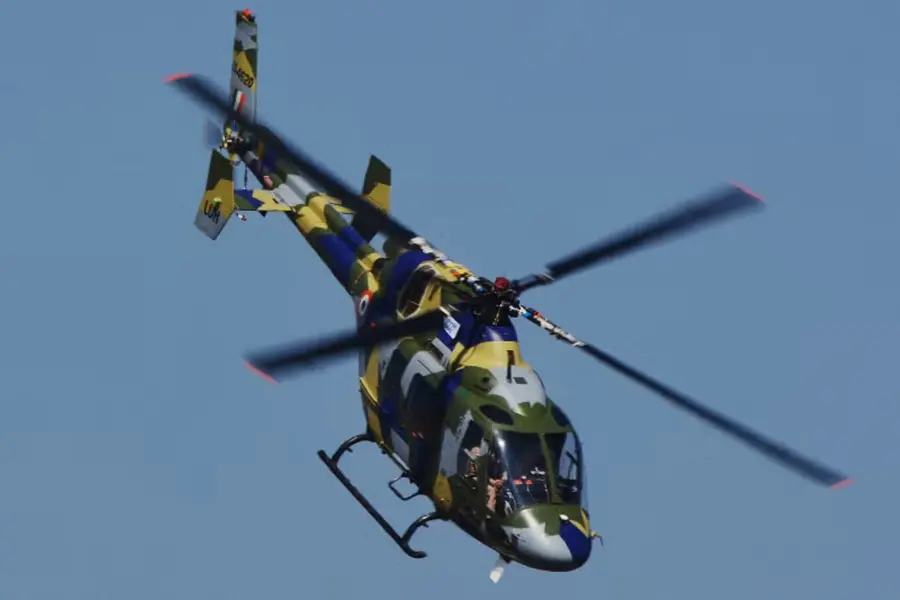
India's own Light Utility Helicopter, or LUH, built by Hindustan Aeronautics Limited (HAL), is facing serious trouble as of May 2026. This helicopter was designed to replace the ageing Cheetah and Chetak helicopters that our soldiers and pilots have relied on for years in the high mountains. These old machines have served for decades, but they badly need a modern replacement for the toughest jobs in the Himalayas, where the thin mountain air makes flying risky and very difficult.
The LUH has not flown even once in nearly three months. Over the past year, it has barely left the ground at all. This worries everyone, because the Indian Army still has to depend on decades-old helicopters for vital missions near the borders. Just days ago, on May 20, an Indian Army Cheetah helicopter carrying a Major General crash-landed in the high-altitude Tangste area of Ladakh. The officers escaped with only minor injuries, but the incident is a reminder of the real dangers our pilots face every single day—flying through narrow valleys where there is no room for even a small mistake.
ALSO READ: Tejas Mark 1A: HAL's strong push for trust
The deadlock comes from a standoff between three sides: HAL (the maker), the certification bodies that approve aircraft for safety (CEMILAC and RCMA), and the Indian Army (the buyer). They cannot agree on certain key safety standards. In particular, they disagree over three things: how precisely the helicopter's automatic flight system (autopilot) must perform to pass approval; the technology used to reduce the loud noise the helicopter makes; and how steady the aircraft stays during emergency "autorotation" tests. (Autorotation is a manoeuvre where, if the engine fails, the pilot must safely glide the helicopter down using only its freely spinning rotor blades.)
To understand this in everyday terms, think of building a new family car. The company builds the car with new parts, but the safety inspector and the buyer have different opinions about the brakes, the engine power, and how the car should handle on hilly roads. Until all three sides agree, the talks can get stuck—and the car simply stays parked in the garage. Some technical disagreement is normal in any aviation project anywhere in the world. But in India, these disagreements too often drag on and turn into long, frustrating delays.
ALSO READ: 5 reasons mega Rafale fighter aircraft buy will reshape India’s air power
Meanwhile, private companies are moving quickly. Airbus and Tata Advanced Systems Limited (TASL) have set up a Final Assembly Line for the H125 helicopter in Vemagal, Karnataka. This factory will build both civilian and military versions of the helicopter, including the military H125M, making it a genuine alternative under the "Make in India" programme. If the LUH stays stuck, the military may turn to short-term options instead—such as leasing helicopters from abroad or buying from private firms—just to fill the gap.
Analysts warn that if the delay continues, HAL could lose important future orders. The Army and the Indian Air Force together need roughly 400 light utility helicopters, and 187 of these have been specifically promised to the LUH. This is one of India's biggest home-grown (indigenous) defence projects, and its slow progress raises serious questions about a programme that matters enormously to the country.
But let us look at the full picture, fairly and with some understanding. Developing any new helicopter is hard work—and the engineering is only half the battle. The aircraft must be safe, strong enough for high altitudes, and able to meet strict military requirements. HAL has carried out good high-altitude trials, including at Siachen, which show real promise. Many experts believe these problems are normal for a new project and can be solved with more discussion.
ALSO READ: India's AMCA Fighter Jet Project
International examples help put this in perspective. Boeing, the major American company, faced long certification delays with its 737 MAX and 777X aircraft because of safety and technical disagreements with regulators. Airbus, too, has had models that took extra years to win approval. Even these global giants—with all their experience and money—run into the same kind of problems. Building flying machines that carry people safely in every condition is never easy.
The human cost of this deadlock is real and serious. Our soldiers need dependable machines that can fly in thin air, carry heavy loads, and operate safely. Everyone involved—HAL, the Army, and the certification agencies—must work together, and work faster. Technical arguments are normal, but a long paralysis hurts both the nation and our brave troops.
The LUH story captures both the challenges and the dreams of Atmanirbhar Bharat (a self-reliant India). With patience and teamwork, this homegrown helicopter can still succeed and make India proud in the skies. Our defence future depends on turning today's delays into lessons that lead to quicker success next time.
(Girish Linganna is an award-winning science communicator and a Defence, Aerospace & Geopolitical Analyst. He is the Managing Director of ADD Engineering Components India Pvt. Ltd., a subsidiary of ADD Engineering GmbH, Germany.)
Published: 26 May 2026, 01:12 pm IST
Related Topics
Disclaimer: Kindly avoid objectionable, derogatory, unlawful and lewd comments, while responding to reports. Such comments are punishable under cyber laws. Please keep away from personal attacks. The opinions expressed here are the personal opinions of readers and not that of Mathrubhumi.
