
A joint defence agreement between Turkiye, Saudi Arabia and Pakistan has revived talk of an “Islamic NATO” in West Asia. For India, the challenge is less about immediate military threats and more about managing Gulf diplomacy, protecting energy and diaspora interests, and accelerating defence self-reliance to ensure no external alliance can dictate its strategic choices.
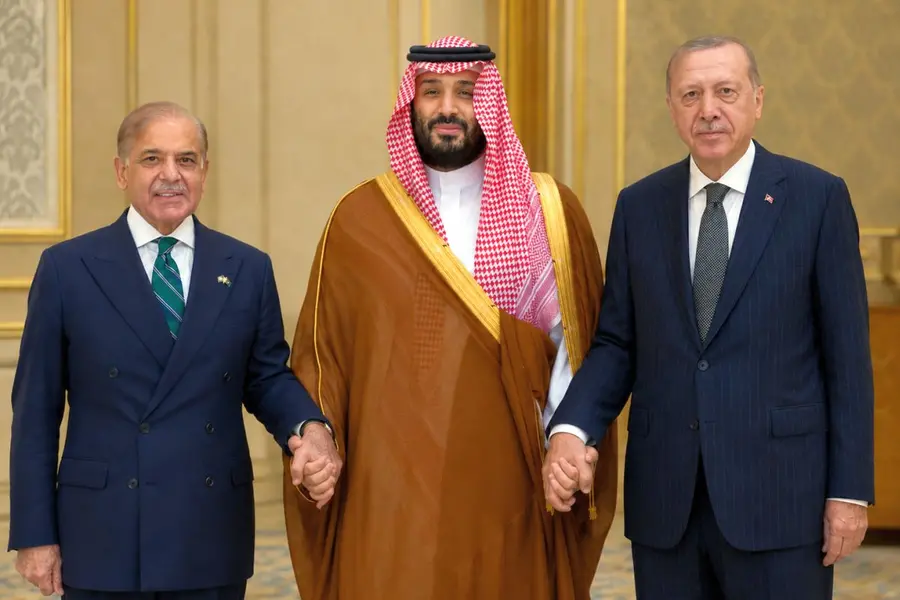
Something big is quietly taking shape in West Asia. Turkiye, Saudi Arabia and Pakistan signed a joint defence agreement on Friday. With this, three influential Muslim-majority nations will formally tie their security interests together. For India, which sits right next door to one of them, this is not distant news at all.
Strategic experts have started calling this idea an "Islamic NATO". The term is informal. NATO, or the North Atlantic Treaty Organisation, is a Western military alliance where an attack on one member is treated as an attack on all. So the phrase simply means a possible defence grouping of major Muslim-majority countries built on a similar promise of mutual protection. No such formal bloc exists today, but the talk has clearly grown louder.
Pakistan's Defence Minister Khawaja Asif had hinted at this earlier. Speaking to Pakistani outlet Hum News in May, he said the existing defence and economic cooperation between Pakistan and Saudi Arabia could be widened to include countries like Qatar and Turkiye, creating a bigger regional security partnership.
He explained that talks were at different stages of progress, with some parts already finalised and others still under discussion. The arrangement, he said, is mainly meant for the future, though it also applies to the present.
Asif added that if Qatar and Turkiye join the existing Saudi Arabia-Pakistan agreement, it would be welcome, because such cooperation within the region could reduce dependence on powers outside it. At the same time, he pointed out that countries will always depend on one another, since all nations are connected economically and in other ways. He insisted the pact is not aimed against any country and is meant to protect peace in their own region.
The foundation was laid last year. Pakistan and Saudi Arabia signed a "Strategic Mutual Defence Agreement" during Prime Minister Shehbaz Sharif's state visit to Riyadh, held at the invitation of Crown Prince and Prime Minister Mohammed bin Salman bin Abdulaziz Al Saud.
In plain terms, "mutual" means both sides promise the same thing: an attack on either country is treated as an attack on both, so each is bound to help the other. The joint statement noted that the two nations have shared a close partnership for nearly eight decades, built on brotherly ties, Islamic unity, common strategic interests and strong defence cooperation.
India's reaction was measured but firm. Ministry of External Affairs spokesperson Randhir Jaiswal said New Delhi had seen the reports and was aware that the two countries had been considering such a move, which formally confirms what India described as a long-standing arrangement between them.
He said India would carefully study its impact on national security and on regional and global stability, adding that the Government remains committed to protecting India's interests in every area.
So what does this mean for India? The most direct concern is Pakistan. If a future conflict breaks out, a mutual defence clause could, in theory, pull other signatories into the picture.
In practice, most analysts believe Riyadh and Ankara would avoid sending soldiers into a South Asian conflict. But even without troops, such a pact gives Pakistan diplomatic cover -- meaning powerful friends who speak for it at the United Nations and other global forums, soften criticism, and make isolating Pakistan harder. It can also mean financial help during a crisis.
Turkiye's presence adds another layer. Ankara has openly backed Pakistan's position on Kashmir at international forums and supplies it with drones, warships and other military hardware. A formal alliance could deepen that flow of technology and training.
India, in response, has built closer ties with Greece, Cyprus and Armenia. These three matter because each has serious disputes with Turkiye -- Greece over sea boundaries, Cyprus over the island's division, and Armenia over Ankara's support to rival Azerbaijan. Befriending them gives India counterweights -- friendly nations that balance a rival's influence, so pressure from one side is answered from another.
Saudi Arabia, however, is a different story. Its relationship with India has grown strong. Millions of Indians live and work in the Gulf, sending home billions of dollars every year, and Saudi Arabia remains a major supplier of India's crude oil. Riyadh has invested in Indian infrastructure and energy projects and has been careful not to take sides in India-Pakistan disputes. Its old friendship with Islamabad is real, but so is its growing economic stake in a stable India.
The lesson is simple. Alliances built on shared faith or history do not automatically override trade, energy and jobs. India's answer will likely be quiet diplomacy, deeper Gulf engagement, and self-reliance in defence — building weapons at home so that no foreign alliance can control India's choices in a crisis.
The author is an award-winning science communicator and a Defence, Aerospace & Geopolitical Analyst.
Published: 07 Aug 2026, 05:11 pm IST
Disclaimer: Kindly avoid objectionable, derogatory, unlawful and lewd comments, while responding to reports. Such comments are punishable under cyber laws. Please keep away from personal attacks. The opinions expressed here are the personal opinions of readers and not that of Mathrubhumi.
