
Babar Ali tells the lived story behind building a free school at nine at the Mathrubhumi International Festival of Letters in Thiruvananthapuram
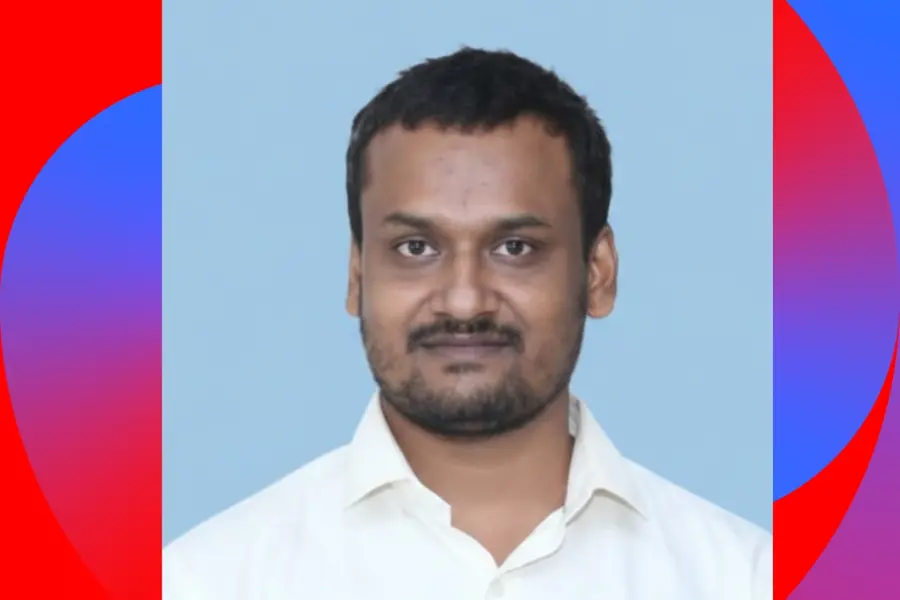
At the seventh edition of the Mathrubhumi International Festival of Letters (MBIFL), a session titled ‘How I Built a School at 9’ unfolded as a quiet yet powerful reminder that social change does not always begin with grand plans, but with empathy.
The speaker, Babar Ali—educator, social interpreter and public speaker—spoke not as a prodigy, but as a child shaped by what he saw around him in Murshidabad, a border district of West Bengal. Moderated by educationist and podcast host Anjali Rajan Dileep, the conversation moved gently between memory, struggle and conviction.
Also Read

Murshidabad, Ali reminded the audience, was once the capital of Bengal, Bihar and Odisha, but is today marked by poverty, migration and generational exclusion from education. “After Murshidabad, the nearest country is Bangladesh,” he said, placing his childhood within a geography both historically rich and socially fragile.
The idea of starting a school came to him when he was nine, during his daily walk back from a school nearly ten kilometres away. “I saw children of my age working,” he recalled. “Girls were inside homes. Boys were in fields, shops and garbage yards. At that age, two things grew inside me — love and realisation.”
Love, he explained, was the desire to share what he was learning. Realisation came from understanding that his own access to education was a rare privilege, made possible by a father who, despite being a school dropout, believed deeply in learning.
The first class began with one student — his younger sister — under a guava tree in the backyard of his home in 2002. Teaching was often done in secrecy, sometimes even in a nearby forest, out of fear that parents would object. Resistance followed quickly. “Many people said I would spoil my own education,” Ali said. “There was jealousy, criticism and even religious bias — especially when it came to educating girls.”
Support, however, arrived in quiet but decisive ways. His mother stood by him. A retired college principal convinced his father that “exchange of knowledge helps one learn better”. A schoolteacher, puzzled by Ali’s repeated requests for broken chalk, visited his home one day and returned with a full box after learning that the chalk was meant for children who had never held it before.
“These gestures changed everything,” Ali said. “Whenever young people want to do something positive, society — especially educators — must support them.”
Books, he added, became his silent mentors. A visit to the Ramakrishna Mission brought him a copy of Swami Vivekananda’s writings. “There was one line — ‘service to man is service to God’,” he recalled. “I did not understand it immediately, but it stayed with me. Books are our greatest friends.”
Balancing life as a student and a headmaster demanded discipline beyond his years. During lunch breaks at his own school, Ali would stand outside the office, watching how registers were maintained and how administration worked. “It was never a game,” he said. “It needed calculation, dedication and seriousness.”
With no funds or infrastructure, innovation was born out of necessity. Rice was collected from students’ homes, sold for a small amount, and used to buy alphabet books. When banks initially refused to open an account for a minor headmaster, special permission was eventually granted, making Ali one of the youngest people in the country to operate a school bank account.
“Whatever I observed in my own school, I tried to replicate in mine,” he said.
In 2009, the BBC recognised him as the world’s youngest headmaster. He was 16 then. Yet Ali remained cautious about instant success. Speaking to young people facing rejection, he said, “Do not expect results in a day or a year. Nothing can stand against determination, honesty and love.”
He repeatedly stressed that education must go beyond examinations. “Education is not just information,” he said, drawing inspiration from Tagore’s Shantiniketan and nature-based learning. Anand Shiksha Niketan, he explained, was designed as a space where first-generation learners are met with empathy, not pressure.
Today, the school educates children up to Class 10 and has provided completely free education to more than 8,000 students over two decades. Several former students — including his sister — have returned as teachers.
“The school that started under a guava tree has grown,” Ali said, “but the vision remains the same — education for all, with equal opportunity.”
At MBIFL, amid conversations on literature and ideas, How I Built a School at 9 stood out as a reminder that some of the most transformative stories are not written first — they are lived, patiently and quietly, with love as their first lesson.
Published: 30 Jan 2026, 09:03 pm IST
Related Topics
Disclaimer: Kindly avoid objectionable, derogatory, unlawful and lewd comments, while responding to reports. Such comments are punishable under cyber laws. Please keep away from personal attacks. The opinions expressed here are the personal opinions of readers and not that of Mathrubhumi.