
Maharashtra schools will no longer be allowed to sell chocolates, chips, cold drinks and other unhealthy food items on campuses after the state Food and Drug Administration issued new directions to improve nutrition among students.
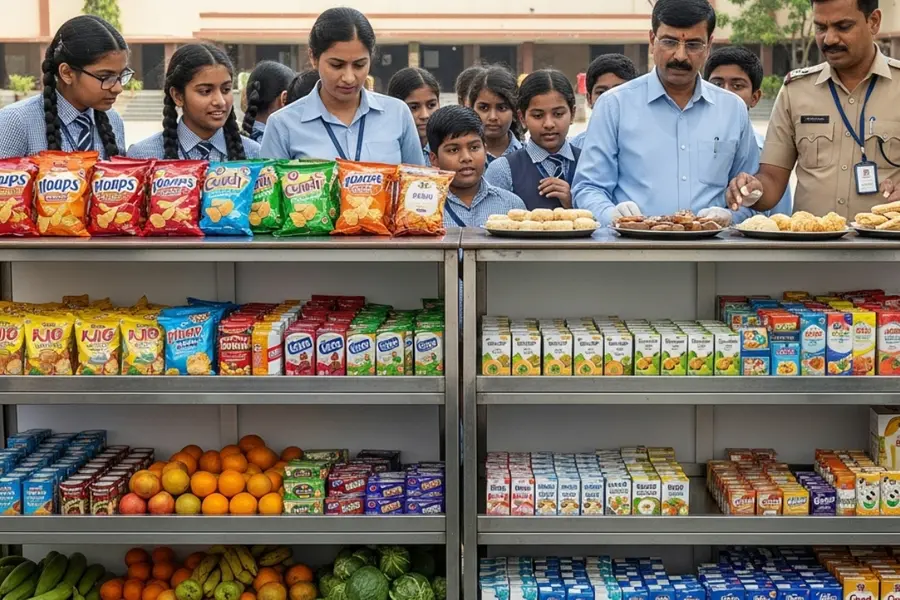
Mumabi: The Maharashtra Food and Drug Administration (FDA) has directed all schools across the state to stop the sale of chocolates, chips, cold drinks and other unhealthy food items on campuses. The order aims to improve food choices for students and ensure compliance with existing nutrition and food safety rules.
Issued by FDA Maharashtra Commissioner Tukaram Mundhe, the directive applies to government, aided and private schools, including pre-primary, primary, secondary schools, residential schools and institutions affiliated with boards such as the State Board, CBSE and ICSE.
The order also bans the sale, display and advertisement of foods high in saturated fat, trans-fat, added sugar and salt, commonly referred to as HFSS (High Fat, Sugar and Salt) foods, within school premises and a 50-metre area around campuses.
What items are banned?
The FDA has prohibited schools and nearby food outlets from selling several unhealthy food products, including:
- Chocolates
- Chips and packaged junk food
- Cold drinks and sugary beverages
- Caffeinated drinks
ALSO READ | Food addiction decoded: How chips, cola and snacks are designed to drive overconsumption
Other foods high in sugar, salt and unhealthy fats
FDA Commissioner Tukaram Mundhe said the purpose of the move is to encourage healthier eating habits among children. He also stated that items considered unhealthy for students are listed on the FDA website.
What food will schools promote?
Under the new guidelines, school canteens and food providers have been instructed to include healthier options such as fruits, vegetables, whole grains, pulses and dairy products.
Food served on school campuses, including meals under government schemes, must follow dietary recommendations issued by the Indian Council of Medical Research-National Institute of Nutrition (ICMR-NIN).
Schools will also need to ensure proper hygiene standards, display food safety information and appoint a trained nodal officer to monitor compliance.
Why has Maharashtra introduced the ban?
The FDA said the action was necessary because many schools and canteens were not following the food safety regulations introduced by the Food Safety and Standards Authority of India (FSSAI) in 2020.
The Safe Food and Balanced Diets for Children in School Regulations came into effect in 2021, but officials said unhealthy food items continued to be available in and around several school campuses.
The order also highlights concerns over the growing consumption of foods high in sugar, salt and fat among children and the possible impact on long-term health.
How will the rules be monitored?
Food safety officers will inspect schools at least twice a year to check whether institutions are following the guidelines. Officials will examine food licences, hygiene practices, availability of banned products and compliance with nutrition standards.
Schools and food businesses operating on or near campuses will be required to follow the rules. Violations may lead to penalties under food safety laws, and repeated non-compliance could affect school recognition or affiliation.
The FDA said the initiative is aimed at creating healthier school environments and ensuring students have access to safer and more nutritious food options.
Published: 30 Jul 2026, 09:49 am IST
ABOUT THE AUTHOR

Disclaimer: Kindly avoid objectionable, derogatory, unlawful and lewd comments, while responding to reports. Such comments are punishable under cyber laws. Please keep away from personal attacks. The opinions expressed here are the personal opinions of readers and not that of Mathrubhumi.