
The article details the complex docking process, highlighting the technology and precision required for a safe connection, including the various docking systems used by different spacecraft and segments of the ISS
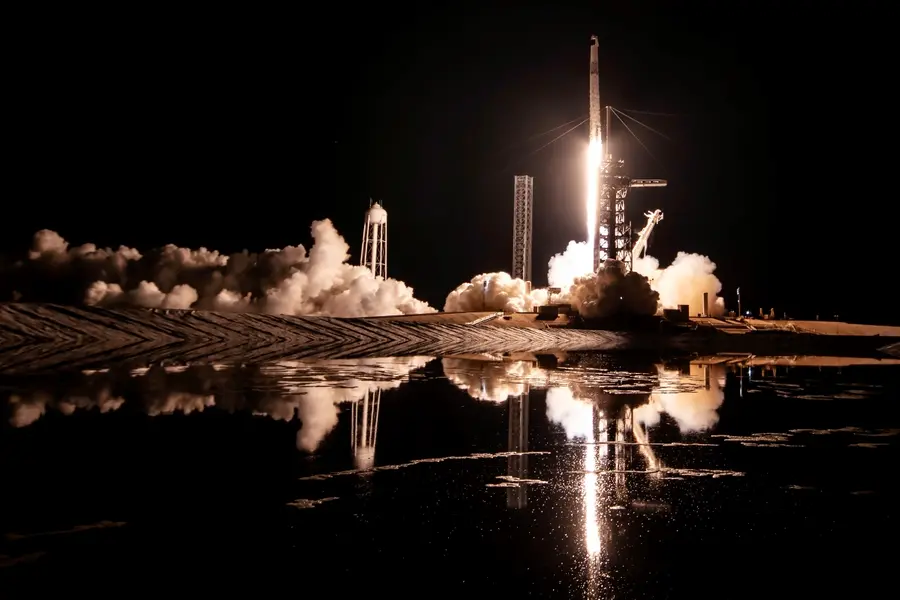
At 2:31 am EDT, the crew of Axiom Mission 4 successfully launched aboard a SpaceX Falcon 9 rocket and Dragon spacecraft from Launch Complex 39A at NASA’s Kennedy Space Center in Florida. Their destination: the International Space Station (ISS), humanity’s home in orbit and a triumph of international collaboration.
The mission is led by Peggy Whitson, a former NASA astronaut and now Axiom Space’s director of human spaceflight. Shubhanshu Shukla, representing ISRO (Indian Space Research Organisation), serves as the mission’s pilot.
The crew also includes ESA project astronaut Sławosz Uznański-Wiśniewski of Poland and Tibor Kapu of Hungary as mission specialists.
The spacecraft is expected to dock autonomously with the space-facing port of the station’s Harmony module at approximately 7 am on Thursday, June 26.
What is docking and why does it matter?
Docking is the process by which a spacecraft connects with another in space. This is crucial for crew transfer, resupply, and the ongoing maintenance of the space station. Without precise docking, astronauts cannot safely enter or exit the ISS, and critical cargo cannot be delivered.
The marvel of space docking
The International Space Station, orbiting Earth at roughly 400 kilometres above the surface, includes five docking ports, each fitted with an IDS (International Docking System) transmitter to assist the connection. These ports allow spacecraft to align and attach with precision.
To begin the docking sequence, the spacecraft performs a rendezvous, a highly calculated manoeuvre where it slowly approaches the ISS using radar-based systems and rendezvous antennas. This allows for real-time position and velocity adjustments.
Technology behind the process
Different spacecraft use different systems for docking. For instance, Boeing’s Starliner relies on the NASA Docking System (NDS), developed to be compatible with future missions, including Orion.
For cargo spacecraft, the process is slightly different. Instead of direct docking, they are captured by the ISS’s robotic arm and then berthed, a manual attachment process to prevent accidental collisions.
However, manned spacecraft like the Dragon capsule used in Axiom 4, carry out automated docking through a computer-controlled system, designed for maximum safety and accuracy.
How the mechanism works
The docking hardware includes a probe on the approaching spacecraft and a drogue on the ISS. Initially, the spacecraft makes a soft contact, followed by load attenuation (to absorb any impact), and finally achieves a hard dock — an air-tight and structurally secure connection.
The Russian segment of the ISS employs the SSVP-G4000 system, also known as the Russian probe and drogue, used by vehicles like Soyuz and Progress.
On the US side, the Common Berthing Mechanism (CBM) is used for berthing operations, which require intervention from the station’s robotic arm.
What happens next for Axiom 4
Once the Dragon spacecraft docks with the Harmony module, the connection will allow the four astronauts aboard Axiom 4 to safely enter the ISS. From there, they will carry out various research and operational tasks during their stay.
(With agency inputs)
Published: 26 Jun 2025, 12:26 am IST
Disclaimer: Kindly avoid objectionable, derogatory, unlawful and lewd comments, while responding to reports. Such comments are punishable under cyber laws. Please keep away from personal attacks. The opinions expressed here are the personal opinions of readers and not that of Mathrubhumi.
