
Launched on November 20, 2004, Swift was designed to detect and investigate gamma-ray bursts, among the most energetic explosions known in the universe.
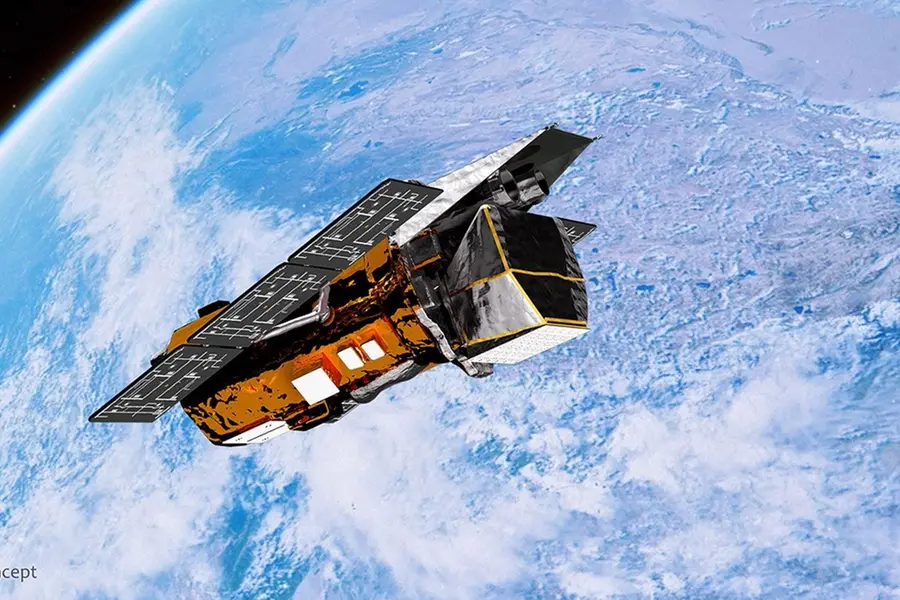
Cape Canaveral: NASA's Swift Observatory, a space telescope that has spent nearly 22 years studying some of the universe's most powerful explosions, is expected to plunge back to Earth around Friday after an unsuccessful attempt to save it from its rapidly decaying orbit.
The US Space Force has predicted that the ageing spacecraft could reenter Earth's atmosphere on or around Friday, with its final descent being closely monitored.
While most of the 1.5-tonne observatory is expected to burn up during reentry, scientists have warned that a small number of components could survive the intense heat and reach Earth's surface.
According to NASA mission chief scientist Brad Cenko, these include parts made from tungsten, a metal denser than lead, as well as fragments of the telescope's mirrors.
Although any surviving debris is most likely to fall into the ocean, the potential reentry zone includes parts of Africa, Australia, India, Southeast Asia, and Central and South America.
The precise location where any surviving fragments might land remains uncertain.
Failed rescue mission seals Swift's fate
NASA had launched an urgent effort to extend Swift's operational life after the telescope began losing altitude faster than expected.
Increased solar activity over recent years caused Earth's upper atmosphere to expand, increasing atmospheric drag on the spacecraft and accelerating its orbital decay.
To prevent the telescope from falling back to Earth, NASA contracted Katalyst Space about a year ago to undertake a rescue operation.
The company developed a robotic spacecraft called Link, equipped with three robotic arms, to approach Swift and potentially help raise its orbit.
However, the mission encountered technical difficulties after Link was launched in July.
The robotic spacecraft failed to get closer than approximately 12 to 15 kilometres (7 to 9 miles) from the observatory, preventing the planned intervention.
The rescue attempt was eventually abandoned, and Link itself reentered Earth's atmosphere in September.
With no further means of restoring Swift's altitude, the telescope continued its gradual descent towards Earth.
Telescope continued making discoveries until its final days
Despite the failed rescue, Swift resumed scientific operations and continued detecting gamma-ray bursts and other extremely energetic cosmic events.
However, by late October, its orbit had deteriorated to the point where the spacecraft could no longer maintain the stability required for observations.
Mission controllers subsequently shut down its systems, bringing an end to more than two decades of scientific discoveries.
The approaching reentry has left scientists reflecting on the telescope's extraordinary contributions to astronomy.
"We've known this day would come since before Swift was launched. At least in low-Earth orbit, what goes up must come down. And that end is catastrophic," said Pennsylvania State University's John Nousek, an astronomer who led the control team.
Nearly 22 years of tracking cosmic explosions
Launched on November 20, 2004, Swift was designed to detect and investigate gamma-ray bursts, among the most energetic explosions known in the universe.
These powerful flashes of radiation can occur when massive stars collapse or when extremely dense objects, such as neutron stars, merge.
The observatory was also instrumental in studying supernovas, black holes, comets and asteroids.
During its nearly 22 years in orbit, Swift detected more than 2,000 gamma-ray bursts and observed approximately 1,400 exploding stars.
Its discoveries also included events involving black holes tearing apart stars, providing astronomers with valuable information about some of the universe's most extreme environments.
One of Swift's defining capabilities was its ability to rapidly reposition itself towards newly detected cosmic explosions.
This quick response, which inspired the telescope's name, allowed scientists to study rapidly changing astronomical events before their signals faded.
A vital first responder for Hubble and Webb
Swift played a crucial role in coordinating astronomical observations by alerting other major space telescopes to newly detected events.
NASA regarded the observatory as a first responder for missions such as the Hubble Space Telescope and the James Webb Space Telescope.
Once Swift identified a gamma-ray burst or another high-energy phenomenon, other observatories could follow up with more detailed investigations.
This coordination enabled astronomers to study the same event using different instruments and wavelengths, helping them better understand the physical processes behind cosmic explosions.
With Swift's mission now ending, scientists face the challenge of replacing its rapid-response capabilities.
Researchers are still considering how future space missions can fill the observational gap left by the telescope.
Scientists hope Swift's legacy will guide future missions
Although the telescope's final descent marks the end of a major chapter in space exploration, researchers say its scientific legacy will continue through the vast amount of data it collected.
Swift's observations have contributed to studies of stellar explosions, black holes and other high-energy phenomena, while its rapid-alert system helped establish a model for coordinated space-based astronomy.
"Our fervent hope is that the lessons learned by the successes of Swift can be applied to new generations of space missions to accelerate our discoveries about the universe," Nousek said in an email.
Published: 31 Oct 2026, 06:47 pm IST


ABOUT THE AUTHOR

Disclaimer: Kindly avoid objectionable, derogatory, unlawful and lewd comments, while responding to reports. Such comments are punishable under cyber laws. Please keep away from personal attacks. The opinions expressed here are the personal opinions of readers and not that of Mathrubhumi.