
US sanctions Hezbollah-linked Lebanese officials as Washington intensifies pressure over disarmament and political reforms in Lebanon
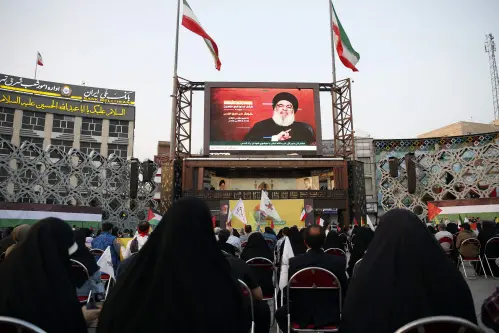
Washington DC: The United States has announced a fresh round of sanctions targeting Lebanese officials and individuals accused of maintaining ties to Hezbollah, marking another step in Washington's long-running campaign to curb the influence of the Iran-backed group.
The measures, announced by the US Department of the Treasury's Office of Foreign Assets Control (OFAC), target what American officials describe as political and financial networks that have helped Hezbollah retain influence within Lebanon's political system and state institutions.
Also Read

The move comes at a sensitive time for Lebanon, which continues to grapple with economic instability, political deadlock and growing international calls for reforms. US officials argue that Hezbollah's influence has hindered efforts to stabilise the country and implement key political and security changes.
Treasury targets officials and business networks
According to the US Treasury Department, the sanctions apply to Lebanese officials as well as members and intermediaries associated with a Hezbollah-linked business network. Washington alleges that these individuals have used their positions and influence to support Hezbollah's interests and obstruct initiatives aimed at strengthening Lebanon's state institutions.
Under the sanctions, all property and financial assets belonging to the designated individuals that fall under US jurisdiction are frozen. American citizens, businesses and financial institutions are also prohibited from conducting transactions with the sanctioned persons. In practice, the restrictions can significantly limit access to international banking and financial systems, even beyond the United States.
US authorities said the action is intended to disrupt support networks that allow Hezbollah to maintain political and economic influence despite years of international sanctions.
Washington accuses figures of blocking political progress
The Treasury Department stated that the sanctioned individuals played a role in delaying or obstructing efforts aimed at advancing political solutions in Lebanon. American officials contend that these figures have resisted reforms and security arrangements designed to strengthen state authority and reduce the influence of armed non-state actors.
Washington specifically linked the sanctions to concerns over Hezbollah's continued military capabilities and its refusal to disarm. The United States has long argued that the group's armed wing operates outside the authority of the Lebanese state and undermines national sovereignty.
According to US officials, progress towards political stability and economic recovery in Lebanon remains difficult while powerful political actors continue to shield Hezbollah from reform efforts and accountability measures.
Hezbollah remains at the centre of US policy
The latest sanctions reflect a broader US strategy that has increasingly relied on financial pressure to weaken Hezbollah's political and economic position. Successive American administrations have imposed sanctions on Hezbollah leaders, financiers, companies and supporters across the Middle East, Africa and Latin America.
US officials believe that targeting the group's financial networks is one of the most effective ways to limit its operations. By cutting access to banking systems and international transactions, Washington hopes to restrict the movement of funds that support Hezbollah's political and military activities.
The sanctions also demonstrate that the United States remains committed to pressuring individuals and institutions it believes help sustain the group's influence within Lebanon.
Potential impact on Lebanon's political landscape
Political observers suggest the sanctions could further intensify divisions within Lebanon, where views on Hezbollah remain deeply polarised. Some political factions support stronger international measures against the group, arguing that its influence has contributed to Lebanon's prolonged crises.
Others may view the sanctions as external interference in the country's internal affairs. Critics of US policy have frequently argued that sanctions risk increasing political tensions and could complicate efforts to achieve national consensus on sensitive issues such as security reforms and power-sharing arrangements.
The latest measures may also place additional pressure on Lebanese political leaders already facing growing demands from international partners to implement reforms tied to economic assistance and recovery programmes.
Financial pressure as a diplomatic tool
The sanctions highlight Washington's continued reliance on economic measures as a key foreign policy instrument. Rather than direct intervention, the United States increasingly uses financial restrictions to influence political behaviour and pressure groups it considers destabilising.
In Lebanon's case, the objective appears to be reducing Hezbollah's ability to operate through political allies, business associates and financial intermediaries. American officials argue that weakening these networks is essential for strengthening Lebanese state institutions and promoting long-term stability.
The sanctions also send a broader message to regional actors that Washington remains prepared to use economic tools against individuals and organisations it believes threaten its vision for security and governance in the Middle East.
What happens next?
While sanctions alone are unlikely to transform Lebanon's political system overnight, they add to mounting international pressure on political actors linked to Hezbollah. The effectiveness of the measures will largely depend on how successfully they restrict financial activity and whether they influence broader political calculations within Lebanon.
As the country continues to navigate economic hardship and political uncertainty, the latest US action underscores the growing international focus on Hezbollah's role in Lebanon's future and the ongoing debate over reforms, sovereignty and security arrangements in the country.
Published: 19 Jun 2026, 07:29 am IST
Related Topics
Disclaimer: Kindly avoid objectionable, derogatory, unlawful and lewd comments, while responding to reports. Such comments are punishable under cyber laws. Please keep away from personal attacks. The opinions expressed here are the personal opinions of readers and not that of Mathrubhumi.