
The United States reportedly refused Israel's request to review a new Iran-US memorandum of understanding before its formal signing, triggering criticism of Israeli Prime Minister Benjamin Netanyahu and raising questions about the agreement's implications for Lebanon and regional security.
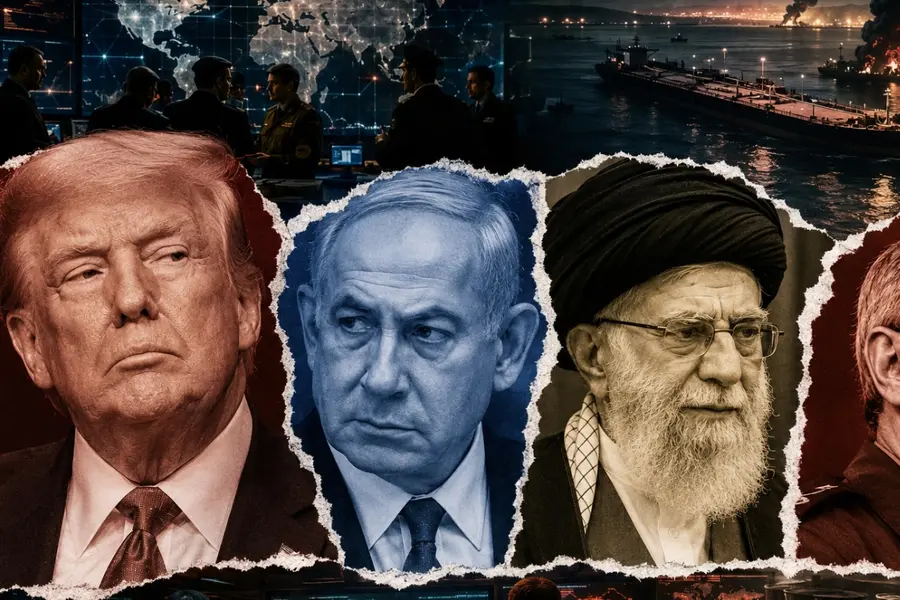
Washington DC: The United States reportedly refused a request from Israel to review the text of a newly negotiated memorandum of understanding (MOU) with Iran before its formal signing ceremony, according to reports published on June 16. The development has fuelled criticism of Israeli Prime Minister Benjamin Netanyahu and intensified debate over the future of regional security arrangements involving Iran, Israel and Lebanon.
The agreement, negotiated following months of conflict and diplomatic efforts, is expected to be formally signed in Geneva later this week. While key details remain undisclosed, reports indicate that the document contains 14 separate clauses covering military, economic and geopolitical issues across the Middle East.
Also Read

Israel reportedly denied access to agreement
According to reports, Israeli officials requested access to the memorandum before its signing but were denied by the Trump administration. The refusal reportedly came despite Israel being one of the countries most directly affected by the agreement's security provisions.
US President Donald Trump said on Tuesday that he would read the agreement “word for word”, although he did not specify when the full text would be released publicly.
Reports suggest that concerns within the White House centred on the possibility that details of the agreement could be leaked before the official announcement.
The reported decision has led to criticism within Israel, with opposition figures and political commentators arguing that the government was excluded from negotiations that could have major consequences for the country's security and regional strategy.
What is reportedly included in the memorandum?
Although the complete text has not been released, multiple reports suggest the agreement includes a range of provisions designed to reduce tensions and stabilise the region.
Among the reported clauses are:
- Reopening the Strait of Hormuz to international shipping
- Releasing approximately $24 billion in previously sanctioned Iranian funds
- Extending the current ceasefire arrangement
- Ending military operations between the parties involved in the conflict
- Provisions affecting southern Lebanon and the future deployment of Israeli forces
The agreement is also reported to include measures aimed at restoring commercial navigation and reducing the risk of further military escalation in one of the world's most strategically important waterways.
Uncertainty over southern Lebanon
One of the most closely watched aspects of the agreement concerns southern Lebanon, where Israeli forces have maintained operations amid tensions with Hezbollah.
Despite claims from some regional officials that the agreement includes provisions relating to Lebanon, Israeli authorities have not publicly confirmed whether they intend to withdraw troops from the area.
An Israeli military source told media outlets earlier this week that if Hezbollah fully respects the ceasefire, there would be no Israeli attacks anywhere in Lebanon.
However, uncertainty remains because the exact language of the memorandum has not been disclosed.
The issue gained further attention after Hezbollah reportedly told Reuters that it had received assurances from Iran that future negotiations with the United States would include demands for the withdrawal of Israeli troops from Lebanese territory.
According to the group, there would be “no nuclear deal between Iran and the United States unless the Israelis withdraw” from Lebanon.
Netanyahu faces criticism from Israeli commentators
The revelation that Israel had not seen the text of the agreement before signing prompted a strong reaction from several Israeli analysts and commentators.
Writing in Haaretz, columnist Yossi Verter argued that Netanyahu had been left outside a process that would significantly affect Israel's security interests.
Verter wrote: “He has no idea what is contained in the memorandum of understanding the US and Iran digitally signed behind his back. The Iranians know. The Pakistanis know. Presumably the Qataris know. Netanyahu, it seems, does not.”
The columnist described the situation as “a colossal strategic failure for the State of Israel” and argued that the goals presented during the conflict had not been achieved.
Verter questioned whether any of the stated objectives — including weakening Iran's regional influence, ending its support for allied armed groups and eliminating concerns over its nuclear programme — had been realised through the agreement.
‘Trump threw him under the bus’
Maariv columnist Ben Caspit offered an equally harsh assessment of Netanyahu's position.
In a commentary titled “Netanyahu's show is over: Trump threw him under the bus,” Caspit argued that the Israeli prime minister had lost influence over a process being shaped directly by Washington and Tehran.
He wrote that Netanyahu was “pushed aside, thrown under the bus, and left standing in the hallway like a scolded child waiting for a verdict that was delivered in his absence.”
The criticism reflected broader frustration among some Israeli commentators who believe the government was unable to influence the final framework despite the conflict's direct impact on Israel.
Reports suggest key Israeli demands were omitted
Several reports indicate that Israeli officials were briefed on aspects of the agreement but were not given access to the complete text.
According to reporting cited by major international media organisations, the framework appears to leave out some provisions that Israeli officials had hoped would be included.
The New York Times reported that the agreement appeared to omit some of the most significant conditions sought by Israel during negotiations.
ABC News similarly reported that while Israeli officials received briefings about the agreement, they were not provided with the actual document.
These reports have further fuelled debate about Israel's influence over the diplomatic process and its relationship with the Trump administration.
Netanyahu defends his record
Facing mounting criticism, Netanyahu addressed the issue during a press conference on Monday evening, his first public appearance since the agreement was announced.
The Israeli prime minister argued that his government had protected the country from what he described as a severe security threat.
He stated that Israel had prevented “nuclear annihilation” and insisted that “with or without an agreement, Iran will never have nuclear weapons.”
Netanyahu also acknowledged disagreements with the Trump administration but sought to minimise their significance.
According to reports, he said such disagreements “exist in the best of families.”
His remarks were interpreted as an attempt to project confidence despite criticism from both political opponents and some media commentators.
Wider implications for the Middle East
The reported agreement comes after months of conflict involving the United States, Israel and Iran, followed by intensive diplomatic efforts aimed at preventing further escalation.
If implemented as described, the memorandum could affect several key regional issues simultaneously, including maritime security in the Gulf, sanctions relief for Iran, military activity in Lebanon and the broader balance of power in the Middle East.
However, significant uncertainty remains because the full text has not yet been published.
Questions persist over the exact commitments made by Washington and Tehran, the future of Israeli military operations in Lebanon, and whether all parties involved will fully implement the agreement's provisions.
Until the official signing ceremony takes place and the document is released publicly, many of the most important details remain unknown, leaving governments, analysts and regional actors waiting for clarity on one of the most consequential diplomatic agreements of the year.
Published: 17 Jun 2026, 07:50 am IST
Disclaimer: Kindly avoid objectionable, derogatory, unlawful and lewd comments, while responding to reports. Such comments are punishable under cyber laws. Please keep away from personal attacks. The opinions expressed here are the personal opinions of readers and not that of Mathrubhumi.