
Iran's Supreme Leader Mojtaba Khamenei says Donald Trump was ‘desperate’ for a deal and used ‘all kinds of leverage’ to secure the US-Iran memorandum aimed at ending the conflict.
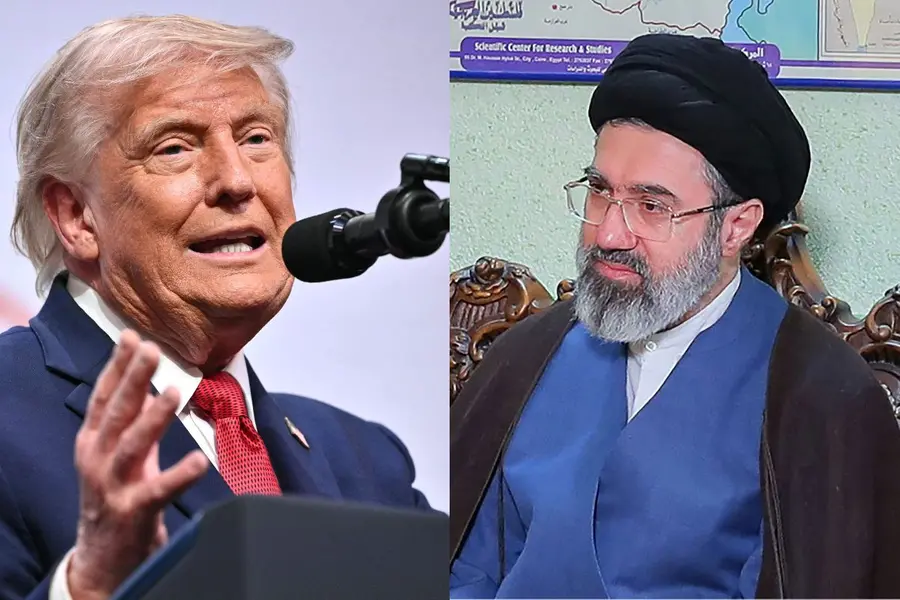
Iran's Supreme Leader Mojtaba Khamenei has accused US President Donald Trump of aggressively pursuing a deal with Tehran, claiming Washington was far more eager for an agreement than Iran as the two countries begin implementing a newly signed framework aimed at ending months of conflict.
In a written message published a day after the memorandum of understanding was signed, Khamenei said Iranian officials had worked diligently during negotiations but argued that the driving force behind the accord came from the United States.
"As you have been informed, a memorandum of understanding was signed between the presidents of Iran and the United States of America," Khamenei wrote.
"Officials in charge, out of sincere concern and goodwill, made extensive efforts -- and of course, it was the American President who, out of desperation, used all kinds of leverage to bring this about," he said.
The agreement, signed on June 18 by Trump and Iranian President Masoud Pezeshkian, is intended to halt hostilities and create a pathway for broader negotiations over sanctions, regional security and Iran's nuclear programme.
Khamenei says he initially opposed the agreement
Khamenei revealed that he had reservations about the arrangement from the outset and only authorised it after receiving assurances from Iran's leadership that national interests would remain protected.
"I, as a matter of principle, held a different view," he said.
According to the Supreme Leader, President Pezeshkian and members of Iran's Supreme National Security Council pledged that the rights of the Iranian people and the interests of the so-called Resistance Front would be safeguarded throughout the process.
He also sought to reassure supporters that Tehran would not accept any future conditions it considers unacceptable.
"He explicitly stated that if the American side seeks to make excessive demands, they will not submit to them," Khamenei said, referring to commitments made by the Iranian president.
At the same time, he stressed that future direct negotiations with Washington should not be interpreted as a concession to American positions.
"It's self-evident that the in-person negotiations in the future will not mean acceptance of the enemy's position."
Agreement signed after G7 summit
The memorandum was signed during a dinner hosted by French President Emmanuel Macron at the Palace of Versailles following the conclusion of the G7 summit.
Macron announced the development on social media, describing the accord as a step towards long-term stability and the reopening of the Strait of Hormuz, a strategically important maritime route for global energy supplies.
Although the formal signing had initially been planned in Switzerland, Iranian officials have indicated that a separate meeting scheduled in Geneva remains on course.
The document is formally known as the Islamabad Memorandum of Understanding between the United States of America and the Islamic Republic of Iran.
Key provisions of the memorandum
The framework establishes an immediate and permanent cessation of military operations across all theatres covered by the conflict, including Lebanon.
Under the agreement, Washington has committed to ending its naval blockade of Iran within 30 days and restoring maritime traffic to pre-conflict levels during that period. The United States has also agreed to withdraw forces operating near Iran within 30 days after a final settlement is concluded.
In return, Tehran has pledged to use its best efforts to guarantee the safe movement of commercial shipping and to allow vessels to pass without charge for a 60-day period.
The memorandum serves as an interim arrangement rather than a final peace settlement. Both governments now have 60 days to negotiate a comprehensive agreement addressing wider issues, including sanctions relief and Iran's nuclear activities.
Iran's Foreign Minister backs Supreme Leader
Iranian Foreign Minister Abbas Araqchi publicly endorsed Khamenei's remarks, saying the government would utilise its "full capacity" to defend the country's interests during the next stage of negotiations.
Iranian state media reported that Araqchi pledged to follow the Supreme Leader's guidance while working to preserve the nation's rights, independence and dignity in discussions with Washington.
Early implementation begins
The first measures outlined in the memorandum are already being put into effect.
US Central Command announced that enforcement actions connected to the maritime blockade around the Strait of Hormuz had been suspended. American forces are no longer restricting vessels travelling to and from Iranian ports and coastal waters.
Iran has simultaneously begun introducing steps aimed at restoring commercial shipping through the strait. Authorities said transit approvals would be accelerated and passage fees waived for the next 60 days.
The developments mark the first practical implementation of the agreement as negotiators prepare for what could be a lengthy process to transform the temporary framework into a comprehensive settlement.
Published: 19 Jun 2026, 06:29 am IST
Disclaimer: Kindly avoid objectionable, derogatory, unlawful and lewd comments, while responding to reports. Such comments are punishable under cyber laws. Please keep away from personal attacks. The opinions expressed here are the personal opinions of readers and not that of Mathrubhumi.
