
According to the memorandum, any final agreement reached by the two sides will be endorsed through a binding resolution of the United Nations Security Council.
Washington/Tehran: The United States and Iran have released the text of a memorandum of understanding aimed at ending months of conflict in the Middle East, outlining a sweeping framework that includes a permanent ceasefire, the reopening of the Strait of Hormuz, a proposed $300-billion reconstruction fund for Iran and fresh commitments on Tehran's nuclear programme.
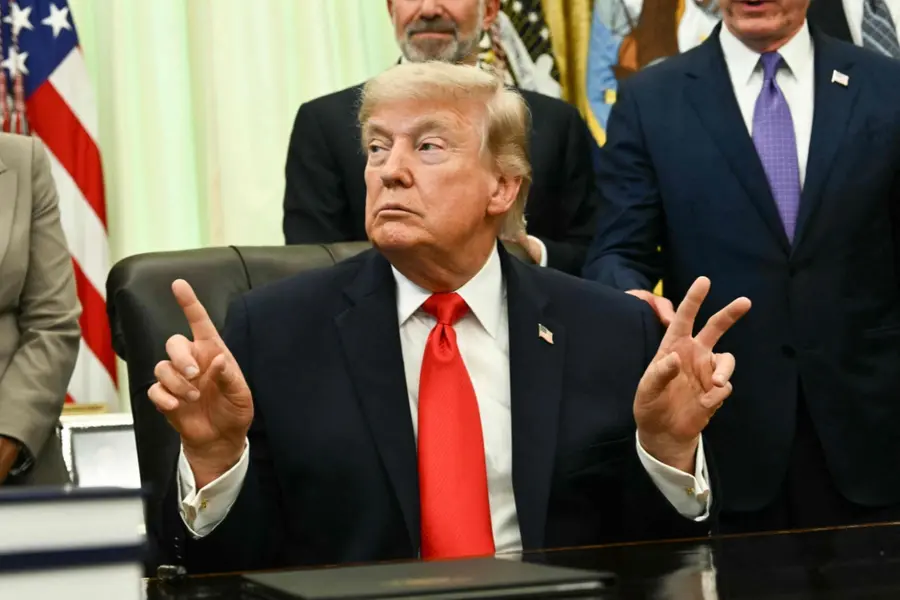
The agreement, signed electronically by US President Donald Trump and Iranian President Masoud Pezeshkian, sets a 60-day deadline for negotiating a final accord and restoring stability to a region shaken by war.
Permanent end to hostilities
The memorandum declares an "immediate and permanent termination of military operations on all fronts", including in Lebanon, and commits both sides and their allies to refrain from future military action against one another.
The agreement also emphasises respect for Lebanon's sovereignty and territorial integrity, one of the most sensitive issues given ongoing tensions involving Israel and Hezbollah.
Also read | Truce in place, attacks continue: Israel kills four in Lebanon
60-day clock for final deal
Washington and Tehran have agreed to negotiate a comprehensive agreement within 60 days, with the option of extending talks through mutual consent.
The future accord is expected to address Iran's nuclear programme, sanctions relief and broader regional security arrangements.
Strait of Hormuz to reopen
One of the most significant economic provisions involves the reopening of the Strait of Hormuz, a critical global energy chokepoint through which roughly one-fifth of the world's traded oil and natural gas normally passes.
Iran pledged to ensure the safe passage of commercial vessels between the Persian Gulf and the Sea of Oman for an initial 60-day period without charging tolls.
Commercial traffic is expected to resume immediately and return to pre-war levels within 30 days after mine-clearing operations are completed.
The reopening is likely to ease pressure on global energy markets, which were rattled by disruptions to shipping during the conflict.
US to lift port blockade
The United States agreed to begin immediately dismantling its blockade of Iranian ports imposed in April and complete the process within 30 days.
Washington also pledged to remove military forces from the vicinity of Iran within 30 days of a final agreement being reached.
$300 Billion reconstruction plan
The memorandum calls for the United States and regional partners to develop a reconstruction and economic development programme worth at least $300 billion for Iran.
While officials indicated Gulf nations could play a major role in financing the initiative, President Trump stressed that the United States would not directly fund the package.
The proposal is one of the largest economic commitments ever linked to a Middle East peace arrangement.
Sanctions relief and oil exports
Under the agreement, the United States pledged to terminate sanctions against Iran and make available frozen Iranian assets once the memorandum is implemented.
In the interim, the US Treasury will immediately issue waivers allowing Iran to export crude oil, petroleum products and related services, including banking, insurance and transportation.
The move could significantly boost Iran's oil revenues and increase global energy supplies.
Nuclear commitments
Iran reaffirmed that it would not develop or acquire nuclear weapons.
The memorandum states that Tehran's stockpile of enriched uranium will be addressed through a mutually agreed mechanism under the supervision of the International Atomic Energy Agency (IAEA), with down-blending of uranium identified as the minimum acceptable approach.
Until a final agreement is reached, Iran will maintain the current status of its nuclear programme, while the United States will refrain from imposing new sanctions or deploying additional military forces in the region.
Questions remain
Despite the breakthrough, the memorandum leaves many details unresolved and has already sparked debate over whether the United States granted major concessions upfront.
The immediate easing of oil-export restrictions, the prospect of lifting all sanctions and the proposed reconstruction package represent significant incentives for Tehran before a final nuclear agreement is completed.
President Trump nevertheless hailed the deal as "very strong" while warning that the ceasefire could be abandoned if negotiations fail.
"If I don't like it, we'll go back to shooting at them, dropping bombs," Trump said.
UN backing planned
According to the memorandum, any final agreement reached by the two sides will be endorsed through a binding resolution of the United Nations Security Council.
A ceremony to mark the accord and launch technical-level negotiations is expected to take place in Switzerland, though officials from the United States, Iran and Pakistan have offered differing accounts regarding the timing and format of the event.
Published: 18 Jun 2026, 08:56 am IST
Related Topics
Disclaimer: Kindly avoid objectionable, derogatory, unlawful and lewd comments, while responding to reports. Such comments are punishable under cyber laws. Please keep away from personal attacks. The opinions expressed here are the personal opinions of readers and not that of Mathrubhumi.
