
The US-Iran conflict has spread to the Gulf after Iran launched missile and drone attacks targeting Bahrain, Qatar, the UAE and Kuwait following fresh US strikes on Iranian military targets linked to the Strait of Hormuz.
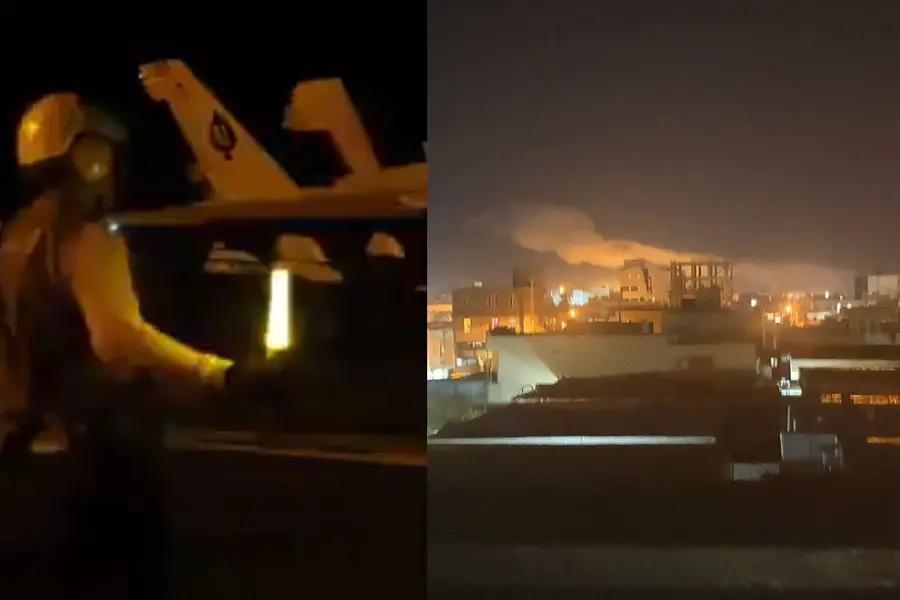
Dubai: The US-Iran conflict expanded beyond Iran on Sunday after Tehran reportedly launched missile and drone attacks targeting Bahrain, Qatar, Kuwait and the United Arab Emirates following fresh American strikes on Iranian military sites linked to the Strait of Hormuz.
The conflict between the United States and Iran widened dramatically on Sunday as several Gulf Arab countries found themselves caught in the crossfire following a fresh round of American military strikes against Iran.
Also Read

According to the US Central Command (CENTCOM), the United States struck around 140 Iranian military targets after Iran allegedly attacked the Cyprus-flagged container ship M/V GFS Galaxy in the Strait of Hormuz, leaving the vessel badly damaged and forcing its crew to abandon ship.
Gulf countries come under missile threat
Hours after the US operation, Iran launched missiles and drones towards several Gulf Arab nations that host American military assets.
Air raid sirens sounded across Bahrain, Qatar, the United Arab Emirates (UAE) and Kuwait, with authorities reporting interceptions of incoming missiles and drones.
Qatar's military said it intercepted Iranian missiles, while Bahrain and Kuwait also activated air defence systems. The UAE issued public warnings over an incoming missile and drone threat.
Iran's Revolutionary Guard claimed it had targeted US military facilities and radar sites across the Gulf in retaliation for the American strikes.
Strait of Hormuz crisis worsens
Iran also announced the closure of the Strait of Hormuz "until further notice", saying commercial vessels would no longer be allowed to transit the strategic waterway while US military operations continued.
The Strait of Hormuz remains one of the world's most important energy corridors, carrying nearly one-fifth of global oil and liquefied natural gas trade before the conflict. Any prolonged disruption threatens global energy supplies and shipping.
Why Gulf countries are being affected
Although Bahrain, Qatar, Kuwait and the UAE are not direct participants in the conflict, all four host significant US military facilities that support American operations in the region.
Iran has repeatedly warned that countries allowing US military action from their territory could face retaliation.
The latest attacks underline the growing regional risks as the conflict extends beyond Iran and threatens the security of Gulf nations and one of the world's busiest maritime trade routes.
Diplomatic efforts under pressure
The latest escalation comes despite ongoing mediation efforts by regional countries, including Oman and Qatar, to revive negotiations over the future of the Strait of Hormuz and prevent a wider regional conflict.
However, with fresh missile attacks, US military strikes and the continued closure of the vital shipping corridor, hopes for an immediate diplomatic breakthrough appear increasingly uncertain.
Published: 12 Jul 2026, 11:01 am IST
Disclaimer: Kindly avoid objectionable, derogatory, unlawful and lewd comments, while responding to reports. Such comments are punishable under cyber laws. Please keep away from personal attacks. The opinions expressed here are the personal opinions of readers and not that of Mathrubhumi.