
Washington says the truce is over. Tehran says it has honoured the deal. Yet both sides are heading back to the negotiating table.
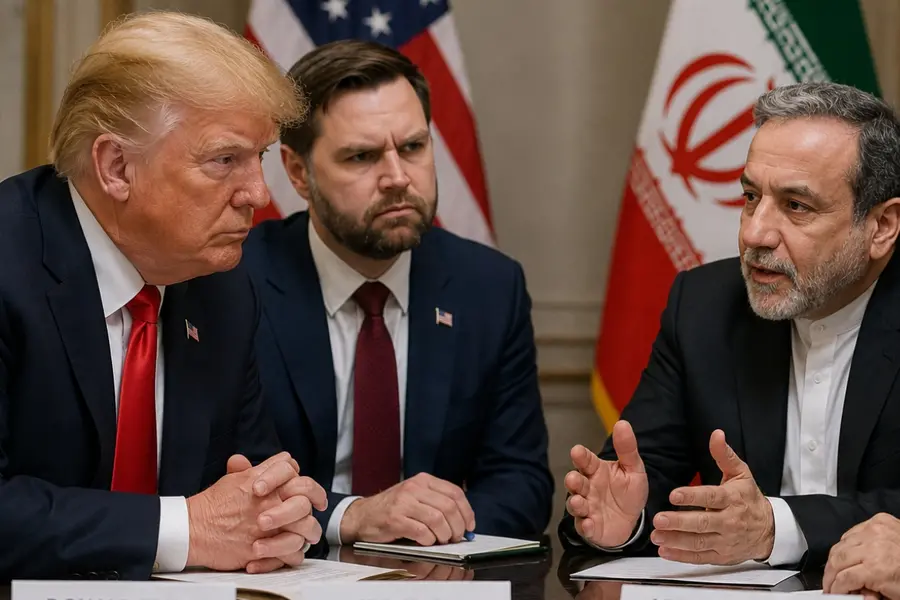
The United States and Iran have agreed to continue negotiations despite offering completely different versions of where their fragile peace process stands, exposing the deep mistrust that still clouds efforts to avoid another regional war.
While US President Donald Trump declared the ceasefire with Iran "over" and said Washington had made that position clear, Tehran insisted it had fully honoured the agreement and accused the United States of violating its commitments. Despite those opposing claims, neither side has walked away from diplomacy.
The unusual situation leaves Washington and Tehran preparing for another round of talks while fundamentally disagreeing over the status of the very ceasefire meant to support those negotiations.
Trump announced on Friday that the United States had accepted Iran's request to continue discussions, but coupled the announcement with a blunt declaration that "the Cease Fire is OVER."
Hours later, Iranian Foreign Minister Abbas Araghchi pushed back, saying Iran had "kept its word" under the memorandum of understanding and alleging that it was Washington, not Tehran, that had breached the agreement by expanding its military deployment in the region.
The contrasting statements underline the biggest challenge facing the next round of diplomacy: both governments agree that talks should continue, but they sharply disagree over who is responsible for the latest collapse in trust.
Diplomacy survives despite growing differences
The renewed diplomatic push comes after two days of military exchanges threatened to undo weeks of efforts to stabilise the region.
Just over three weeks ago, Washington and Tehran signed a memorandum of understanding designed to convert a months-long ceasefire into a more durable peace. However, fresh exchanges of fire this week reignited tensions and revived fears of a wider conflict.
Even so, both capitals have stopped short of abandoning negotiations.
US and Iranian officials have already held one direct meeting in Switzerland, alongside indirect talks brokered by Qatar. Iranian media reported on Saturday that a Qatari delegation had arrived in Tehran to keep diplomatic channels open following the latest escalation.
Strait of Hormuz remains at the centre of tensions
Much of the recent dispute has centred on the Strait of Hormuz, one of the world's busiest energy corridors.
The United States and Qatar accused Iran this week of targeting vessels in the strategic waterway, allegations Tehran rejected. Iran instead said it retaliated after US military action by launching strikes on American bases across the Gulf.
Although military activity has eased, both sides continue to exchange warnings, making future negotiations very difficult.
Iranian negotiator Mohammad Bagher Ghalibaf said the country remained committed to defending itself and would never surrender under pressure, while senior security officials warned that any new attacks would trigger retaliation.
Araghchi is expected to visit Oman for talks on the Strait of Hormuz, signalling that mediation efforts remain active even as Washington and Tehran remain divided over the ceasefire itself.
With AFP inputs
Published: 11 Jul 2026, 09:15 am IST
Related Topics
Disclaimer: Kindly avoid objectionable, derogatory, unlawful and lewd comments, while responding to reports. Such comments are punishable under cyber laws. Please keep away from personal attacks. The opinions expressed here are the personal opinions of readers and not that of Mathrubhumi.
