
Tarique Rahman was sworn in as Bangladesh’s new Prime Minister at the South Plaza of the Jatiya Sangsad, breaking from the Bangabhaban tradition. The ceremony comes amid debate over a proposed Constitution Reform Commission and renewed regional attention.
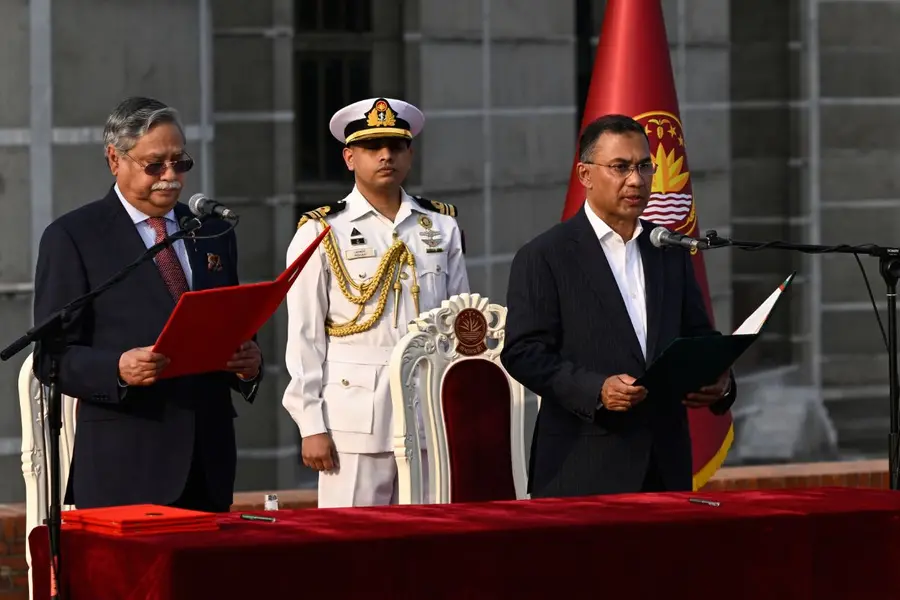
Tarique Rahman was sworn in as the new Prime Minister of Bangladesh on Tuesday (February 17, 2026), marking a significant political transition following the Bangladesh Nationalist Party’s (BNP) decisive victory in the recent general elections.
President Mohammed Shahabuddin administered the oath of office to the 60-year-old leader at the South Plaza of the Jatiya Sangsad (National Parliament), a notable departure from the long-standing tradition of holding such ceremonies at Bangabhaban, the official residence of the President.
Also Read

The venue shift immediately drew attention in political and constitutional circles, with observers interpreting it as a symbolic gesture underscoring Parliament’s centrality in the country’s democratic framework.
While government sources described the move as a logistical and ceremonial choice, critics argued that the break from precedent could fuel debates about institutional norms at a time of broader constitutional discussions.
Earlier in the day, newly elected Members of Parliament were sworn in by Chief Election Commissioner AMM Nasir Uddin, formally constituting the new legislature.
The formation of the government follows elections that were closely watched both domestically and internationally, given Bangladesh’s recent period of political uncertainty and governance reforms.
However, the oath-taking process unfolded alongside controversy over the proposed “Constitution Reform Commission.”
The BNP, unlike Jamaat-e-Islami, declined to take a second oath as members of the commission to endorse a referendum held simultaneously with the general election.
BNP leaders maintained that there is “no provision of the council yet incorporated in the Constitution,” signalling reservations about the legal and procedural foundations of the reform mechanism.
According to one interpretation of the referendum outcome, the entire Parliament is expected to function as a Constitution Reform Commission for 180 days.
Yet, the framework has generated unease among lawmakers and analysts, who question how MPs will balance legislative responsibilities with the commission’s reform mandate.
Constitutional experts have warned that ambiguities in the arrangement could lead to political friction and judicial scrutiny if not clarified promptly.
The developments have also drawn regional attention, particularly from India. Lok Sabha Speaker Om Birla attended the swearing-in ceremony in Dhaka, representing New Delhi.
The high-level presence was viewed as a diplomatic signal of India’s intent to sustain engagement with Bangladesh amid evolving political dynamics.
Reacting to India’s participation, Shiv Sena (UBT) MP Priyanka Chaturvedi stressed the strategic importance of maintaining strong India-Bangladesh ties. Speaking to ANI, she noted concerns about Pakistan’s growing influence in Bangladesh and underscored the need for renewed diplomatic outreach.
“Understanding the seriousness of how the India-Bangladesh relationship has gone downhill… it is important that we begin engaging with Bangladesh and ensure the relationship we shared returns to the same footing,” she said.
As Rahman assumes office, attention now turns to his government’s policy priorities, economic agenda, and approach to constitutional reform.
With expectations of stability, governance improvements, and balanced foreign relations, the new administration faces the dual challenge of consolidating its electoral mandate while navigating institutional and regional sensitivities.
Published: 17 Feb 2026, 05:13 pm IST
Related Topics
Disclaimer: Kindly avoid objectionable, derogatory, unlawful and lewd comments, while responding to reports. Such comments are punishable under cyber laws. Please keep away from personal attacks. The opinions expressed here are the personal opinions of readers and not that of Mathrubhumi.