
Muhammad Yunus resigns ahead of Tarique Rahman’s oath, clearing path for BNP government in Bangladesh
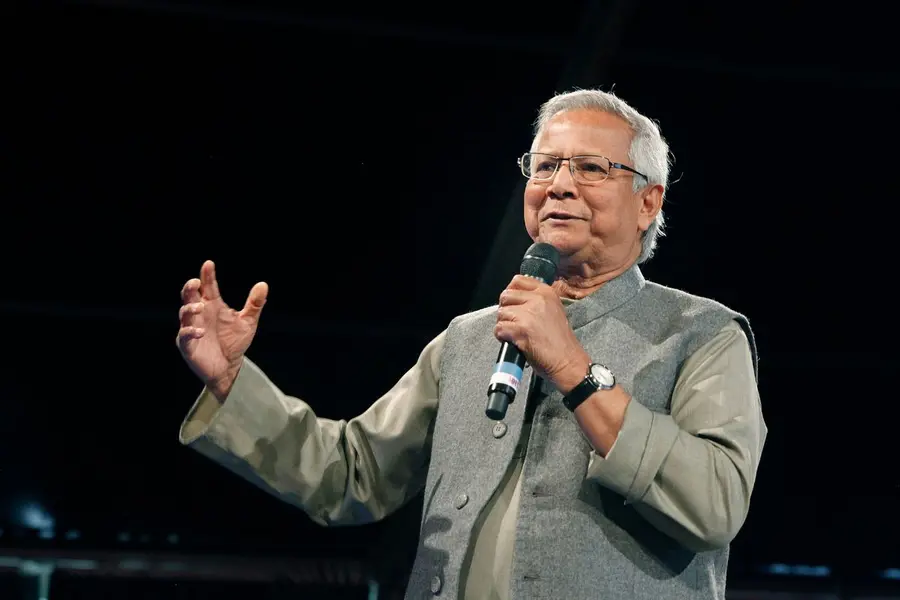
Bangladesh’s interim leader Muhammad Yunus on Monday announced his resignation, formally paving the way for the installation of an elected government led by Tarique Rahman and the Bangladesh Nationalist Party (BNP) in Dhaka.
Yunus, who had been serving as chief adviser of the interim administration formed after the exit of Sheikh Hasina, confirmed his decision during a nationally televised farewell address.
Also Read

“Today, the interim government is stepping down. But let the practice of democracy, freedom of speech, and fundamental rights that has begun not be halted,” Yunus said, underscoring the need for continuity in democratic norms as Bangladesh transitions to a new leadership. His departure marks the end of a caretaker period that was tasked with stabilising governance and overseeing elections amid political uncertainty.
The announcement comes just a day before Tarique Rahman is scheduled to take the oath as Bangladesh’s new prime minister.
The BNP secured a decisive mandate in Friday’s general election, winning 209 of the 297 parliamentary seats, a result widely interpreted as a strong endorsement for change.
The outcome positions Rahman to lead a government expected to recalibrate policy priorities while addressing pressing economic and institutional challenges.
The election results also drew attention for the representation of minority communities. Four candidates from minority backgrounds were elected to parliament, all on BNP tickets.
Among them are Goyeshwar Chandra Roy and Nitai Roy Chowdhury, two Hindu leaders who clinched victories from a Dhaka constituency and the western Magura seat, respectively.
Both candidates defeated rivals fielded by the Jamaat-e-Islami, highlighting competitive contests in key regions.
Roy is a member of the BNP’s highest policy-making standing committee, while Chowdhury serves as a prominent vice president and senior adviser within the party. Their wins have been cited by BNP leaders as evidence of broader electoral outreach and inclusivity.
The other minority MPs-elect include Saching Pru, a senior BNP figure and follower of the Buddhist faith from the Marma ethnic community.
He was elected from the southeastern hill district of Bandarban. Dipen Dewan, representing the Chakma ethnic minority group, won from a constituency in Rangamati hill district. Dewan’s precise religious identity remains a subject of discussion, with varying descriptions in media reports.
Attention is now turning to the composition of Rahman’s cabinet, which has yet to be officially announced. According to a report by The Dhaka Tribune, the BNP is preparing a council of ministers that blends experienced figures with younger, highly educated leaders.
Sources cited by the publication indicated the cabinet could comprise between 32 and 42 members, signalling an attempt to balance continuity with generational renewal.
Political analysts say the incoming administration will face immediate tests, including sustaining economic momentum, managing inflationary pressures, and reinforcing institutional credibility.
Yunus’s parting remarks, meanwhile, have added symbolic weight to the transition, with supporters praising his emphasis on democratic freedoms and critics assessing the interim period’s mixed legacy.
As Bangladesh prepares for Rahman’s swearing-in, the leadership change represents a defining moment for the nation’s political trajectory. The effectiveness of the transition, and the policy direction of the new government, will be closely watched both domestically and internationally.
Published: 16 Feb 2026, 09:52 pm IST
Related Topics
Disclaimer: Kindly avoid objectionable, derogatory, unlawful and lewd comments, while responding to reports. Such comments are punishable under cyber laws. Please keep away from personal attacks. The opinions expressed here are the personal opinions of readers and not that of Mathrubhumi.