
Tarique Rahman is set to lead Bangladesh as the BNP crosses majority marks, marking a stunning comeback just months after ending his 17-year exile in London.
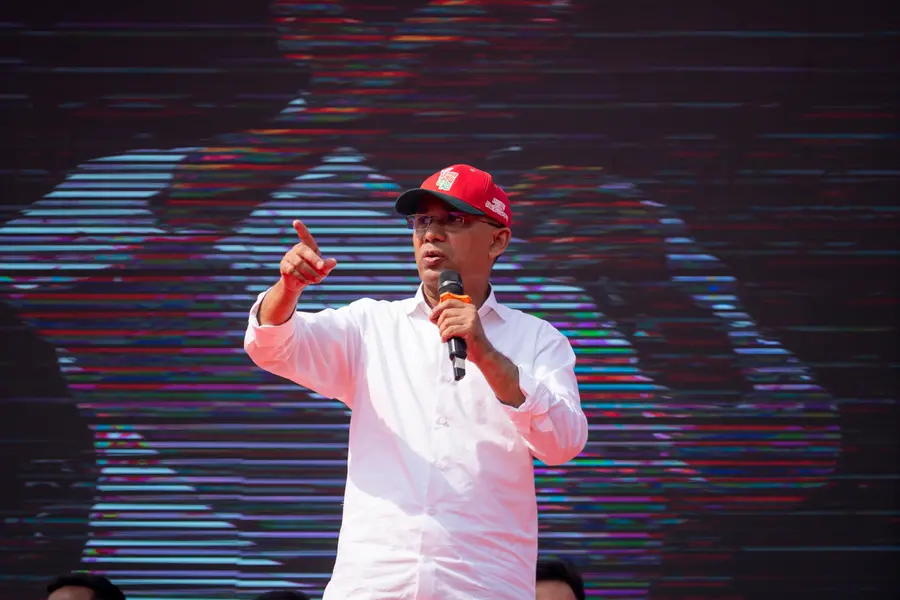
Tarique Rahman, long seen as the most influential heir to Bangladesh’s major political dynasty, is poised to take the country’s top office less than two months after ending 17 years of exile in London. A coalition led by his Bangladesh Nationalist Party (BNP) crossed the parliamentary majority mark in early counting on Friday, according to Ekattor TV, cementing a dramatic rise for the 60-year-old who left the country in 2008 amid corruption charges and political turmoil.
His swift ascent follows a youth-driven uprising that toppled longtime rival Sheikh Hasina in August 2024, ending her 15-year rule. Rahman’s return to Dhaka on Christmas Day was greeted by cheering crowds, marking a symbolic homecoming for a politician long cast as both a reformist hope and a deeply polarising figure.
Exile ends as Bangladesh enters a new political era
Rahman, the BNP’s acting chairman, had lived in London since 2008, departing Bangladesh after his release from military-backed detention and claiming he needed medical treatment. Thursday’s election is the first since Hasina’s removal, and its outcome places Rahman at the centre of a transformed political landscape.
BNP secretary general Mirza Fakhrul Islam Alamgir had described the day of Rahman’s return as a “fantastic day”, underscoring the party’s expectations that its long-absent leader would guide them into a post-uprising future.
The timing of his arrival–just weeks before the 12 February 2026 general election–highlighted his intention to reclaim influence as the party prepares for power after years of persecution under the Awami League government.
Family legacy and early political grooming
Known domestically as Tarique Zia, Rahman has deep roots in Bangladesh’s political history. Born in 1965 to former president Ziaur Rahman and former prime minister Khaleda Zia, he grew up in the shadow of national upheaval, even briefly detained as a child during the 1971 independence war. The BNP often refers to him as “one of the youngest prisoners of war.”
His father rose to power after the 1975 assassination of Sheikh Mujibur Rahman–Sheikh Hasina’s father–setting the stage for a decades-long rivalry between the Zia and Hasina families, often dubbed the “Battle of the Begums.” Ziaur Rahman himself was assassinated when Tarique was 15.
Rahman entered politics at 23, joining protests against Hussain Muhammad Ershad, and quickly became a prominent figure in the BNP, frequently appearing beside his mother on party banners.
Controversy, corruption charges and exile
Rahman’s political journey has been widely debated. A 2006 US diplomatic cable described him as the BNP’s “heir apparent” who “inspires few but unnerves many.” Other cables accused him of symbolising “kleptocratic government and violent politics,” allegations he denied as political smears.
He was arrested during a 2007 anti-corruption crackdown and later claimed he was tortured in custody. After his release, reports suggested he was pressured to leave politics—a claim he never publicly confirmed.
Freed later that year, he travelled to London for medical reasons and stayed there for 17 years. During that period, Hasina’s government prosecuted thousands of BNP members and sentenced Rahman in absentia to life imprisonment over the 2004 grenade attack on a Hasina rally–a charge he consistently rejected. Since Hasina’s fall in 2024, he has been acquitted of all major charges.
Return to Dhaka
Living quietly in Britain with his cardiologist wife and daughter, Rahman kept a low profile for years. But after Hasina’s ouster, he re-emerged online, becoming a rallying figure for BNP supporters. He met Nobel laureate Muhammad Yunus in London in June, signalling a broader diplomatic shift.
His return has been accompanied by a visible moderation in tone. Rahman now emphasises reconciliation and institution-building rather than partisan confrontation. He has spoken of restoring “people’s ownership of the state” and rebuilding democratic institutions.
He has also embraced a softer public persona, even allowing the family’s Siberian cat, Jebu, to become a social-media sensation. "She's 7. She's half Siberian. We adopted her," his daughter Zaima told Reuters.
Policy vision
Rahman has pledged to reshape Bangladesh’s foreign policy, positioning the country to attract wider investment without aligning too closely with any single power–implicitly contrasting himself with Hasina, who was viewed as pro-New Delhi.
He has proposed increasing financial support for low-income families, diversifying the economy away from garment exports by promoting industries such as toys and leather goods, and introducing a two-term, 10-year limit for prime ministers to prevent authoritarian rule.
Speaking to Reuters, he said: "What does revenge bring to someone? People have to flee from this country because of revenge. This does not bring anything good… What we need at the moment in the country is peace and stability."
Inside the BNP, Rahman’s authority has solidified further. Party insiders say he has been directly overseeing candidate selection, strategy and coalition negotiations–roles he previously handled remotely from exile.
He insists that democracy will be central to Bangladesh’s future, "Only by practicing democracy can we prosper and rebuild our country. If we practice democracy, we can establish accountability… So we want to practice democracy, we want to rebuild our country."
Published: 13 Feb 2026, 09:43 am IST
Related Topics
Disclaimer: Kindly avoid objectionable, derogatory, unlawful and lewd comments, while responding to reports. Such comments are punishable under cyber laws. Please keep away from personal attacks. The opinions expressed here are the personal opinions of readers and not that of Mathrubhumi.
