
Pakistan’s tax policies squeeze productive citizens to fund unproductive bureaucracy, report finds
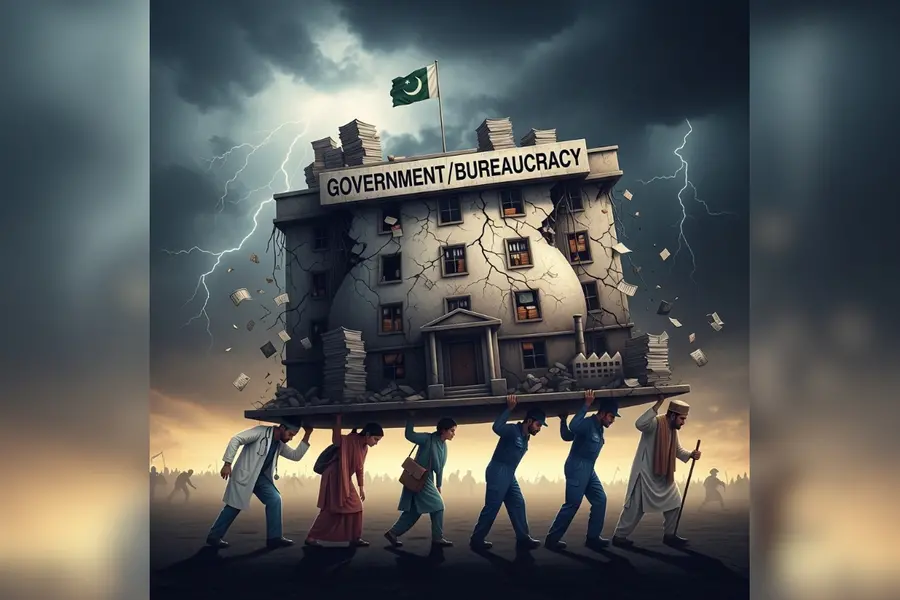
Pakistan is facing a deep economic and fiscal crisis, with policies that place heavy tax burdens on a tiny segment of its workforce. The Business Recorder report highlights that only 3.4 million Pakistanis, roughly 4% of the 85.6 million-strong workforce, effectively pay taxes to support the state.
Taxation and public services:
Also Read

The report argues that citizens are taxed heavily while receiving minimal public services, which are described as comparable to a “medieval fiefdom.” Salaried professionals face a 35% tax rate while still paying out-of-pocket for essentials such as private security, power, and education.
Impact on skilled workers:
The current system has forced around 800,000 skilled professionals to leave Pakistan by 2025. The report states that this exodus is a result of high taxation on a microscopic base, coupled with a lack of trust and transparency in government institutions.
Bureaucracy and state inefficiency:
The fiscal policy is seen as prioritising the maintenance of a “bloated, unproductive bureaucracy” over economic growth. High rates of extraction discourage formal economic activity, keeping the shadow economy intact.
Expert opinions:
While the IMF and state technocrats defend high taxation to meet debt-servicing obligations nearing Rs 9 trillion, analysts argue that such measures reduce trust and volume in the tax system, ultimately stifling economic growth.
The report stresses that Pakistan’s fiscal solvency depends on expanding the tax base and building trust, not merely increasing rates on the few productive taxpayers. Without reform, the country risks continued economic stagnation and further brain drain.
Published: 07 Feb 2026, 06:40 pm IST
Related Topics
Disclaimer: Kindly avoid objectionable, derogatory, unlawful and lewd comments, while responding to reports. Such comments are punishable under cyber laws. Please keep away from personal attacks. The opinions expressed here are the personal opinions of readers and not that of Mathrubhumi.