
Indian intelligence inputs suggest that Pakistan’s ISI is backing a strategy involving foreign women recruits in suicide units linked to Jaish-e-Mohammad
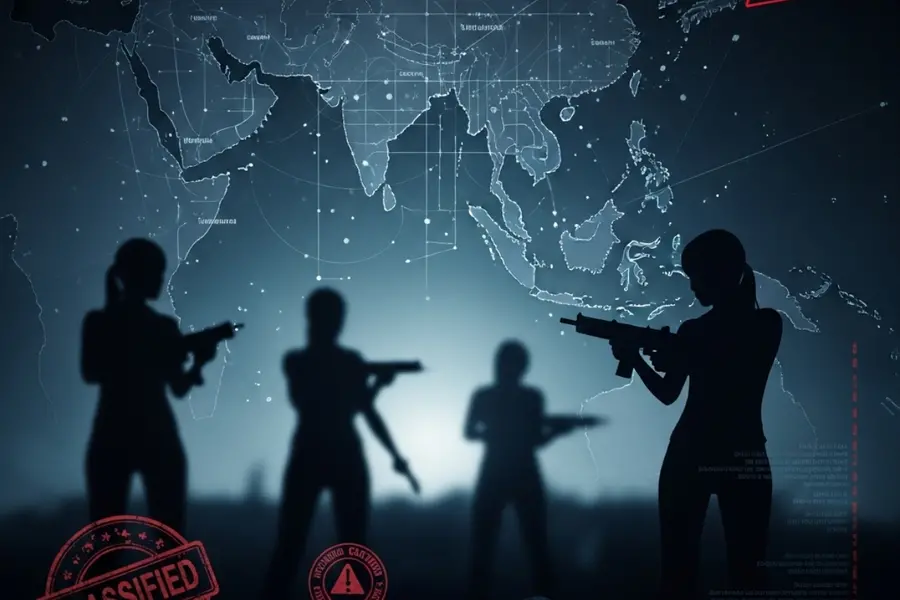
Islamabad: Indian intelligence agencies have flagged what they describe as a shift in strategy by Pakistan’s Inter-Services Intelligence (ISI), involving the recruitment of foreign women for suicide missions linked to Jaish-e-Mohammad (JeM).
The development comes weeks after an unverified audio clip surfaced in January in which JeM chief Masood Azhar was allegedly heard threatening to unleash thousands of suicide bombers on India. While the authenticity of the audio has not been confirmed, intelligence officials maintain that JeM has been expanding its suicide bomber unit.
Also Read

According to officials cited in the inputs, the proposed unit is expected to be women-heavy. However, the recruits are reportedly not of Pakistani origin. Instead, women are allegedly being recruited from countries such as Uzbekistan, Indonesia and the Philippines. Pakistani women are said to be involved in leadership, radicalisation and training roles, but not in operational field deployment.
Officials claim the strategy serves two purposes. First, they say the recruitment of foreign nationals is seen as strengthening ideological commitment within the group. Second, and more significantly, it is described as an attempt to provide Pakistan with plausible deniability in the event of an attack.
According to intelligence assessments, Pakistan has historically attempted to distance itself from direct involvement in cross-border terrorism. By allegedly deploying non-Pakistani operatives, authorities believe the ISI may be attempting to reduce diplomatic and economic consequences from international bodies such as the International Monetary Fund (IMF) and the Financial Action Task Force (FATF).
Officials further indicated that these recruits are reportedly being trained to target soft locations, including hotels and movie theatres. The training process, they claim, would include reconnaissance of targets before operatives return to their home countries to await further instructions. Entry into India would allegedly be attempted only after final clearance is issued.
In parallel, intelligence sources also suggest that the ISI is encouraging the expansion of women’s networks within Lashkar-e-Tayiba (LeT). While JeM is said to be focused on targets outside Jammu and Kashmir, LeT’s alleged recruitment efforts are reportedly concentrated in the Union Territory.
Security analysts cited in the inputs argue that women operatives are often perceived as less suspicious and may evade scrutiny more easily than male recruits. Past investigations, including the Faridabad module case, have highlighted the role of women in recruitment and logistical coordination, according to officials.
Authorities state that counter-terror monitoring mechanisms are being strengthened in response to these inputs. However, the claims remain based on intelligence assessments and ongoing investigations.
No official response from Pakistan was immediately available regarding the allegations.
(With IANS inputs)
Published: 07 Feb 2026, 04:56 pm IST
Related Topics
Disclaimer: Kindly avoid objectionable, derogatory, unlawful and lewd comments, while responding to reports. Such comments are punishable under cyber laws. Please keep away from personal attacks. The opinions expressed here are the personal opinions of readers and not that of Mathrubhumi.