
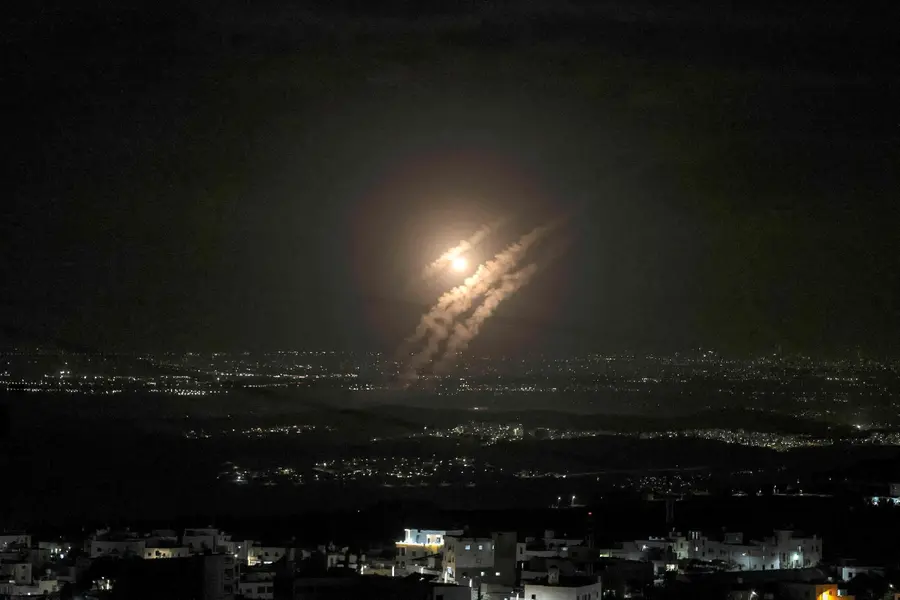
No fighter jets, soldiers, or critical operational infrastructure were impacted in Tuesday's missile attack by Iran, according to the Israeli Defence Forces.
The IDF also refuted Iranian claims, confirming that no hypersonic missiles were launched from Iran during the attack.
Also Read

While several air force bases were hit, the strikes were deemed ineffective, the IDF claimed, adding that only administrative buildings, which are not part of the operational core, were affected.
Israel has vowed retaliation against Iran after a barrage of missiles was fired at its territory, while Tehran warned on Wednesday that any counterattack would be met with an even larger assault.
Iranian state media claimed 200 missiles, including hypersonic weapons for the first time, were launched, targeting "three military bases" around Tel Aviv and other locations. The Israeli Defense Forces, however, reported that 180 missiles were fired at Israel.
In response, Israel carried out heavy airstrikes early Wednesday on Hezbollah strongholds in southern Beirut, escalating the conflict with Iran's ally in Lebanon. Israel, which has recently shifted its focus from the Gaza war to its northern border, is engaged in ongoing clashes with Hezbollah.
This was Iran's second missile attack on Israel since April, igniting panic throughout the region. Israel intercepted most of the missiles, but shrapnel injured two people, and one missile damaged a school building.
In the occupied West Bank, a Palestinian man in Jericho was killed when debris from a missile struck him, according to the city's governor, Hussein Hamayel.
Israeli Prime Minister Benjamin Netanyahu warned Iran, stating, "Iran made a big mistake tonight and will pay for it," and reiterated that Israel would strike back against any aggressor.
Defense Minister Yoav Gallant, who monitored the missile interceptions at a command center, also promised severe consequences for Iran, stating, "Those who attack the state of Israel pay a heavy price."
Iran's Revolutionary Guards claimed the missile strikes were in retaliation for the recent killing of Hezbollah leader Hassan Nasrallah and Hamas leader Ismail Haniyeh in attacks attributed to Israel. The attack also sought to avenge the death of Quds Force commander Abbas Nilforoushan, killed alongside Nasrallah.
The strikes followed Israel’s "targeted ground raids" in southern Lebanon, with tensions rising across the border. Iran’s Revolutionary Guards commander, Major General Mohammad Bagheri, threatened a more intense response if Israel follows through on its vow to retaliate.
Agencies
Published: 02 Oct 2024, 05:10 pm IST
Related Topics
Disclaimer: Kindly avoid objectionable, derogatory, unlawful and lewd comments, while responding to reports. Such comments are punishable under cyber laws. Please keep away from personal attacks. The opinions expressed here are the personal opinions of readers and not that of Mathrubhumi.