
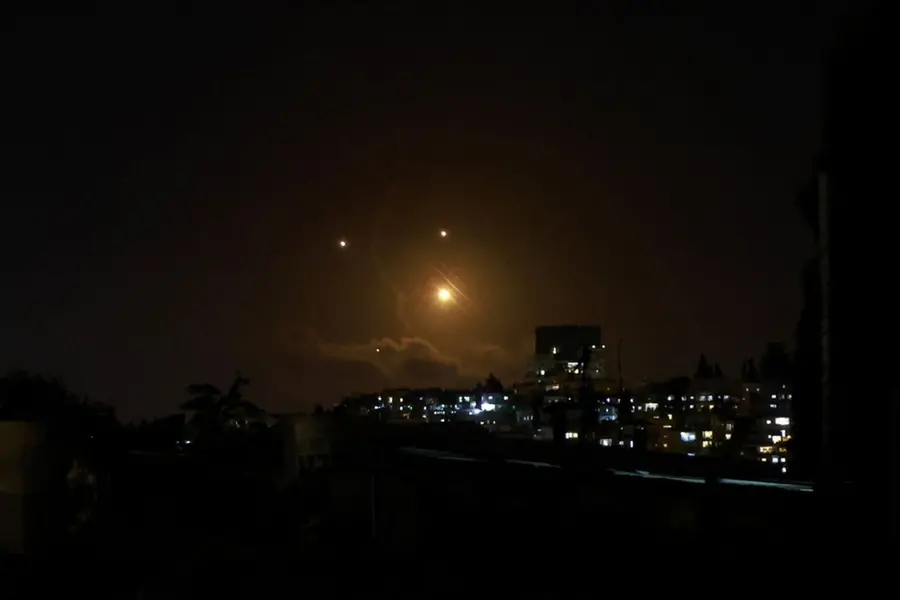
The Israeli Defense Forces (IDF) reported that they intercepted "a large number" of the 180 ballistic missiles launched by Iran on Tuesday evening. Israel's air defenses were deemed "effective," according to the IDF. The US also played a role in the defense, assisting in detecting the missile threat from Iran and intercepting some of the missiles, according to military sources.
The IDF noted that there were "isolated" missile impacts in central Israel, with additional strikes reported in southern parts of the country. Despite the attack, the Israeli Air Force's operations, including planes, air defenses, and air traffic control, were unaffected and continue to function normally.
IDF Spokesman Rear Adm. Daniel Hagari stated that Israel will retaliate for the Iranian missile strike. "We are on heightened alert both defensively and offensively. We will protect the citizens of Israel, and this missile fire will have consequences. We have plans, and we will act at a time and place of our choosing," he said.
Iran launched dozens of missiles into Israel, marking a sharp escalation in the ongoing conflict with Iran-backed militias Hezbollah and Hamas. There were no immediate reports of casualties as air raid sirens blared across the country, and Israeli authorities instructed residents to take shelter in bomb shelters.
Loud explosions shook areas near Tel Aviv and Jerusalem, though it was unclear if the blasts were caused by missile impacts, interceptions by Israeli defenses, or a combination of both.
Both Israel and the United States had previously warned that Iran would face severe consequences if it attacked Israel. President Joe Biden and Vice President Kamala Harris were closely monitoring the situation from the White House Situation Room.
In a statement, Iran mentioned the deaths of Hezbollah leader Hassan Nasrallah and Iranian Revolutionary Guard General Abbas Nilforushan, both killed in an Israeli airstrike in Beirut last week. It also referenced the assassination of Hamas leader Ismail Haniyeh in Tehran in July, allegedly carried out by Israel. Iran warned that this missile attack was only a "first wave" without providing further details.
The missile strikes followed Israel's announcement of limited ground operations against Hezbollah in southern Lebanon. In response, Israeli airstrikes and artillery targeted southern Lebanese villages, prompting Hezbollah to fire a barrage of rockets back into Israel. The escalating violence raised concerns about the potential for a broader regional war, though immediate reports of casualties remained unconfirmed.
A senior White House official, speaking anonymously, warned that any ballistic missile attack from Iran on Israel would lead to "severe consequences." U.S. military assets, including ships and aircraft, are positioned in the region to support Israel in case of further Iranian aggression.
Agencies
Published: 02 Oct 2024, 12:08 am IST
Related Topics
Disclaimer: Kindly avoid objectionable, derogatory, unlawful and lewd comments, while responding to reports. Such comments are punishable under cyber laws. Please keep away from personal attacks. The opinions expressed here are the personal opinions of readers and not that of Mathrubhumi.
