
Israel has launched a wide-ranging military operation across multiple Iranian cities, targeting nuclear and military sites
Tehran: Israel has reportedly carried out large-scale military strikes on Iranian nuclear and military targets, in what Israeli officials are calling Operation Rising Lion.
The strikes, launched early on Friday, targeted cities including Tehran, Natanz, Tabriz, Isfahan, Arak, and Kermanshah. The Iranian capital and surrounding areas witnessed multiple explosions, with videos showing extensive damage to buildings, including residential areas.
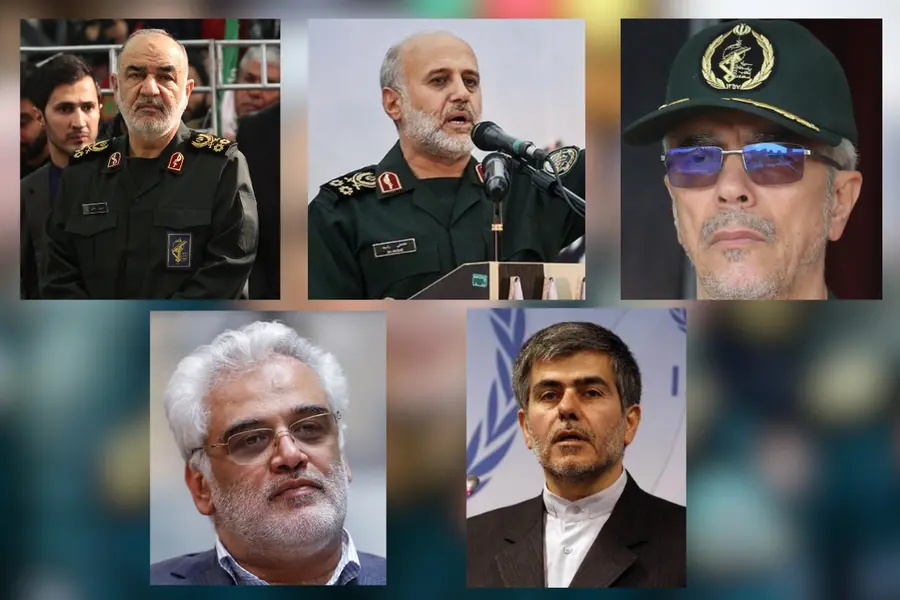
According to Iranian media, at least five senior officials were killed in the Israeli strikes. Among them are:
Major-General Hossein Salami, commander-in-chief of the Islamic Revolutionary Guard Corps (IRGC)
Major-General Mohammad Bagheri, chief of staff of Iran’s armed forces
General Gholamali Rashid, commander of the Khatam al-Anbiya Headquarters
Dr Fereydoun Abbasi, a prominent nuclear scientist and former head of the Atomic Energy Organisation of Iran
Dr Mohammad Mahdi Tehranchi, nuclear scientist and head of Islamic Azad University
Additionally, Ali Shamkhani, a top adviser to Supreme Leader Ayatollah Ali Khamenei, was reportedly critically injured, according to state-run outlet Nour News.
Iranian authorities have not issued a final official statement confirming the deaths, but semi-official news agencies including Tasnim and Fars News have circulated the names. Al Jazeera reporter from Tehran, also corroborated the information, citing multiple Iranian sources.
Israeli Prime Minister Benjamin Netanyahu said in a pre-recorded message that the airstrikes were meant to disrupt Iran’s nuclear infrastructure and prevent further development of ballistic missile capabilities. “We could not wait another moment to act,” said Israel’s military chief of staff Eyal Zamir, calling the strikes a “point of no return.”
Supreme Leader Ayatollah Khamenei responded sharply, saying Israel had “opened its dirty and bloody hand” and vowed “a bitter and painful” response. Military spokesperson Abolfazl Shekarchi warned that Israel would face a “heavy price”.
The United Nations and other international actors have called for restraint. UN Secretary-General António Guterres condemned the escalation and raised concerns about attacks on nuclear facilities. The head of the International Atomic Energy Agency (IAEA), Rafael Grossi, confirmed that the Natanz uranium enrichment site was hit and said the agency is monitoring radiation levels and in contact with Iranian authorities.
Meanwhile, US President Donald Trump told Fox News that the United States was not involved in the Israeli operation. “Iran cannot have a nuclear bomb. We will help defend Israel if needed,” he said. US Secretary of State Marco Rubio also said the US would protect its troops in the region but emphasised non-involvement.
Oman, a mediator in the Iran-US nuclear talks, condemned Israel’s strikes as a violation of international norms and warned that the assault could destabilise the region further.
This marks one of the most significant escalations between Israel and Iran in recent history, especially given the reported assassination of high-level Iranian officials and scientists. The international community remains on high alert amid fears of a wider regional war.
Published: 13 Jun 2025, 12:51 pm IST
Disclaimer: Kindly avoid objectionable, derogatory, unlawful and lewd comments, while responding to reports. Such comments are punishable under cyber laws. Please keep away from personal attacks. The opinions expressed here are the personal opinions of readers and not that of Mathrubhumi.
