
Prime Minister Narendra Modi and Israeli Prime Minister Benjamin Netanyahu held a phone conversation on Thursday, discussing developments in West Asia and reviewing cooperation between India and Israel. The call came amid continuing tensions in the region.
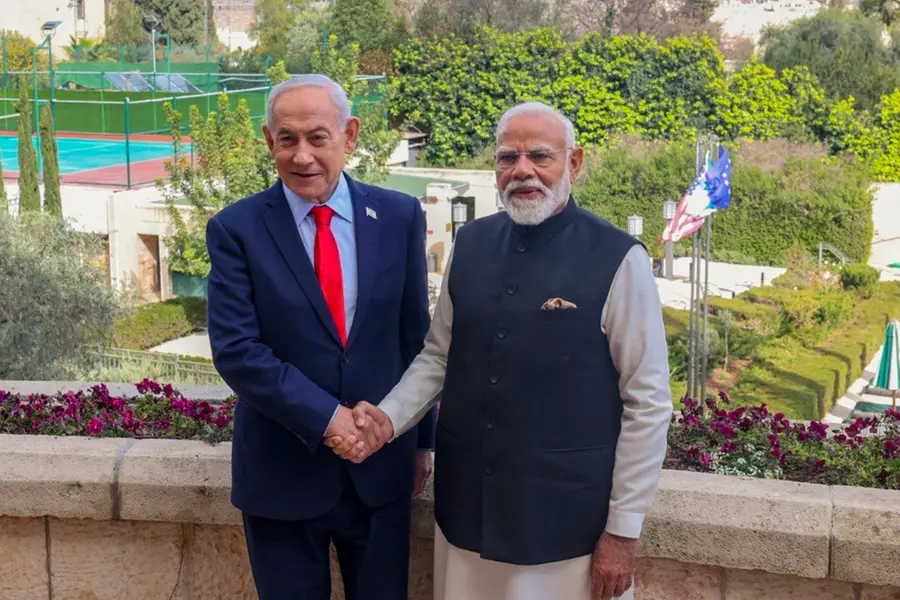
Jerusalem: Prime Minister Narendra Modi and Israeli Prime Minister Benjamin Netanyahu held a telephone conversation on Thursday, during which the two leaders discussed recent developments in West Asia and reviewed progress in the India-Israel Special Strategic Partnership.
The discussion took place amid continued tensions in the region involving Israel, Iran and other regional actors.
What did Modi and Netanyahu discuss?
According to the Prime Minister’s Office (PMO), Modi and Netanyahu exchanged views on the current situation in West Asia and discussed the progress of bilateral cooperation between India and Israel. Both leaders reaffirmed their commitment to strengthening ties across various sectors and agreed to remain in contact as regional developments continue.
After the call, Modi shared details of the conversation on X, saying, “Received a phone call from Prime Minister Benjamin Netanyahu. We reviewed progress on various aspects of the India-Israel Special Strategic Partnership which continues to grow from strength-to-strength.”
He added, “We also exchanged views on the current situation in West Asia.”
Why does the conversation matter?
The phone call comes at a time when West Asia remains affected by ongoing conflicts, diplomatic tensions and security challenges. Developments involving Israel, Iran and other countries have raised concerns about regional stability, energy security and global trade routes.
For India, stability in West Asia is significant due to its economic links, energy requirements, strategic interests and the presence of a large Indian community across the region.
India-Israel strategic partnership
India and Israel share a Special Strategic Partnership that has expanded over the years in areas including defence, technology, agriculture, water management, innovation, trade and research.
The relationship has become particularly important in areas such as defence cooperation and technological development, with both countries continuing discussions on expanding collaboration in different sectors.
West Asia tensions and regional developments
The broader West Asian situation remains uncertain amid continuing conflicts and diplomatic efforts. The Gaza conflict, tensions involving Iran and Israel, and security concerns around important waterways have kept the region under international focus.
The Strait of Hormuz, located near the Persian Gulf, remains a key global trade route as a major portion of the world’s energy shipments passes through the area. Any instability around the waterway can have wider economic consequences.
Iran has also said it is in the final stages of drafting an agreement related to the Strait of Hormuz with Oman, while military tensions in the region continue.
India has maintained diplomatic relations with Israel, Arab countries and Iran while focusing on strategic cooperation and regional stability. New Delhi has repeatedly highlighted the importance of dialogue and peaceful solutions to conflicts.
The Modi-Netanyahu conversation reflects continued engagement between the two countries as they monitor developments in West Asia and work on strengthening bilateral ties.
Published: 06 Aug 2026, 09:15 pm IST
ABOUT THE AUTHOR

Disclaimer: Kindly avoid objectionable, derogatory, unlawful and lewd comments, while responding to reports. Such comments are punishable under cyber laws. Please keep away from personal attacks. The opinions expressed here are the personal opinions of readers and not that of Mathrubhumi.