
Turkey has criticised Israel's decision to formally recognise the Armenian genocide, calling it politically motivated as tensions between the two countries deepen over Gaza and regional diplomacy.
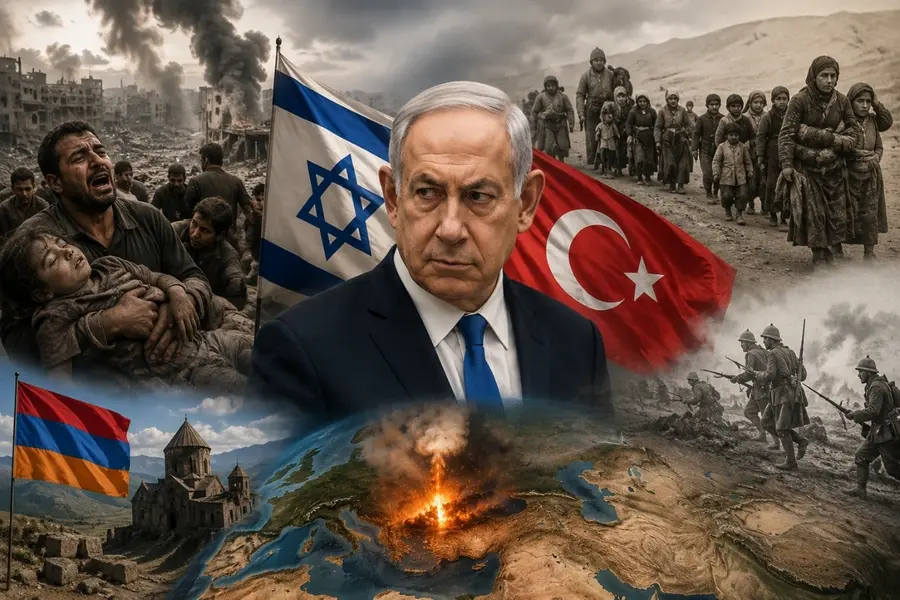
Jerusalem: A fresh diplomatic row has erupted between Turkey and Israel after the Israeli Cabinet unanimously approved a proposal to formally recognise the mass killings of Armenians during the Ottoman Empire as genocide, prompting Ankara to accuse Israel of using the issue for political purposes.
Israel moves to formally recognise Armenian genocide
Also Read

Israel's Cabinet has unanimously approved a proposal to officially designate the mass killings of Armenians by the Ottoman Empire during World War I as genocide. The decision now awaits approval by the Israeli Parliament (Knesset) before becoming official policy.
While several Israeli leaders, including Prime Minister Benjamin Netanyahu, have previously referred to the events as genocide, Israel has never formally adopted the designation through parliamentary approval. If endorsed by the Knesset, the move would mark a major shift in Israel's long-standing position on one of the world's most sensitive historical disputes.
Israeli Foreign Minister Gideon Saar, who introduced the proposal, described the recognition as a "moral and historical duty". He argued that despite extensive historical documentation, the Armenian genocide has continued to face organised campaigns of denial and historical revisionism. Saar noted that more than 30 countries, including the United States, Syria and Lebanon, have already recognised the killings as genocide.
Turkey condemns decision as politically motivated
Turkey swiftly rejected Israel's move, calling it politically motivated rather than historically driven.
In a strongly worded statement, Turkey's Ministry of Foreign Affairs accused Israel of attempting to divert international attention from its own conduct in Gaza.
The ministry alleged that the Israeli government was using the 1915 issue to distract from international legal proceedings concerning its military campaign against Hamas in Gaza. It also claimed the decision reflected the political difficulties facing Prime Minister Benjamin Netanyahu and members of his government.
Ankara reiterated that it would continue working to counter what it described as Israel's expansionist and destabilising policies in the region while advocating accountability under international law.
Why the Armenian genocide remains disputed
The events of 1915 remain one of the most contentious issues in modern history.
Most historians estimate that up to 1.5 million Armenians died through mass killings, forced deportations and starvation during the final years of the Ottoman Empire. Many scholars regard the episode as the first genocide of the 20th century.
Turkey, however, rejects the genocide label. It argues that the death toll has been exaggerated and maintains that many Armenians died during widespread civil conflict, famine and unrest rather than through a planned campaign of extermination.
Ankara has consistently argued that historical conclusions should be based on legal findings, historical research and international dialogue rather than political decisions by foreign governments.
Recognition reflects worsening Israel-Turkey ties
The decision comes as relations between Israel and Turkey continue to deteriorate.
The two countries were once close regional allies, but ties have steadily worsened during the presidency of Recep Tayyip Erdogan. Their relationship has further deteriorated since the outbreak of the Gaza war in October 2023, with Ankara emerging as one of Israel's strongest international critics.
For decades, Israel avoided officially recognising the Armenian genocide, partly to preserve strategic relations with Turkey. The latest Cabinet decision signals a significant shift in Israeli foreign policy amid increasingly strained bilateral relations.
Gaza conflict continues to fuel diplomatic tensions
Turkey's response also reflects broader tensions over Israel's military campaign in Gaza.
Israel continues to face allegations of genocide before the International Court of Justice, while the International Criminal Court has issued arrest warrants for Israeli Prime Minister Benjamin Netanyahu and former Defence Minister Yoav Gallant over alleged war crimes and crimes against humanity. Israel rejects the allegations and disputes the courts' jurisdiction.
Israel launched its military campaign following Hamas' October 7, 2023, attack, which killed around 1,200 people and saw more than 250 hostages taken. According to Gaza health authorities, more than 73,000 Palestinians have since been killed, although those figures cannot be independently verified. Israel says it targets Hamas militants and accuses the group of operating from civilian areas, an allegation Hamas denies.
Cyber conflict adds another front
Alongside military and diplomatic tensions, cyber warfare between Iran and Israel has also intensified.
According to Israel's National Cyber Directorate, cyberattacks attributed to Iran increased sharply during June 2026, with officials reporting around 4,800 hostile incidents compared with approximately 1,600 during the previous year's conflict.
Israeli officials say the attacks have targeted critical infrastructure, government-linked organisations, businesses and private citizens. They also claim Iranian-linked groups have increasingly used artificial intelligence to create sophisticated phishing campaigns, malware and fake online identities.
Iran has consistently denied conducting offensive cyber campaigns against other countries while also accusing foreign actors of carrying out cyberattacks against its own infrastructure.
Published: 29 Jun 2026, 12:35 pm IST
Related Topics
Disclaimer: Kindly avoid objectionable, derogatory, unlawful and lewd comments, while responding to reports. Such comments are punishable under cyber laws. Please keep away from personal attacks. The opinions expressed here are the personal opinions of readers and not that of Mathrubhumi.