
A group of eight Muslim-majority countries has warned that ongoing Israeli military operations in Gaza could affect efforts to implement US President Donald Trump’s proposed peace framework. The statement comes amid disagreements over Hamas disarmament, Israeli troop withdrawal and the next phase of a possible ceasefire.
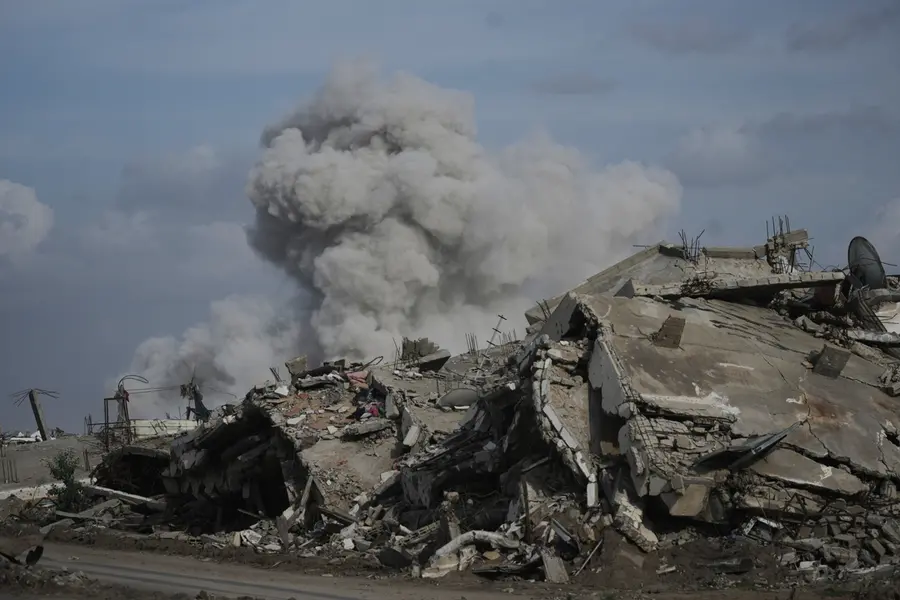
Abu Dhabi: Foreign ministers from the United Arab Emirates, Qatar, Jordan, Indonesia, Pakistan, Türkiye, Saudi Arabia and Egypt issued a joint statement criticising Israel’s continued military actions in Gaza.
The countries said the operations could weaken diplomatic efforts aimed at moving forward with the next stage of Trump’s Gaza peace framework. They argued that continued fighting could increase tensions and worsen the humanitarian situation in the region.
Also Read

The statement brought together countries with different diplomatic relationships with Israel and the United States. While the UAE has formal diplomatic relations with Israel, other countries including Türkiye have been among Israel’s strongest critics during the Gaza war.
Why are Muslim nations opposing Israel’s actions?
The eight countries accused Israel of violating international law and said attacks affecting civilian infrastructure, healthcare facilities and humanitarian operations were creating further instability.
In their statement, the foreign ministers said protecting civilians, medical workers and aid personnel was an obligation under international humanitarian law.
They also called for uninterrupted humanitarian assistance to reach Gaza and said the situation in Gaza was connected to wider issues involving the West Bank and East Jerusalem.
What is Trump’s Gaza peace framework?
The proposed framework focuses on ending the Gaza conflict through a series of steps involving Hamas and Israel.
According to the plan described by officials, Hamas would begin handing over weapons while Israel would stop military operations and gradually reduce its presence in Gaza.
However, disagreements have emerged over the order in which these steps should happen.
Why is Israel objecting to parts of the plan?
Israeli Prime Minister Benjamin Netanyahu has said Israeli forces will not fully withdraw until Hamas is disarmed.
Netanyahu said Israel had received a draft proposal from the Trump administration but had sent its own comments because it did not fully agree with the original version.
“We did not agree. It is not our draft. We sent our comments,” Netanyahu said.
He added that Israel would continue taking measures necessary to protect its citizens and territory.
The main dispute: Hamas disarmament vs Israeli withdrawal
The biggest disagreement appears to be about sequencing.
The Trump framework reportedly links Hamas disarmament with a ceasefire and Israeli military withdrawal.
Israel says Hamas must first surrender weapons before a complete withdrawal.
Regional countries argue that continued military operations could prevent progress towards a political solution.
This disagreement has become a major obstacle in moving the peace process forward.
Role of the eight countries
The joint statement reflects a rare moment of agreement among several Muslim-majority countries that often have different approaches towards Israel and regional diplomacy.
The countries urged renewed efforts towards a political solution based on a two-state framework and rejected actions they said could permanently change the status of Palestinian territories.
The latest diplomatic dispute highlights the uncertainty surrounding efforts to end the Gaza conflict. While the US-backed framework aims to create a path towards a ceasefire, differences between Israel, Hamas and regional countries continue to complicate negotiations.
The coming discussions are expected to focus on whether a compromise can be reached on Hamas’ future role, Israeli security concerns and the conditions required for a long-term ceasefire.
Published: 06 Aug 2026, 09:01 pm IST
ABOUT THE AUTHOR
Disclaimer: Kindly avoid objectionable, derogatory, unlawful and lewd comments, while responding to reports. Such comments are punishable under cyber laws. Please keep away from personal attacks. The opinions expressed here are the personal opinions of readers and not that of Mathrubhumi.