
A Wall Street Journal investigation says Iranian missile and drone strikes damaged at least 20 US military sites, prompting the Pentagon to reassess its Middle East military presence and rebuilding plans
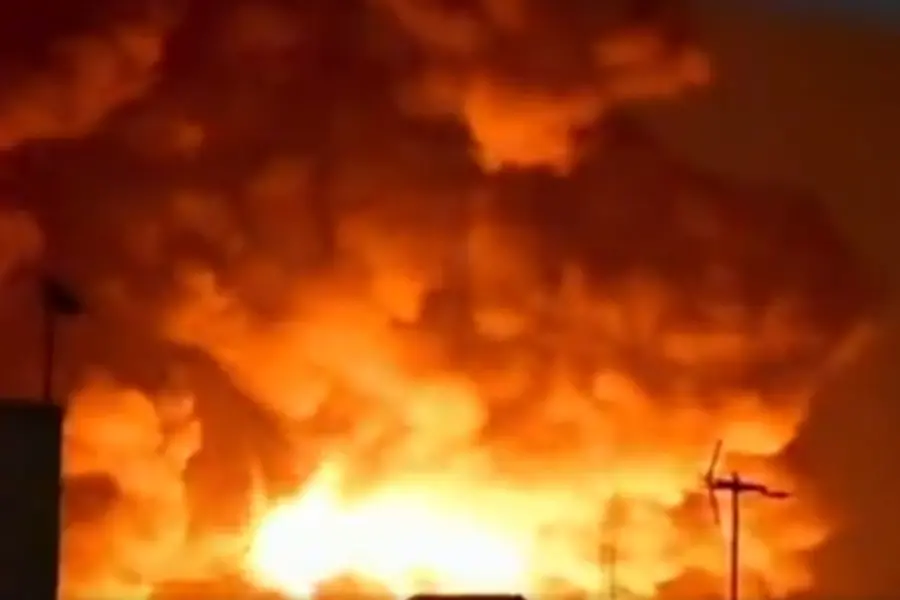
Tehran: Fresh revelations from a Wall Street Journal investigation suggest the damage caused by Iran's missile and drone campaign against US military bases in the Middle East was far more extensive than publicly acknowledged at the time.
The findings indicate that the conflict left dozens of American military installations damaged, exposing vulnerabilities in Washington's regional defence network and forcing the Pentagon to reassess its long-term military posture in the Gulf.
Also Read

WSJ investigation points to wider damage
According to the Wall Street Journal, Iranian missile and drone strikes damaged at least 20 US military sites across the Middle East during the recent conflict. The newspaper reported that the scale of destruction was significantly greater than what had been reflected in the Pentagon's public statements, which largely emphasised that no American service members were killed and that military operations continued without major disruption.
The investigation suggests that while operational continuity was maintained, several key facilities sustained structural damage that could require extensive rebuilding and redesign.
Bahrain naval base among the hardest hit
One of the most severely affected locations was Naval Support Activity (NSA) Bahrain, the US Navy's only permanent military base in the Middle East and a critical hub for operations in the Gulf.
The report states that repeated Iranian strikes between late February and June damaged the base's command headquarters, more than a dozen additional buildings and two satellite communications terminals. Although the Pentagon said there were no fatalities among US personnel, most military staff had reportedly been evacuated before the attacks, leaving only a limited number of personnel on site.
The conflict also affected civilian infrastructure. Bahraini authorities confirmed that a residential building near the country's international airport was damaged during the attacks, although officials clarified that it was not close to the headquarters of the US Navy's Fifth Fleet.
Pentagon reviewing Middle East military strategy
The reported scale of the damage has prompted a broader review of America's military footprint in the region.
According to the Wall Street Journal, Pentagon officials are considering redesigning parts of the Bahrain naval facility rather than simply rebuilding them. Discussions reportedly include reducing troop deployments in Kuwait and Saudi Arabia, relocating certain military assets farther west beyond the operational range of Iranian missiles and drones, and moving critical command-and-control centres underground to improve survivability during future attacks.
Officials are also evaluating whether some damaged facilities should be rebuilt at all, with greater emphasis being placed on dispersing military capabilities across multiple locations instead of concentrating them at a handful of large bases.
Rebuilding bill could run into hundreds of millions
The financial implications are expected to be significant.
The Wall Street Journal estimated that rebuilding damaged infrastructure at the Bahrain naval base alone could cost approximately $400 million. That figure covers construction costs but excludes additional expenses such as debris clearance, security enhancements and fortification work.
The broader cost of the conflict could be even higher. The Centre for Strategic and International Studies estimated that the overall conflict cost nearly $40 billion, including between $2.2 billion and $5.1 billion in damage to US military installations across the Middle East.
Long-standing concerns exposed
The investigation argues that the conflict highlighted concerns that military planners have raised for years regarding the vulnerability of US bases in the Gulf.
Many American facilities in the region were established before Iran developed its current arsenal of precision-guided ballistic missiles, cruise missiles and long-range drones. As Iran's strike capabilities expanded, analysts repeatedly warned that fixed military installations would become increasingly exposed in the event of a regional conflict.
According to the report, proposals to relocate some military infrastructure farther west were discussed during President Donald Trump's first term but were never implemented.
Diplomatic tensions remain high
The military fallout has also complicated diplomatic efforts between Washington and Tehran.
According to the Associated Press, Iran has warned that negotiations with the United States over sanctions relief, its nuclear programme and maritime security in the Strait of Hormuz could come to a "complete halt" if Washington launches additional military strikes.
Although both sides are expected to resume talks, recent military exchanges have heightened uncertainty over the future of diplomatic negotiations, while the reported damage to US military infrastructure has added a new strategic dimension to the ongoing tensions in the Middle East.
Published: 29 Jun 2026, 12:09 pm IST
Related Topics
Disclaimer: Kindly avoid objectionable, derogatory, unlawful and lewd comments, while responding to reports. Such comments are punishable under cyber laws. Please keep away from personal attacks. The opinions expressed here are the personal opinions of readers and not that of Mathrubhumi.