
Boeing faces fresh scrutiny after the FAA found hundreds of quality violations and fined the aircraft maker $3.1 million, raising renewed questions about its safety and certification processes.
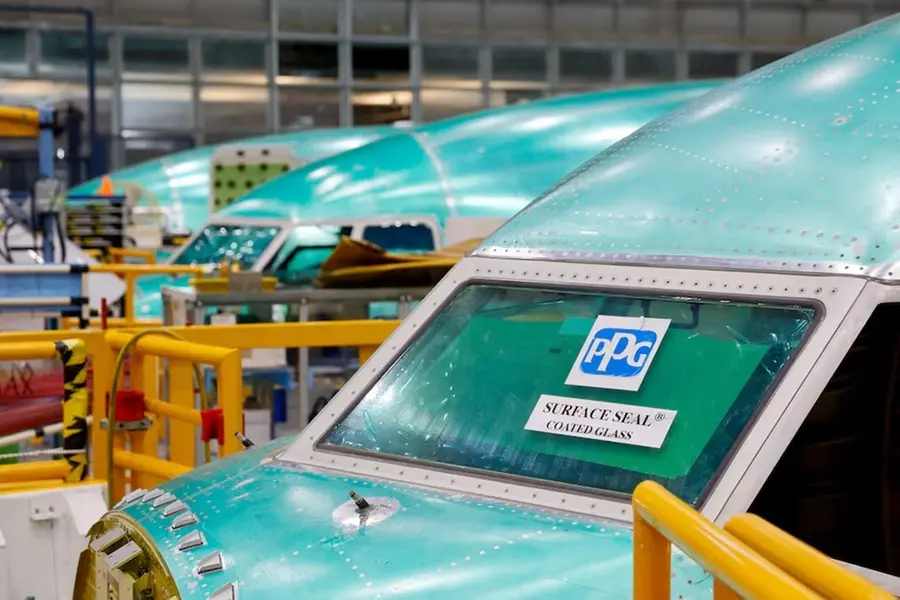
For an aircraft maker, safety does not begin when a passenger boards a plane. It begins much earlier on the factory floor, during assembly, inspection, testing and the final checks before an aircraft is cleared to fly. For Boeing, this basic principle has once again come under scrutiny.
The US aircraft maker has paid a $3.1 million fine to the Federal Aviation Administration (FAA) over a series of safety violations, including problems linked to the January 2024 Alaska Airlines 737 MAX 9 incident. The FAA had proposed the fine in September 2025, but the payment, made in January 2026, was not publicly disclosed until this week. Boeing confirmed that it had paid the penalty.
Also Read

The amount may appear small for a company of Boeing’s size. But the bigger issue is what the FAA found behind the fine and what it says about the company’s safety and quality culture.
Hundreds of quality violations
The FAA said it had identified hundreds of quality-system violations at Boeing’s 737 production facility in Renton, Washington, and at the Spirit AeroSystems facility in Wichita, Kansas, which was then a Boeing supplier.
The violations were recorded between September 2023 and February 2024, a period that included the January 5, 2024, Alaska Airlines 737 MAX 9 incident.
The Alaska Airlines aircraft had suffered a serious mid-air emergency when a door plug came off the aircraft shortly after take-off. The incident did not result in fatalities, but it became another major warning sign for Boeing and triggered intense scrutiny of the company's manufacturing and quality processes.
The latest FAA findings make the issue even more serious because they go beyond a single manufacturing mistake. They point towards weaknesses in the systems that are supposed to catch problems before an aircraft reaches an airline or, ultimately, a passenger.
When an aircraft is not ready to fly
One of the FAA's most concerning findings was that Boeing presented two aircraft to the regulator for airworthiness certification even though they were not airworthy.
In simple terms, an aircraft being built for an airline cannot be treated as ready simply because most of its assembly is complete. It must meet the required safety and regulatory standards before it can receive approval to enter service. The FAA also found that a Boeing employee pressured a colleague working on behalf of the regulator to approve a 737 MAX so that the company could meet its delivery schedule.
The colleague had determined that the aircraft did not comply with applicable standards.
This is where the issue becomes bigger than a factory error. Delivery targets can change. Production schedules can change. But an aircraft's safety standards cannot.
The importance of an independent safety check
Aircraft manufacturers have systems that allow authorised employees to perform certain regulatory functions on behalf of the FAA. These systems are designed to provide oversight while allowing manufacturers to manage parts of the certification process. For such a system to work, however, the person responsible for the safety decision must be able to say “no” when an aircraft does not meet the required standard.
If production pressure, delivery targets or commercial priorities begin influencing that decision, the entire purpose of the safety check is weakened. That is why the FAA specifically highlighted interference with the independence of safety officials in its findings.
The Alaska Airlines incident changed the conversation
The January 2024 Alaska Airlines incident had already placed Boeing's manufacturing practices under a powerful microscope. The FAA responded by increasing its oversight of Boeing, halting production expansion of the 737 MAX and examining the company's production and quality systems.
The incident also changed the conversation around what might appear to be small manufacturing or documentation problems.
A missing fastener, an incomplete record or a missed inspection may seem like a minor issue when viewed individually. But aviation safety depends on thousands of such checks being completed correctly. A small gap in a manufacturing process can become a very big problem in the air. That is why quality control is not simply about paperwork. It is part of the aircraft's safety system.
Also read | Boeing achieves major milestone as FAA clears 737-7 Max for commercial flights
Boeing is trying to rebuild trust
Boeing has been working to strengthen its safety and quality processes following years of intense scrutiny. The company says its Safety & Quality Plan includes greater investment in workforce training, simpler processes, reducing defects and strengthening its safety culture. It is also using performance indicators to monitor the health of its production system.
There are signs that regulators have seen progress. In July 2026, the FAA allowed Boeing to resume issuing airworthiness certificates for all 737 MAX and 787 aircraft after months of additional safety reviews and production oversight. The FAA said the decision reflected consistent production quality and greater confidence in Boeing's processes.
But the latest fine shows that Boeing's recovery is far from simply being a technical exercise.
The company is also trying to rebuild confidence among regulators, airlines, employees and passengers.
Why this matters to passengers
Most passengers will never see an aircraft's production line. They will not see the inspection records, quality checks or certification paperwork that stand behind their flight. Yet those invisible processes are among the most important parts of aviation safety.
When a passenger boards a Boeing aircraft, there is an expectation that thousands of people and processes have already done their jobs correctly.
That includes engineers, technicians, inspectors, quality teams, regulators and the employees responsible for signing off an aircraft. The latest FAA findings raise a simple but important question: Can every person involved in that chain stop the process when something is wrong, even when there is pressure to deliver the aircraft?
Also read | US FAA orders Boeing 787 inspections over fatigue crack risk: What it means for passengers
For Boeing, the problem is bigger than a fine
The $3.1 million penalty may eventually disappear from Boeing's financial statements. The more difficult challenge is repairing the trust damaged by repeated questions around manufacturing quality and safety.
The FAA's latest findings do not suggest that Boeing is facing one isolated problem. They point to weaknesses across quality systems, certification processes and the independence of safety oversight. That makes the issue much more significant. Boeing is simultaneously trying to increase production, reduce delivery delays, stabilise its supply chain and restore confidence in its aircraft. But aviation has one rule that cannot be negotiated:
An aircraft must be safe before it is ready.
The bigger lesson
Boeing's experience offers a lesson for the wider aviation industry, including manufacturers, airlines and MRO organisations. As the industry faces pressure to deliver aircraft faster, return planes to service sooner and keep fleets flying for longer, safety systems must become stronger.
Good documentation, proper inspections, component traceability, configuration control and independent decision-making may sound like routine processes. In reality, they are the foundation on which airworthiness is built. The strongest aviation organisations are not those that never find a problem. They are those that have systems capable of finding a problem early, stopping the process and fixing it before it reaches the aircraft or the passenger. For Boeing, the latest FAA fine is another reminder that rebuilding a production line can be easier than rebuilding a culture of quality and safety.
And after everything Boeing has been through, that may be the most important repair of all.
Published: 04 Sept 2026, 03:42 pm IST
ABOUT THE AUTHOR
Related Topics
Disclaimer: Kindly avoid objectionable, derogatory, unlawful and lewd comments, while responding to reports. Such comments are punishable under cyber laws. Please keep away from personal attacks. The opinions expressed here are the personal opinions of readers and not that of Mathrubhumi.