
Democrats have taken control of both chambers of the US Congress, while Benjamin Netanyahu's bloc has fallen short of a majority in Israel. With the Iran war unresolved and fresh military action still possible, the election results could reshape the political calculations of both leaders.
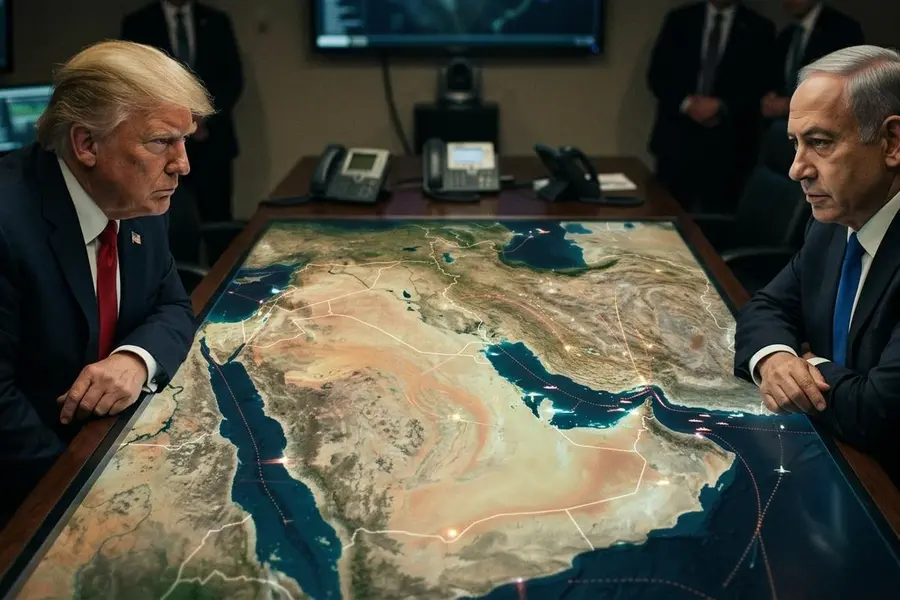
Donald Trump and Benjamin Netanyahu are facing political challenges at home as the conflict with Iran remains unresolved. Democrats have taken control of both chambers of the US Congress, while Netanyahu's political bloc has fallen short of a parliamentary majority in Israel. The results raise fresh questions about the future of their partnership, the possibility of renewed military action against Iran and the prospects of a diplomatic settlement.
US President Donald Trump and Israeli Prime Minister Benjamin Netanyahu are facing political challenges at home as the war with Iran remains unresolved. Democrats have won control of both chambers of the US Congress, while Netanyahu's political bloc has failed to secure a majority in Israel's parliament.
The results have raised questions about the future of the US-Israel partnership, the possibility of fresh military action against Iran and the chances of a diplomatic settlement.
The timing is significant as Washington and Tehran continue to exchange proposals to end the conflict. However, disagreements over sanctions, the Strait of Hormuz and Iran's nuclear programme remain major obstacles.
US midterm elections: Democrats take control of Congress
The November 3 midterm elections dealt a major setback to Trump's Republican Party, with Democrats winning control of both the House of Representatives and the Senate.
Democrats made gains in several traditionally Republican states, including Texas, Kansas, Iowa, Ohio and South Carolina. They also won more than two dozen additional House seats.
The new Congress will take office in January 2027. Democrats will then have greater powers to investigate the Trump administration, question its decisions and examine government spending, including the cost of the Iran war.
Trump dismissed suggestions that the results were a personal defeat, saying he would have won by a landslide if his name had been on the ballot. He also congratulated Democrats but warned that he would veto legislation he disagreed with.
Did the Iran war contribute to Trump's election setback?
The Iran conflict was one of the issues influencing voters, but economic concerns, particularly the rising cost of living, played a bigger role.
Polling data showed that many Americans were unhappy with the country's direction and Trump's handling of the presidency. Around six in 10 voters also considered the decision to launch military action against Iran the wrong one.
Trump acknowledged that the conflict had contributed to Republican losses but defended his decision to attack Iran, saying he would make the same choice again.
JNU professor Rajan Kumar told The Times of India that the war had failed to deliver a clear military or political outcome. He said the US was caught in a difficult position, unable to claim victory or easily withdraw.
Can Democrats restrict Trump's Iran policy?
Democratic control of Congress could make it harder for Trump to continue the war without facing questions about its objectives, costs and consequences.
Lawmakers can use investigations, hearings and government funding decisions to put pressure on the administration. However, Democrats cannot automatically end military operations or take control of the armed forces away from the president.
Trump remains commander-in-chief, but his decisions on Iran will now face greater scrutiny from Congress.
US strikes near the Strait of Hormuz: Is another attack possible?
The military situation remained tense even as Americans voted in the midterm elections.
On November 2, the US carried out limited strikes against Iranian targets near the Strait of Hormuz. The operation came after Iranian forces reportedly used surface-to-air missiles against American assets in the region.
Trump described the strikes as a minor attack and said they did not amount to a return to full-scale war.
The US continues to maintain a naval blockade around Iranian ports, while additional American military assets have been reported to be heading towards the Middle East.
The developments have raised concerns about another round of strikes, although diplomatic discussions are also continuing.
US-Iran negotiations: What is stopping a deal?
The US and Iran have continued exchanging proposals through mediators, including Qatar, but major differences remain.
Iran wants the US to lift its naval blockade, ease sanctions on its oil exports and agree to a ceasefire that also addresses the conflict in Lebanon. Tehran has also indicated that it is willing to discuss its nuclear programme.
Washington, meanwhile, wants a settlement covering Iran's nuclear activities and the security of shipping through the Strait of Hormuz.
Iranian Parliament Speaker Mohammad Bagher Qalibaf has warned the US against further military action, saying the responsibility to prevent another war lies with Washington.
US Vice-President JD Vance has expressed optimism about the possibility of a negotiated settlement. However, the two sides have yet to agree on the main conditions.
Israel elections: Netanyahu falls short of a majority
Netanyahu is facing a separate political challenge after Israel's October 27 parliamentary elections.
His Likud-led bloc won 53 seats in the 120-member Knesset, while the opposition bloc led by Gadi Eisenkot secured 48 seats. Arab-led parties won the remaining 19 seats.
A minimum of 61 seats is needed to form a government. Neither major bloc has secured enough support on its own.
Netanyahu remains prime minister while political parties negotiate the formation of a new government. President Isaac Herzog is expected to consult political parties before asking a candidate to form a coalition.
The opposition is also struggling to find common ground, particularly over whether to work with Arab-led parties.
Netanyahu's election fraud allegations add to the dispute
Following the results, Netanyahu's Likud party alleged that Arab-led parties were involved in electoral irregularities. Netanyahu claimed that the election had been stolen through alleged bribery, threats and other offences.
Opposition leader Eisenkot rejected the allegations and accused Netanyahu of trying to undermine confidence in the election results.
President Herzog also criticised Netanyahu's remarks, warning against statements that tarnished an entire community.
Election authorities approved the final results after examining the claims, with no established evidence of widespread fraud that would change the outcome.
Did Netanyahu ask Trump to launch fresh strikes against Iran?
Netanyahu's political difficulties have also brought attention to his approach towards the Iran conflict.
An Associated Press report published on November 2 said Netanyahu had pressed Trump to approve another round of strikes against Iran after the US midterm elections.
The report, citing regional officials and another person familiar with the discussions, said Netanyahu was seeking support for a fresh military campaign. However, Trump had reportedly not committed to taking military action.
There is speculation that renewed conflict could help Netanyahu bring political opponents together under an emergency government. However, there is no established evidence that this was his reason for seeking further strikes.
Another attack could also trigger Iranian retaliation and increase tensions across the Middle East.
Trump-Netanyahu partnership: Can political pressure change their Iran strategy?
The election results have created different challenges for the two leaders.
Trump will face greater scrutiny from Democrats in Congress over the cost and purpose of the Iran war. However, he still has considerable authority over military decisions.
Netanyahu, meanwhile, must find additional support to form a government. Although his bloc remains the largest political grouping, it is eight seats short of a majority.
A fresh confrontation with Iran could bring security concerns back to the centre of Israel's political debate. However, it would also risk further retaliation and regional instability.
Kumar told The Times of India that Netanyahu's influence had played a role in Trump's decision to become more deeply involved in the Iran conflict. He also pointed to the political and economic consequences of the war for the US administration.
Two election setbacks, one unresolved war: What happens next?
The US and Israeli elections have changed the political circumstances of Trump and Netanyahu, but they have not brought the Iran war closer to an end.
Trump will have to deal with a Democratic-controlled Congress from January, while Netanyahu must navigate difficult coalition negotiations to remain in power.
Meanwhile, the US and Iran continue to disagree over sanctions, the naval blockade, nuclear restrictions and the Strait of Hormuz.
Whether the two sides reach a diplomatic agreement or return to military confrontation remains uncertain. For now, both leaders face growing pressure to address the consequences of a conflict that has yet to produce a lasting settlement.
Published: 04 Nov 2026, 08:56 pm IST


ABOUT THE AUTHOR

Related Topics
Disclaimer: Kindly avoid objectionable, derogatory, unlawful and lewd comments, while responding to reports. Such comments are punishable under cyber laws. Please keep away from personal attacks. The opinions expressed here are the personal opinions of readers and not that of Mathrubhumi.