
Nepal Prime Minister Balendra Shah will address the UN General Assembly on September 24 and is expected to raise climate change, climate justice and compensation following devastating flash floods.
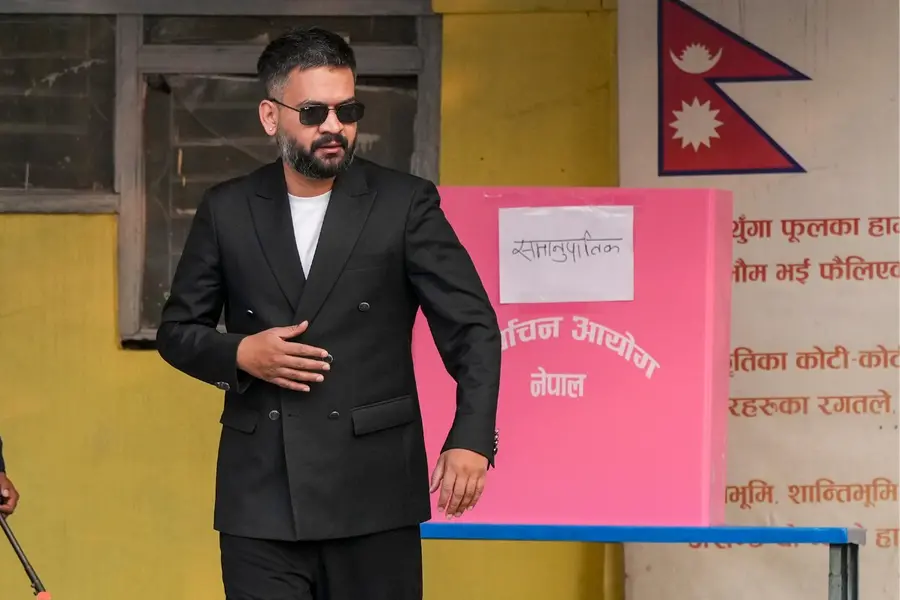
Kathmandu: Nepal Prime Minister Balendra Shah is set to address the 81st session of the United Nations General Assembly in New York on September 24, where Nepal is expected to highlight climate change and seek international support and compensation following the country's devastating flash floods.
Balen Shah to address UNGA on September 24
Also Read

Shah is scheduled to address the UN General Assembly in New York on September 24, according to the UN's official speaking schedule.
The visit will be significant as it is expected to be his first foreign trip since becoming prime minister on March 27.
Shah will lead Nepal's delegation to the UNGA, with Foreign Minister Shisir Khanal expected to accompany him.
Nepal's Foreign Ministry and Prime Minister's Office are working on the country's position for the high-level meeting, with consultations being held with experts and scientists in Nepal and abroad.
Nepal likely to raise climate justice
A major focus of Nepal's UN engagement is expected to be climate change and climate justice.
The government is assessing the human and economic losses caused by the recent disaster. Nepal's Finance Ministry and Foreign Ministry are jointly preparing a report containing a factual assessment of the damage.
The government is expected to use the findings while making its case for greater international support and possible compensation linked to the consequences of climate-related disasters.
Foreign Minister Shisir Khanal recently held discussions with diplomatic missions in Nepal on the issue of climate justice that Kathmandu plans to raise internationally.
Flood disaster leaves thousands dead or missing
The UN visit comes after one of Nepal's most devastating recent disasters.
An ice-rock avalanche near the Nepal-Tibet border triggered flash floods on August 26, causing extensive destruction across parts of northern and central Nepal.
According to officials cited in the reports, Nepal's death toll had risen to 1,344 by Saturday, while 4,996 people were still believed to be missing.
Chinese state media separately reported 16 deaths and 546 missing people in Tibet.
The disaster has also affected foreign nationals. The US State Department said around 70 Americans remained unaccounted for in the Nepal-Tibet border region, while 17 affected Americans had reached safety.
Rescue operations continue
Search-and-rescue operations are still under way despite the passage of more than a week since the floods.
Two Nepali workers were rescued from a tunnel at the Trishuli 3A hydropower plant on Friday, while another worker was subsequently rescued, according to reports.
At least 557 workers associated with the project were reported missing, with around 115 believed to be trapped inside the tunnel, according to the Independent Power Producers Association of Nepal.
In Nuwakot, a woman was also rescued alive from a house on Saturday.
Nepal's authorities have continued to express hope that additional survivors could be found as rescue teams search affected areas.
Thousands rescued and security personnel deployed
Relief operations have involved both domestic and international assistance.
Officials said almost all communication towers had been restored and nearly 12,000 people had been rescued.
Around 21,500 security personnel have been mobilised for search-and-rescue operations, while more than 5,000 people have received treatment for injuries.
The government has also begun preparing for the longer-term rehabilitation of affected communities as rescue efforts continue.
Why the UN visit matters
The UN General Assembly gives Nepal an opportunity to take the consequences of the disaster to an international diplomatic platform.
For Kathmandu, the issue is not limited to immediate relief. The government is also seeking to highlight the vulnerability of Himalayan communities to climate-related risks and the financial burden of rebuilding after major disasters.
Nepal's argument for climate justice is likely to focus on the gap between countries' contributions to global emissions and the disproportionate impact climate-related disasters can have on vulnerable nations.
The government's damage assessment will be important in establishing the scale of the losses and supporting any request for international assistance or compensation.
Nepal's climate diplomacy after the floods
Shah's UN address comes at a critical moment for Nepal. The country is dealing simultaneously with an immediate humanitarian emergency and the longer-term challenge of rebuilding infrastructure and communities affected by the floods.
The planned emphasis on climate justice allows Nepal to connect the disaster to a wider international debate over climate finance, adaptation and support for countries particularly exposed to climate-related hazards.
However, raising the issue at the UN does not automatically guarantee compensation. Any financial support would depend on negotiations with international partners, existing climate-finance mechanisms and the evidence presented by the Nepalese government.
The damage assessment being prepared by Nepal's Finance and Foreign Ministries could therefore become an important part of the country's diplomatic case.
Shah's September 24 address is also likely to attract attention because it will be his first major international appearance since taking office. His government's handling of the disaster and its appeal for international support will be closely watched as Nepal moves from emergency rescue operations towards rehabilitation.
Published: 05 Sept 2026, 06:19 pm IST
ABOUT THE AUTHOR
Related Topics
Disclaimer: Kindly avoid objectionable, derogatory, unlawful and lewd comments, while responding to reports. Such comments are punishable under cyber laws. Please keep away from personal attacks. The opinions expressed here are the personal opinions of readers and not that of Mathrubhumi.