
Shah first made a political breakthrough in May 2022, when he won the mayoral election in Kathmandu as an independent candidate
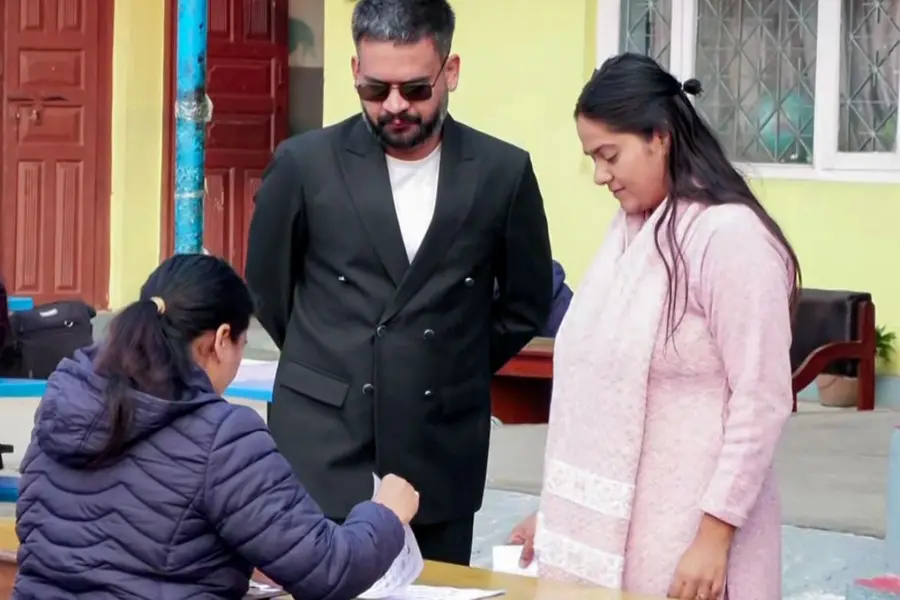
Vote counting in Nepal’s general elections has put the centrist Rastriya Swatantra Party (RSP) ahead in a contest that could reshape the country’s political landscape, with its leader Balendra Shah emerging as the frontrunner to become the next prime minister.
Early results on Friday showed the RSP leading in 47 of 57 constituencies, according to reports by the Kathmandu Post. The Communist Party of Nepal (Unified Marxist–Leninist), led by former premier KP Sharma Oli, was ahead in five seats, while the Nepali Congress, led by Gagan Thapa, was leading in four.
The vote, held on Thursday, was the first national election since violent Gen Z–led protests in September 2025 forced the collapse of Oli’s coalition government.
ALSO READ | Nepal election results: RSP surges ahead as old guard trails in first post-unrest polls
Rapper-turned-politician
At 35, Shah — popularly known as Balen — has emerged as one of the most unusual figures in Nepal’s politics.
Born in Kathmandu in 1990, he grew up during the country’s decade-long Nepalese Civil War between Maoist rebels and the state. The youngest of four siblings, Shah studied civil engineering at Himalayan Whitehouse International College before completing a postgraduate degree in structural engineering from Visvesvaraya Technological University in India.
Before entering politics, Shah gained fame as an underground hip-hop artist. In 2013, he shot to national prominence after launching Raw Barz, a rap-battle platform where artists competed live, helping popularise Nepal’s hip-hop scene.
His music — often critical of corruption and traditional political elites — resonated strongly with younger Nepalis.
Shock victory as Kathmandu mayor
Shah first made a political breakthrough in May 2022, when he won the mayoral election in Kathmandu as an independent candidate, defeating candidates from Nepal’s established parties.
ALSO READ | ‘My duty is completed’: Sushila Karki signals end of interim term as Nepal general election begins
As mayor, he built an image as a reformist leader focused on urban governance, including campaigns against tax evasion, traffic congestion and poor waste management.
Rise during Gen Z protests
Shah’s popularity surged during the mass protests in September 2025, when young demonstrators took to the streets against the government of KP Sharma Oli. The unrest left 77 people dead and eventually forced the prime minister to resign.
Backing the protests, Shah became a symbolic figure of youth-led political change. Though some activists pushed for him to lead an interim government, he instead supported former chief justice Sushila Karki for the role.
Soon after, he joined the Rastriya Swatantra Party, positioning himself for national leadership.
High-profile electoral battle
In the 2026 election, Shah is contesting the Jhapa-5 constituency — the home turf of Oli in eastern Nepal — turning the race into a symbolic clash between the old political establishment and a new generation of leaders.
Speaking before the vote, Shah said challenging Oli showed he was “not taking the easy way out”.
Reform agenda and youth appeal
Shah has advocated a liberal economic approach paired with social welfare policies, including free education and healthcare for poorer citizens. His messaging centres on demands from younger voters for better governance and an end to corruption.
His protest-era song “Nepal Haseko” (Nepal Smiling) — calling for a happier and more prosperous country — became an anthem for the demonstrations and has garnered millions of views online.
Analysts say his popularity has reached unusual levels for a Nepali politician. According to constitutional law expert Bipin Adhikari of Kathmandu University, buses travelling to the capital have even been seen carrying stickers reading: “Headed to Balen’s city.”
Criticism and controversies
Despite his popularity, Shah’s tenure as mayor has also drawn criticism. Human rights groups have accused authorities under his administration of using police to seize property belonging to street vendors and landless people.
He also faced scrutiny earlier this year after being seen driving a Land Rover Defender worth about 40 million Nepali rupees ($275,000) during his campaign, raising questions about the vehicle’s ownership and transparency.
A potential turning point for Nepal
If the current election trend holds, Shah’s rise could mark a major shift in Nepal, where politics has long been dominated by veteran leaders — many with roots in the Maoist insurgency era.
His party has pledged to maintain “balanced foreign relations” with both India and China, Nepal’s powerful neighbours.
For now, as vote counting continues, Shah’s journey from underground rapper to possible prime minister has become one of the most striking political stories in South Asia.
Published: 06 Mar 2026, 03:38 pm IST
Related Topics
Disclaimer: Kindly avoid objectionable, derogatory, unlawful and lewd comments, while responding to reports. Such comments are punishable under cyber laws. Please keep away from personal attacks. The opinions expressed here are the personal opinions of readers and not that of Mathrubhumi.
