
India’s long-awaited IDBI Bank privatisation has reached a decisive stage, with final bids expected this week and the government targeting a complete exit in FY26.
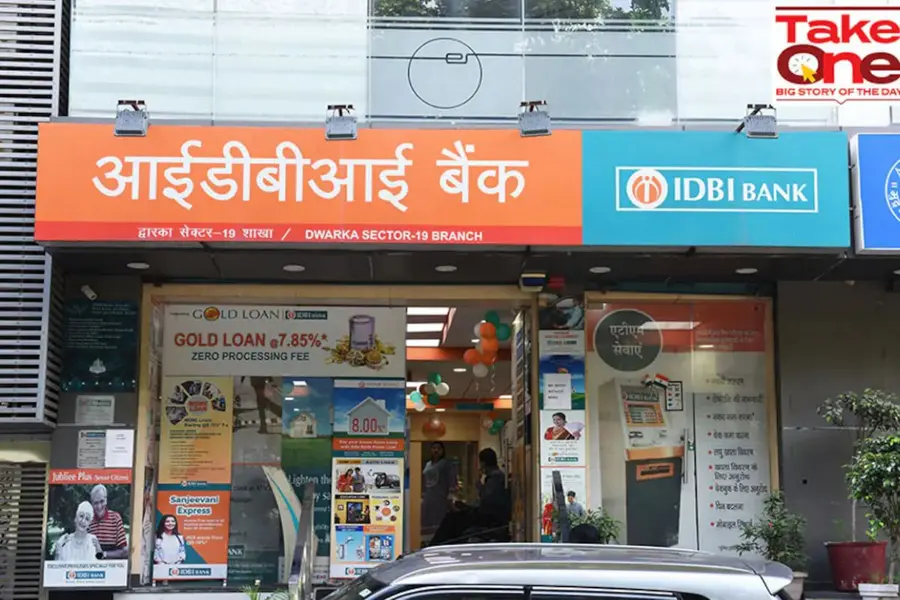
New Delhi: India’s long-running effort to privatise IDBI Bank has entered its most decisive phase yet, with the government aiming to complete the strategic divestment in FY26 as binding financial bids from shortlisted suitors are expected this week.
According to government and industry sources, Kotak Mahindra Bank, Emirates NBD, and Fairfax India Holdings are preparing to submit their final bids for a controlling 61 percent stake in IDBI Bank. One bid has already been placed, while the remaining offers are expected before the weekend, sources familiar with the process said.
Also Read

The Centre and Life Insurance Corporation of India together hold about 90 percent stake in IDBI Bank. Under the proposed transaction, the government will divest its 30.48 percent holding, while LIC will offload around 30.24 percent, transferring management control to the successful bidder.
Officials estimate the transaction could fetch close to ₹33,000 crore, though the final valuation will depend on the bids and subsequent negotiations.
A senior government official confirmed that the entire divestment process is targeted for completion in FY26, underlining the administration’s intent to close one of India’s most closely watched strategic sales.
Bids to be evaluated under a structured process
The bids will be submitted to the Department of Investment and Public Asset Management, or Department of Investment and Public Asset Management, which is overseeing the sale.
Once received, the financial offers will be opened in the presence of transaction advisers, members of an inter-ministerial group (IMG), and authorised representatives of the bidders.
After evaluation, the IMG will make its recommendation, following which the proposal will be sent to the finance minister for final approval. Officials stress that the process is being conducted in a rule-based and transparent manner, given the scale and sensitivity of the transaction.
Third phase of divestment underway
The IDBI Bank divestment has formally moved into what the government describes as the third phase, where technical and financial bids are invited. In a post-Budget interaction earlier this month, DIPAM Secretary Arunish Chawla said the process had advanced meaningfully and that further clarity would emerge before the end of the financial year.
The Reserve Bank of India has already cleared four entities under its ‘fit and proper’ norms: Kotak Mahindra Bank, Fairfax India Holdings, Emirates NBD, and Oaktree Capital. While Oaktree was among the eligible bidders, the final shortlist invited to submit binding bids currently includes Kotak, Emirates NBD, and Fairfax.
A bellwether for India’s privatisation push
The IDBI Bank sale is widely seen as a test case for India’s broader privatisation agenda, particularly in the banking sector, where state ownership has traditionally dominated.
A successful transaction would not only provide substantial non-tax revenue to the exchequer but also signal policy continuity and reform credibility to domestic and foreign investors.
Market participants note that the identity of the winning bidder could have wider implications. A sale to a private Indian lender could accelerate consolidation within the banking system, while a foreign buyer would underscore overseas interest in India’s financial sector.
A financial investor, on the other hand, may pursue a different approach to governance and growth.
A long road since first announcement
The proposal to privatise IDBI Bank was first announced in the FY21 Budget in February 2020. A request for proposal was issued in October 2022, followed by extensive due diligence and regulatory vetting. In January 2025, Moneycontrol reported that closing due diligence was underway at the bank, paving the way for final bids more than a year later.
The extended timeline reflects the complexity of bank privatisation in India, where depositor confidence, regulatory scrutiny, employee concerns and political sensitivity all play a role.
As final bids come in, attention will now turn to valuations, the speed of approvals, and any post-selection commentary from regulators. For now, India’s attempt to exit IDBI Bank stands at a pivotal juncture, one that could shape perceptions of the country’s reform trajectory well beyond FY26.
Published: 06 Feb 2026, 02:49 pm IST
Related Topics
Disclaimer: Kindly avoid objectionable, derogatory, unlawful and lewd comments, while responding to reports. Such comments are punishable under cyber laws. Please keep away from personal attacks. The opinions expressed here are the personal opinions of readers and not that of Mathrubhumi.