
The Centre plans to redirect around 90 lakh tonnes of broken rice from food distribution to ethanol production to boost fuel blending and manage supply chains
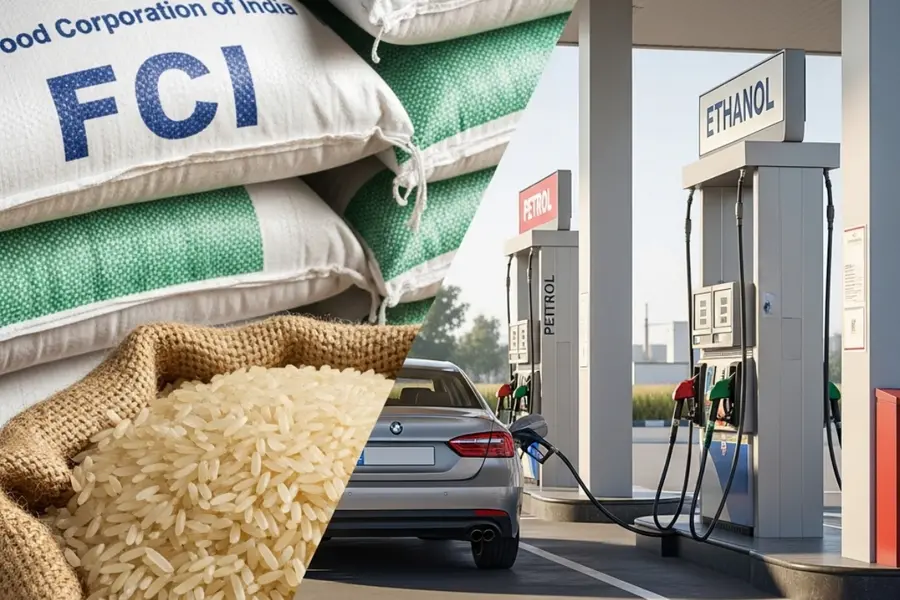
New Delhi: The central government is preparing to divert nearly 90 lakh tonnes of broken rice from the Food Corporation of India (FCI) stocks to the ethanol industry starting next year. The proposal, which will soon be placed before the Cabinet, aims to reduce the share of broken rice in foodgrains distributed under the public distribution system (PDS) from 25 per cent to 10 per cent.
This move is expected to ensure a steady supply of feedstock for ethanol production at a time when global crude oil prices have surged by around 40 per cent in recent weeks. According to Food Secretary Sanjeev Chopra, India has already achieved 20 per cent ethanol blending in petrol, a sharp rise from 1.5 per cent in 2013. This has helped the country save over Rs 1.63 lakh crore in foreign exchange and reduce crude oil imports significantly.
Also Read

The government is now looking to expand the ethanol programme further by exploring higher blending limits, mixing ethanol with diesel, and promoting flex-fuel vehicles. Officials indicated that key policy decisions on these measures could be taken soon.
Currently, broken rice makes up about 25 per cent of the grains distributed free to nearly 80 crore beneficiaries under the government’s food scheme. Under the proposed plan, this share will be reduced to 10 per cent, freeing surplus rice from the annual distribution of around 360–370 lakh tonnes. The excess stock will be auctioned to ethanol producers, animal feed manufacturers, and other buyers. A pilot run of this system has already been conducted in five states.
Also read | Trump extends deadline to reopen Strait of Hormuz; freezes US strikes on power plants for 5 days
From next year, the government also plans to stop supplying whole-grain rice from FCI stocks to distilleries. Instead, broken rice from the revised food distribution system will become the primary feedstock, ensuring year-round availability.
The proposal is also aimed at addressing past disruptions. In 2023, concerns over sugar and rice production led to restrictions on feedstock supply, affecting ethanol output. Officials say the new system will help stabilise supply chains, especially in the face of climate-related uncertainties.
In addition to rice, maize is being promoted as an alternative feedstock. The agriculture ministry is developing high-yield maize varieties suitable for rain-fed regions, capable of producing five to six tonnes per hectare. Currently, around 40 per cent of India’s ethanol production comes from grain-based sources, mainly maize.
India’s ethanol production capacity has expanded significantly, rising from 420 crore litres in 2013–14 to nearly 2,000 crore litres today, with rapid growth recorded in the past three years. The government’s latest move signals a stronger push towards energy security and reduced dependence on fossil fuels while maintaining food distribution priorities.
(With PTI inputs)
Published: 24 Mar 2026, 02:36 pm IST
Disclaimer: Kindly avoid objectionable, derogatory, unlawful and lewd comments, while responding to reports. Such comments are punishable under cyber laws. Please keep away from personal attacks. The opinions expressed here are the personal opinions of readers and not that of Mathrubhumi.