
Trump extends the deadline for Iran to reopen the Strait of Hormuz as the US holds off strikes on Iranian power plants for five days.
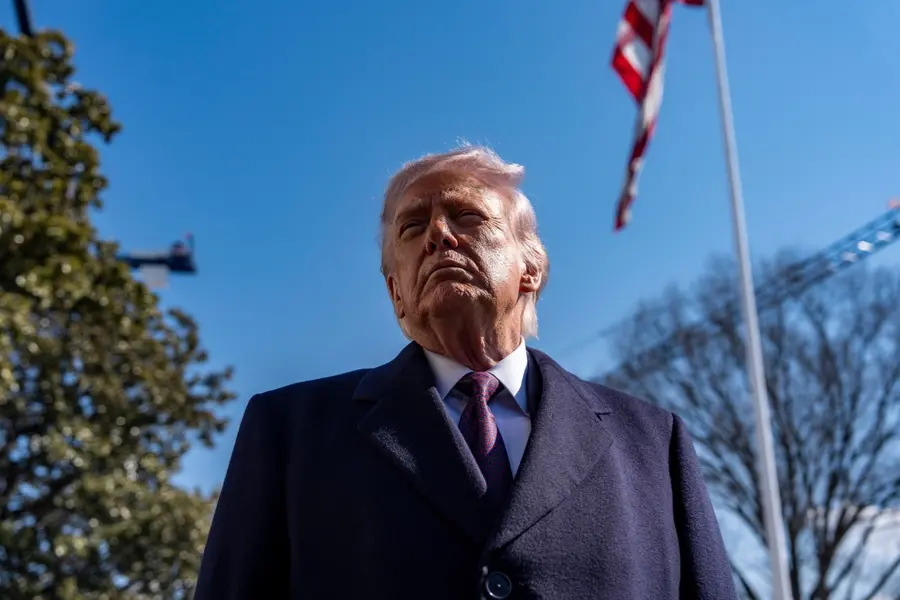
President Donald Trump has extended his ultimatum for Iran to reopen the Strait of Hormuz, announcing that the United States will delay planned strikes on Iranian power facilities for five days as talks continue.
The decision, revealed in a post on Truth Social on Monday, came just hours before Washington’s initial deadline was due to expire.
In his announcement, Trump said the two countries had engaged in “very good and productive conversations,” prompting him to order a temporary halt to attacks on Iran’s energy infrastructure.
“I AM PLEASE TO REPORT THAT THE UNITED STATES OF AMERICA, AND THE COUNTRY OF IRAN, HAVE HAD, OVER THE LAST TWO DAYS, VERY GOOD AND PRODUCTIVE CONVERSATIONS REGARDING A COMPLETE AND TOTAL RESOLUTION OF OUR HOSTILITIES IN THE MIDDLE EAST… I HAVE INSTRUCTED THE DEPARTMENT OF WAR TO POSTPONE ANY AND ALL MILITARY STRIKES AGAINST IRANIAN POWER PLANTS AND ENERGY INFRASTRUCTURE FOR A FIVE DAY PERIOD, SUBJECT TO THE SUCCESS OF THE ONGOING MEETINGS AND DISCUSSIONS.”
The extension comes as the conflict, now entering its fourth week, intensifies across the region, with more than 2,000 people already killed and critical infrastructure in multiple countries targeted.
Iran threatens counterstrikes across the region
Iran responded to Trump’s earlier warnings with its own threats, saying it would attack electricity plants across the Middle East and mine waterways if the US carried out its promised bombardment.
Officials in Tehran have insisted they consider energy and desalination facilities throughout the Gulf to be legitimate targets if hostilities escalate.
Iran’s Revolutionary Guard said any strike on its power grid would trigger retaliation against “all areas that supply electricity to American bases,” as well as economic and industrial sites linked to US interests.
Mohammad Bagher Qalibaf, speaker of Iran’s parliament, similarly declared that key regional infrastructure, including water-desalination plants relied upon by Gulf states, would be at risk.
The semiofficial Fars News Agency published a list of potential targets, among them the Barakah Nuclear Power Plant in the United Arab Emirates.
Over the weekend, Iran also fired missiles toward Dimona in Israel, though the strike caused no damage.
Crisis at the Strait of Hormuz
The standoff began after Iran closed the Strait of Hormuz to US, Israeli and allied vessels following repeated American and Israeli strikes on Iranian territory.
Although Tehran claims the waterway remains open to others, the restrictions have choked global shipping flows, sending oil prices soaring and disrupting food and commodity markets worldwide.
A fifth of the world’s crude passes through the narrow channel, making it one of the most strategically vital and vulnerable trade routes on earth.
Iran’s actions came after US and Israeli forces launched a series of operations that included the killing of Iran’s supreme leader, strikes on a major gas field and attacks on energy installations across the Gulf.
US ultimatum and global fallout
Before extending Monday’s deadline, Trump had vowed to “obliterate” Iran’s power grid unless it reopened the strait within 48 hours.
The heightened rhetoric has sparked fears of escalating attacks that could plunge wide areas of the Middle East into darkness and disrupt drinking-water supplies, much of which depend on desalination plants powered by vulnerable electricity networks.
Global energy officials have warned that the world economy could suffer lasting damage if the crisis continues.
“No country will be immune to the effects of this crisis if it continues to go in this direction,” said Fatih Birol, head of the International Energy Agency.
US and Israeli military actions intensify
In an interview aired on the Iran International network, Brad Cooper, commander of US Central Command, accused Iran of launching missiles and drones from populated areas, saying such sites could now be targeted.
“You need to stay inside for right now,” he warned Iranian civilians. Cooper added that the US and Israel have been striking Iran’s infrastructure to degrade its ability to rebuild military capabilities, “It’s not just about the threat today,” he said. “We’re eliminating the threat of the future.”
Israel confirmed a new wave of strikes on Tehran on Monday, saying it had “begun a wide-scale wave of strikes” on infrastructure targets. Explosions were reported in several districts of the capital.
Iran warns of mining the Gulf
With Washington deploying additional Marines and amphibious assault ships to the region, Iran has cautioned that any attempt to seize its coastline or islands would trigger the mining of access routes across the Persian Gulf.
The Defense Council of Iran said, “Any attempt by the enemy to target Iran’s coasts or islands will… lead to the mining of all access routes… in the Persian Gulf and along the coasts.”
Such mining could endanger commercial shipping far beyond the conflict itself, potentially leaving long-term hazards for global trade.
Regional conflict expands
Israel continues to strike Hezbollah positions in Lebanon, while the group has launched hundreds of rockets into Israel.
Despite escalating military movements, Trump has maintained that he does not plan to send US ground forces into Iran, though he has also insisted he is keeping “all options” open.
(With AP inputs)
Published: 23 Mar 2026, 05:04 pm IST
Disclaimer: Kindly avoid objectionable, derogatory, unlawful and lewd comments, while responding to reports. Such comments are punishable under cyber laws. Please keep away from personal attacks. The opinions expressed here are the personal opinions of readers and not that of Mathrubhumi.
