
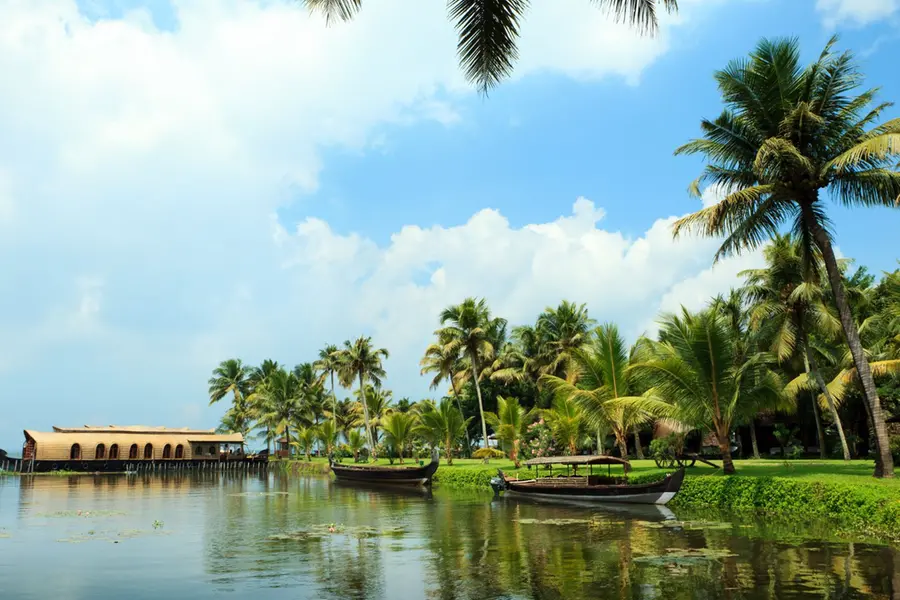
November 1 is a momentous day for Malayalis worldwide, as it marks Kerala Piravi, the birth of the state of Kerala. This year, November 1, 2024, celebrates Kerala's 68th anniversary. This day commemorates the unification of regions based on language in 1956, culminating in the formation of a united Kerala. This was not just a political milestone; it heralded the advent of the first communist ministry in the state, setting a new precedent for governance and unity among diverse communities.
Cultural imagination and historical roots
Also Read
Even before the official establishment of Kerala, the idea of a unified state thrived in the cultural consciousness of its people. Myths and legends, such as Parayi Petta Panthirukulam, traversed the geographical and cultural divides, uniting Malayalis through shared narratives. The figure of Mahabali, symbolising an age of equality and prosperity, is central to this collective imagination. Poet Vailoppilly Sreedhara Menon encapsulated this sentiment, suggesting that the people of Kerala dream of a brighter future rooted in a glorious past. P Kunhiraman Nair’s poetry echoes this yearning, reflecting on the historical grandeur of Kerala and India.

Vallathol Narayana Menon captured the essence of this pride when he stated, "When you hear the name of India, your heart must swell with pride. When you hear the name of Kerala, the blood must throb in your veins." This connection between Kerala and its historical legacy is vital to our identity as Malayalis.
Historical narratives of unity
The common narrative suggests that British colonial rule unified India before handing it over to its people. However, this notion simplifies a much deeper historical context. Long before colonial intervention, India was referred to as Hindustan, indicating ‘a region on the banks of river Sindhu.’ The name Bharat itself is derived from the lineage of Emperor Bharathan, further emphasising the region's profound historical significance.
In the post-independence era, the regions of Travancore, Kochi, and Malabar united to form political Kerala in 1956. Despite being the only area under direct British control, Malabar’s integration into this new political entity showcased the collective aspiration for unity that existed well before the time.
The lush land of Kerala in poetry
Poets like Kunjikuttan Thampuran and Vallathol Narayana Menon envisioned Kerala as a lush paradise nestled beneath the divine mountains of the Western Ghats. They often lamented the oppression that befell such a vibrant land. P. Kunhiraman Nair poignantly asked, "When did you stumble and fall, my country, guarded by the Sahya mountains?" This resonated with a longing for Kerala’s lost glory and the promise of renewal.
Malayalam: The heart of Kerala’s identity
At the core of a Malayali's identity lies the Malayalam language, a rich tapestry woven from numerous dialects that reflect the region's diversity. From the unique Urali dialect explored in the novel Kolukkan (2022) penned by Pushpamma to the distinct Malayalam of Kasaragod highlighted by P V Shajikumar in Marana Vamsam (2024), every dialect adds a layer to the linguistic richness of Kerala. The coastal regions, Travancore, and central Kerala each contribute unique characteristics to the language, showcasing its vibrant diversity.
Caste dynamics also influence linguistic expressions. Communities who once led isolated lives, have their languages intricately tied to their specific territories. While Malayalam serves as a unifying force, it is crucial to honour these regional dialects, allowing them to enrich the standardised version of the language rather than suppressing them.
Celebrating linguistic diversity
Several institutions and agencies in Kerala, including Mathrubhumi, have initiated literature festivals that celebrate this linguistic diversity. Such events not only promote the various dialects but also highlight the potential for a dynamic and evolving Malayalam language. By integrating regional vocabularies into the broader Malayalam lexicon, we can enrich the language, ensuring it remains a living, breathing reflection of Kerala’s diverse heritage.
Published: 01 Nov 2024, 09:30 am IST
ABOUT THE AUTHOR
Related Topics
Disclaimer: Kindly avoid objectionable, derogatory, unlawful and lewd comments, while responding to reports. Such comments are punishable under cyber laws. Please keep away from personal attacks. The opinions expressed here are the personal opinions of readers and not that of Mathrubhumi.