

Every year on November 1, Malayalis across the world celebrate Kerala Piravi, the birth of “God’s Own Country.” From scientists in Bengaluru to artists in Chennai, Mathrubhumi speaks to Malayalis living away from home — and one who returned — on what this day truly means to them.
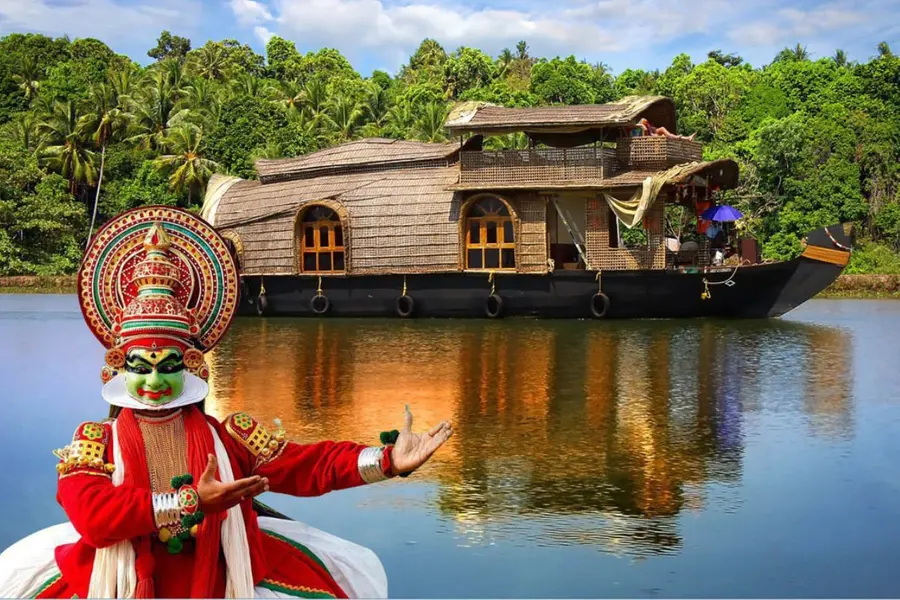
Kozhikode: Every year on November 1, Malayalis around the world come together — in spirit if not in place — to celebrate Kerala Piravi, the day the state of Kerala was born.
The word “Piravi”, meaning birth, marks the historic moment in 1956 when Malayalam-speaking regions united under the States Reorganisation Act, giving rise to what we now know as “God’s Own Country.”
Kerala Piravi is more than just a date on the calendar — it’s a reminder of identity, belonging, and the deep emotional connection that Malayalis share with their homeland.
Whether they live in Bengaluru or Boston, Delhi or Doha, Malayalis carry with them the sights, smells, and sounds of home — the monsoon-soaked earth, the aroma of coconut oil, the melody of temple bells, and the comforting chaos of Onam mornings.
This year, Mathrubhumi spoke to Malayalis living away from Kerala — and one who returned home after six decades — to understand what Kerala Piravi means to them in today’s world.
“I miss the simple joy of doing absolutely nothing” — Adersh S. Nair, IISc, Bengaluru
A sixth-year PhD student from Mavelikara, Adersh, has been away from Kerala for over five years.
“What I genuinely miss about Kerala is not the postcard-perfect backwaters,” he says, “but the time I spent with friends and family — bathing in the village pond, laughing and half-drowning; the Parumala Perunnal, the evenings in paddy fields watching the sunset.”
He laughs, “The real MVP of my nostalgia? Kuttanad toddy shops — perfect chicken and soft kappa. Here in Bangalore, I’m living on coffee and stress. I scroll through my gallery sometimes and imagine my friends are still at those toddy shops while I’m here, PhD-ing away.”
“Kerala is a part of me, wherever I go” — Joyce John, Scientist, Bengaluru
For Joyce John, a scientist who has lived outside Kerala for three decades, the pandemic rekindled her connection to home.
“It unexpectedly reconnected me to my roots,” she says. “While many of us left Kerala for opportunities, the state’s beauty and warmth remain etched within us. I carry the essence of Kerala wherever I go — in how I think, work, and celebrate.”
“The smell of jasmine and my mother’s Kerala saree” — Hari Shankar, 32
Hari, who left Kerala 15 years ago, associates Kerala Piravi with childhood memories.
“I remember my mother dressing in a Kerala saree with mullappoo in her hair before heading to her LIC office,” he recalls. “That smell of jasmine — that’s what Kerala Piravi is to me. It’s the one day that lets me feel at home a little more deeply and miss it a little extra.”
“A quiet pride in where I come from” — Srinath Sajith, Artist
For Srinath Sajith from Palakkad, Kerala Piravi brings back school memories — “teachers in Kerala sarees, cultural programs, and songs that filled us with pride.”
“My mother says it used to be celebrated like Independence Day — with sweets and parades. Today, it’s quieter, but when I see women in Kerala sarees, it brings that feeling of togetherness. I feel lucky to be born here — Kerala Piravi is nostalgia wrapped in gratitude.”
“The land that nurtured my childhood has come full circle” — Leelamma John, Retired English Teacher
For Leelamma John from Muvattupuzha, Kerala Piravi carries an even deeper resonance. Born just before Kerala’s formation, she left at age five and returned only after retirement, sixty years later.
“Kerala, the land that nurtured my childhood, has come full circle,” she says. “Though life took me away, the memories of those idyllic days stayed with me.
Today, as I return to this enchanting land, I’m blessed to experience its beauty once more. Perhaps providence knew my desire to live out my days surrounded by nature’s splendour.
The same landscapes that brought me joy as a child now welcome me home. I’m incredibly proud of how Kerala has evolved — from a simple, sleepy region to a globally admired state. This is, and will always be, my own God’s Own Country.”
“You breathe different air in Kerala” — Shivaani Srinivasan, 27, Project Associate, IISc
For Shivaani, who grew up in Coimbatore but hails from Palakkad, Kerala Piravi means reconnecting with her roots through memories of food, festivals, and family.
“It’s like you go through a transition when you leave the city for Palakkad’s lush green villages,” she says. “It’s hot, but you breathe differently there. And the food — the sadhya with upperi, thoran, kootu, erisseri, pulisseri, ending with chakka payasam — nothing can beat that.
My grandmother would cook vegetables fresh from the market. The agraharams are full of warmth — Appachans and Ammumas who feed you till you burst. We used to bathe in the pond for hours.
Now the pond barely fills even after rain, and many have moved to cities. But when a festival comes, the village comes alive again — like one big family.”
“Nostalgia, pure nostalgia” — Merin James, MBA Student, Bengaluru
For Merin James, originally from Idukki and now pursuing an MBA in Bengaluru, Kerala Piravi is both pride and longing.
“After India’s independence, the demand for linguistic reorganisation stemmed from a deep desire among Malayalis to protect and preserve their language and cultural identity.
Kerala Piravi honours that struggle and celebrates the success of a state that went on to become one of India’s most progressive and literate — and I’m super proud to hail from there,” she says.
She fondly recalls how the day is celebrated back home. “I remember Kerala Piravi being observed with great enthusiasm across the state. Government offices, schools, and cultural organisations hoist the Kerala flag, while the national and state anthems are sung.
Streets, schools, and buildings are decorated with red-and-white banners and lights. Cultural performances, Thiruvathira, Theyyam, and musical showcases highlight Kerala’s artistic depth.
“Even if I’m miles away,” she adds, “the fact that I speak Malayalam connects me to my roots — and that makes me strong and grounded. The message is clear: celebrate the traditions while shaping modernity.”
A Land Remembered
For some, Kerala Piravi is a celebration of homecoming; for others, it’s a tender ache of absence. Across ages and cities, one truth stands out — Kerala is not just a place, it’s a feeling.
Whether in a student’s nostalgia, a teacher’s homecoming, or a young professional’s pride, Kerala Piravi continues to remind every Malayali that no matter how far they wander, home still smells of coconut oil, tastes of payasam, and feels like the soft rain of November.
Published: 01 Nov 2025, 09:32 am IST
ABOUT THE AUTHOR
Disclaimer: Kindly avoid objectionable, derogatory, unlawful and lewd comments, while responding to reports. Such comments are punishable under cyber laws. Please keep away from personal attacks. The opinions expressed here are the personal opinions of readers and not that of Mathrubhumi.