
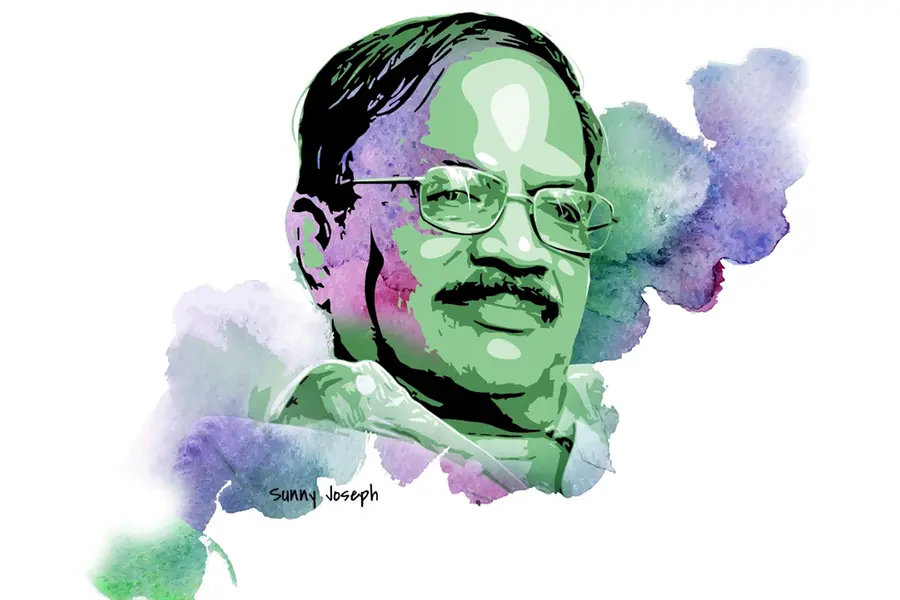
MT Vasudevan Nair is indeed an enduring beacon of literary excellence, whose unparalleled contributions have enriched Malayalam literature and cinema for decades. Celebrating his birthday after his Navati (90 years) celebrations last year, Malayali readers pay tribute to the multifaceted personality who has excelled in various domains of life. As a writer, he pioneered an expressive and poetic trend in Malayalam novels and short stories, shaping the literary landscape after the progressive era. His role as the editor of a literary magazine further underscores his influence, having nurtured numerous writers across generations. His contributions to cinema through screenwriting and direction have left an indelible mark on the art form as well.
MT Vasudevan Nair, who arrived in Kozhikode early in his career as a parallel college teacher, emerged as a guiding force for writers across generations, deeply shaping the cultural milieu of the city. His literary endeavours played a strong role in Kozhikode being recognized as a literary city on UNESCO's heritage list. As the editor of Mathrubhumi weekly, he ushered in a new literary sensibility in Malayalam, following in the footsteps of NV Krishna Warrier.
Also Read

As a writer, MT Vasudevan Nair's novels and short stories are equally noteworthy. His novel 'Manju' is particularly celebrated for its poetic portrayal of the theme of waiting. In contemporary discourse, some critics have interpreted 'Manju' as a novel that poignantly addresses the plight of women -- a perspective that has been debated in the current social scenario. Critics have stated that the portrayal of women's suffering in 'Manju' resonates deeply through its lyrical prose and poetic essence.
Three particular novels by the literary stalwart hold a special place in his literary repertoire. Though not formally labelled as such yet, MT Vasudevan Nair's novels 'Nalukettu', 'Asuravithu', and 'Kaalam', which vividly portray life along the banks of the river Nila (Bharathapuzha), can be considered a thematic trilogy. Together, these novels capture rural life intricately woven with the cultural and natural beauty of the region surrounding river Bharathapuzha.
Trilogies like these are often landmarks in the works of major writers, like Satyajit Ray's films 'Pather Panchali', 'Aparajito', and 'Apur Sansar', or CN Sreekantan Nair’s Ramayana-inspired dramas 'Saketham', 'Kanchana Sita', and 'Lanka Lakshmi'. Similarly, CV Raman Pillai's novels 'Marthanda Varma', 'Dharmaraja', and 'Ramaraja Bahadur', and Sophocles' famous Oedipus trilogy exemplify this literary tradition.
One of MT's later novels, 'Varanasi', also stands out as a notable work in his literary career. Equally significant are his contributions to the realm of short stories. As EM Forster elaborates in his critical book 'The Personal Voice', MT's short stories often echo the solitary laments of individuals who stay isolated from the bustle of society.
One remarkable story portrays a poignant moment from the impoverished childhood of a boy, set in the month of ‘Karkidakam’ (July/August) in Kerala when food is scarce. It narrates how a guest's unexpected visit prompts the family to gather and generously share their meagre resources, capturing a child's innocent wish-fulfilling spirit. The story, 'Karkidakam', portrays the emotional depth and empathy that manifests in MT's fictional oeuvre.
Similarly, he delves into characters such as a madman who is a societal outcast and an "unattractive" maid, exploring their inner worlds with empathy. 'Iruttinte Athmaavu', featuring Mad Velayudhan, remains a poignant depiction of human struggles and resilience. The life of Kuttyedathi, a local woman, resonates deeply with Malayali readers.
MT's literary contributions extend to the silver screen, where his writing has inspired many celebrated films. He has also directed some rare cinematic gems, showcasing his versatility and artistic vision.
As Kerala celebrates the ninety-first birthday of a beloved writer whose influence on Malayalam literature remains indelible, it is particularly noteworthy that this celebration follows closely on the heels of Kozhikode being officially recognized as a 'city of literature'. MT Vasudevan Nair has long been an integral figure in Kozhikode's cultural milieu, alongside luminaries such as SK Pottekkatt and Vaikom Muhammad Basheer. His genius and imaginative writings ensure that his legacy will endure as long as Malayalam literature itself.
Published: 15 Jul 2024, 01:29 pm IST
ABOUT THE AUTHOR
Related Topics
Disclaimer: Kindly avoid objectionable, derogatory, unlawful and lewd comments, while responding to reports. Such comments are punishable under cyber laws. Please keep away from personal attacks. The opinions expressed here are the personal opinions of readers and not that of Mathrubhumi.