
The ash cloud from the volcanic eruption, travelling at speeds of 100–120 km/h at altitudes above 10 km, entered Indian airspace at around 6.30 pm.
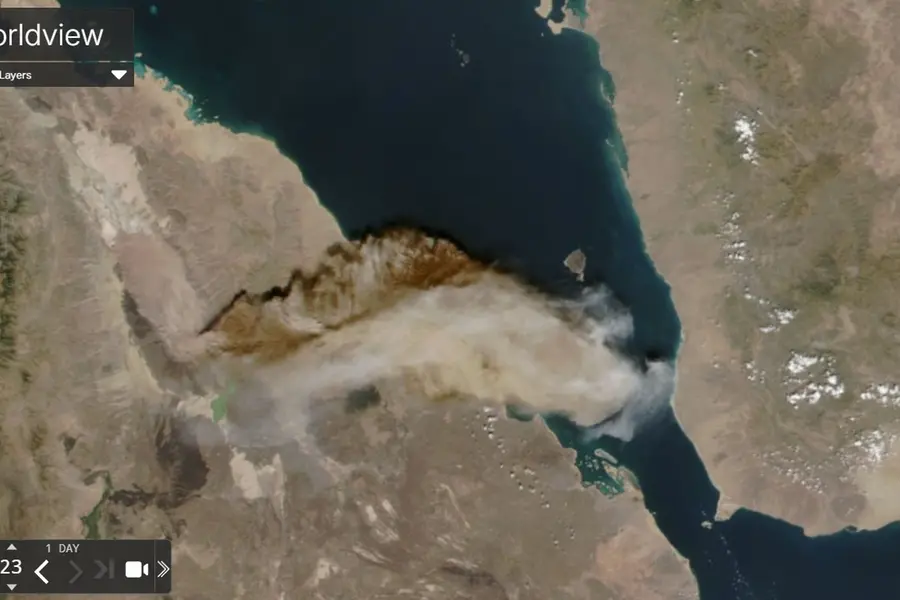
New Delhi: A vast plume of volcanic ash from Ethiopia’s Hayli Gubbi volcano swept across north-western India on Monday night, dimming skies and causing significant disruption to air traffic.
The ash cloud, travelling at speeds of 100–120 km/h at altitudes above 10 km, entered Indian airspace at around 6.30 pm. It tracked across Rajasthan, Gujarat, Maharashtra, Delhi-NCR and Punjab before continuing eastward. Airlines were forced to divert or cancel several flights as visibility dropped sharply through the evening.
Also Read

Although the India Meteorological Department (IMD) said surface-level pollution was unlikely to worsen because the plume remained at high altitude, aviation authorities cautioned that operations could be severely affected on Tuesday should ash levels descend over major airports.
By 11 pm on Monday, the cloud had reached the skies over Delhi and was expected to drift further towards Punjab and Haryana overnight and into Tuesday. IndiaMetSky Weather reported that the plume, stretching from the Oman–Arabian Sea region deep into the plains of northern and central India, would continue to move gradually across Delhi, Haryana and Rajasthan.
According to IndiaMetSky, the plume is composed mainly of sulphur dioxide along with low to moderate concentrations of volcanic ash. While not expected to impact overall air-quality indices in major Indian cities, it may raise sulphur dioxide levels in the Himalayas and the adjoining Terai belt of Uttar Pradesh. The cloud, containing ash, sulphur dioxide and fine particles of glass and rock, is travelling between 15,000 and 25,000 feet and could rise as high as 45,000 feet, the agency added.
Published: 25 Nov 2025, 08:13 am IST
Disclaimer: Kindly avoid objectionable, derogatory, unlawful and lewd comments, while responding to reports. Such comments are punishable under cyber laws. Please keep away from personal attacks. The opinions expressed here are the personal opinions of readers and not that of Mathrubhumi.